
A shakuhachi note is rarely still. Breath catches at its edge, pitch shifts, and the release can sound almost percussive. A close microphone may bring those movements forward until they seem louder than the note. Electronics can extend them, or flatten the player's control into a wash. The difference matters when listening to what happens between an instrument and its processing.
“Tradition meets technology” makes that encounter sound too simple. An instrument comes with a repertoire, techniques, makers, teachers, and expectations about where it belongs. A microphone, sampler, or loudspeaker changes some of those relationships and leaves others intact. Japanese electroacoustic work is no single style or lineage: it includes composed tape pieces, improvised electronics, sound installations, and performances in which acoustic and amplified sounds are hard to separate. Rather than ask whether a piece sounds old or new, ask what changes when a particular sound crosses from one practice into another.
What the electronic layer actually changes
Electroacoustic music uses electronics to generate, record, alter, or reproduce sound in relation to acoustic listening. A performer might play against a prepared recording; a composer might edit instrumental fragments into a piece with no live player; an improviser might route a microphone through pedals and speakers. The stakes differ. A live player can respond to processing as it happens. In a fixed recording, editing decides when a sound returns, long after the performance has ended.
Three operations are especially revealing when the acoustic source has an established musical identity:
- Magnification brings quiet physical events forward: a finger touching a string, a breath before a pitch, the strike before a sustained resonance.
- Displacement takes a sound out of its expected sequence or space. One attack might recur long after its natural decay, or come from a speaker behind the audience.
- Reassignment gives a gesture another job. A short ornament becomes a rhythmic loop; room noise becomes the continuous ground beneath it.
None of these operations automatically preserves or violates a tradition. What matters is whether the recording retains a trace of technique, whether the player can intervene, and how the work identifies its sources. A sampled instrument used as a decorative sign of “Japan” tells us less than a piece in which its articulation unsettles the electronic structure.
Tradition is a practice, not a timbre preset
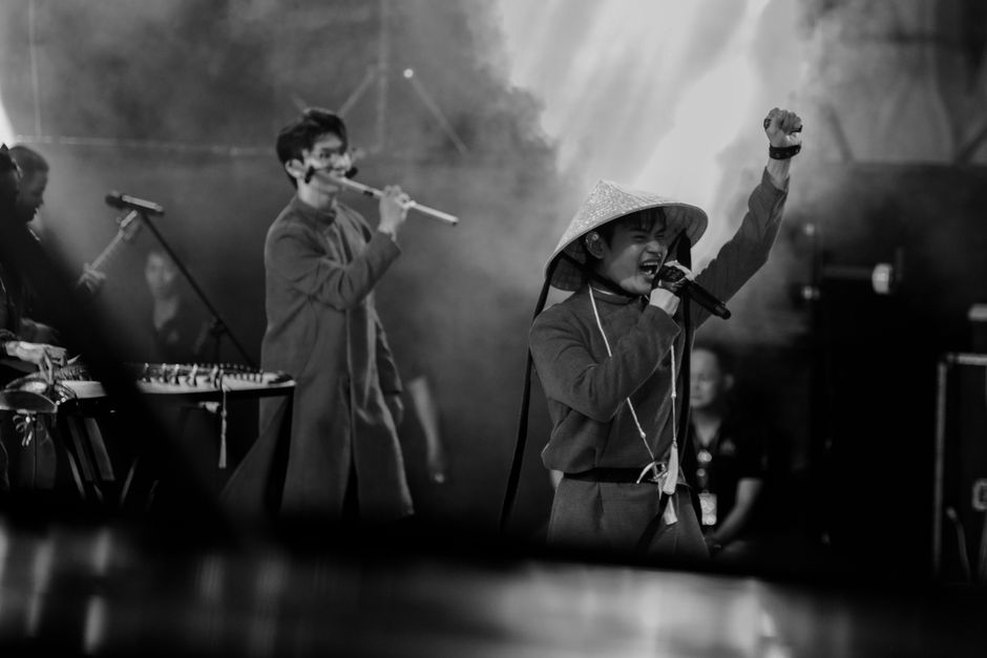
The shakuhachi, koto, and shamisen may be recognizable to listeners, but recognition can mislead. Shakuhachi playing involves breath pressure, embouchure, and pitch inflection; koto playing involves plucked attacks, damping, and bends made by pressing strings. An electronic work can engage those actions even when the result no longer resembles a familiar instrumental passage. An unaltered sample, meanwhile, can sound traditional while revealing little about the practice behind it.
Take one recorded koto note. Its pluck, vibrating string, and resonant body do not decay at the same rate. A composer could separate the attack from the tail, repeat only the attack, or stretch the resonance until the original gesture is barely audible. If the attack remains, the hand's movement may still organize the piece. Keep only the sustained frequencies, and the instrument begins to act more like a drone source. Neither choice is inherently more faithful; each asks us to follow something different.
Sound alone cannot tell us everything about repertoire or authority. A performer working within a taught practice may approach a phrase differently from a producer selecting a short excerpt from a recording. Credits, program notes, and documentation matter, particularly when a work draws on a named composition or a specific performance rather than an instrument's general possibilities. Without that context, claims that a processed sound represents an entire tradition deserve caution.
Historical routes were neither straight nor exclusive
Electronic composition in Japan did not begin as an extension of traditional instrumental music. The NHK electronic music studio, established in the 1950s, supported composers working with recording, synthesis, and tape. Tōru Takemitsu's Water Music, made from manipulated water sounds, shows how electroacoustic work could begin with an everyday source rather than an instrument. His November Steps, for biwa, shakuhachi, and orchestra, is not an electroacoustic piece. It is still a useful comparison: it puts distinct performance practices in contact without pretending their differences disappear.
Other routes opened outside institutional studios. Portable recorders, affordable effects, mixers, and home computers let musicians capture and alter sounds on their own terms. Shared access to equipment did not produce a shared aesthetic. A tape composition, a tabletop electronics improvisation, and a noise performance can all use altered acoustic material while treating control, accident, and repeatability differently.
That distinction matters when noise comes up. Merzbow's work is central to histories of Japanese noise, but volume and distortion do not explain every electroacoustic exchange with older instruments. Toshimaru Nakamura's no-input mixing board practice offers a contrast: its source is the mixer's own electrical feedback, with no traditional instrument required. Such work helps separate electroacoustic method from the assumption that Japanese experiments must pair a recognizable heritage sound with electronics.
Where the encounter becomes audible
Attack, decay, and the body of an instrument
Close recording can make a small action large enough to structure a piece. The scrape of a plectrum, the movement of air, or a string's uneven decay may take precedence over melody. On playback, listen for where the physical gesture ends and the electronic extension carries on. A long reverberant tail may preserve the shape of an attack; a loop can turn that attack into a pulse the performer never played.
Live processing and shared control
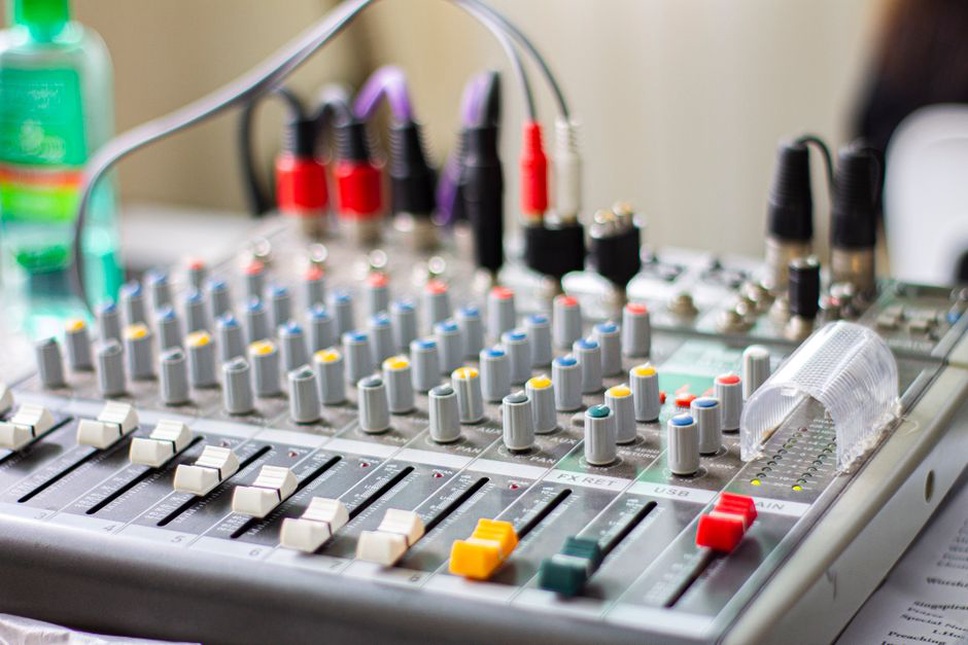
In a live setup, processing need not be added after the “real” performance. Amplification can lead an instrumentalist to play more softly; a delay can produce a phrase the player answers. Speaker feedback may make microphone placement part of the performance. Control then shifts among player, operator, equipment, and room. A concert recording preserves the audible result, but not necessarily the decisions behind it, so documentation is worth reading alongside the audio when available.
Composition from recorded fragments
Once recorded, a gesture can be cut and placed beside unrelated sounds. A short breath could lead into a field recording; a struck string might recur until its timing resembles machinery. The seam need not be polished away. For a closer look at such transitions, the blog's discussion of sound collage techniques in Japanese experimental music considers how recorded materials are placed in relation to one another. Here, listen for what the edit keeps of the original player's timing.
Space can interrupt the idea of a clean fusion
Microphones pick up rooms as well as instruments. A close-miked flute may sound intimate on headphones, while a distant microphone places it among audience movement and ventilation. Field recordings complicate the picture: bells, voices, traffic, or wind can enter a composition without serving as symbols of a place. When identifiable people or restricted performances are recorded, permission and context matter more than microphone quality.
Playback space changes the apparent balance between an inherited technique and its electronic treatment. In a small venue, an audience might hear the unamplified instrument alongside the speaker output. On headphones, that physical reference disappears, and the processed signal may seem to be the whole performance. A multichannel installation can move a recorded instrument around the listener even though the original player stood still. These choices shape what we hear as source, environment, or response.
How to listen without turning difference into a slogan
Listen to each work as a set of decisions, not as evidence of a national character. A first pass needs only a few questions:
- Identify what is present. Is there a live instrument, a recorded one, a field recording, an electronic oscillator, or a source you cannot place? Leave uncertain sounds uncertain.
- Track one gesture. Follow a pluck, breath, or strike through its decay. Notice where repetition, filtering, or movement through space changes it.
- Check the relationship. Does the electronic sound accompany the player, answer them, mask them, or come from their signal?
- Read the credits carefully. Distinguish an instrumental performer from a sample source, and a named composition from an instrument used more generally.
These questions help resist an easy critical mistake: calling every quiet passage “Zen,” or every burst of feedback a rejection of tradition. Neither label explains what the sound is doing. Japanese Noise: Listening Beyond Volume and Myth examines other assumptions that can obscure the choices inside apparently chaotic music.
Documentation has limits, too. A release may name the instruments but say little about how they were recorded; a video may show the equipment without clarifying the signal path. If a sound's origin matters to your interpretation, say what the recording supports and what remains unknown. In a dense passage, comparing the moments just before and after an identifiable strike may tell you more about the electronics than a list of devices.
For a focused listen, play a passage once at a comfortable level, then return to one short gesture. Find the point where its acoustic decay should have faded. What continues: a delayed copy, room resonance, sustained processing, or another player? That boundary can tell you where the instrument ends—and whether the recording lets you be sure.