
A sustained tone can seem motionless until it stops. The cut exposes a faint room hum, a breath, or the decay the tone had covered. Neither passage is necessarily silent, but the second can feel startlingly still. In ambient music, stillness has less to do with an absence of sound than with the timing and distance between events—and with how much attention those intervals can hold.
A sparse record makes this distinction easier to hear. A low drone may run uninterrupted and barely change; a near-silent passage may hold dozens of small clicks. The drone slows the rate of change. The clicks leave room for each event to settle. Asking only whether the track is quiet misses both.
Stillness is a matter of scale
What sounds fixed over ten seconds may change considerably over two minutes. Two close frequencies can interfere, producing a slow pulse. A long note may lose its upper harmonics while its lower portion remains. Reflections in a room can outlast a struck object and seem to move as the direct sound fades. In ambient music, those gradual shifts can be the main activity, not background detail.
Recurrence can create stillness too. A short sound returning at even intervals gives the ear time to expect it. Shift the next entrance slightly and the pattern grows tense, even if the sound is only a soft tone or a muted mechanical tick. The interval has taught the listener when it should arrive.
Playback matters here. A quiet high tone audible through headphones may vanish beneath ventilation in a public room. A low frequency barely apparent on small speakers may become physical on larger ones. Before calling a piece static, consider the volume, equipment, and noise around you; some of its movement may simply be hidden.
What a pause can do
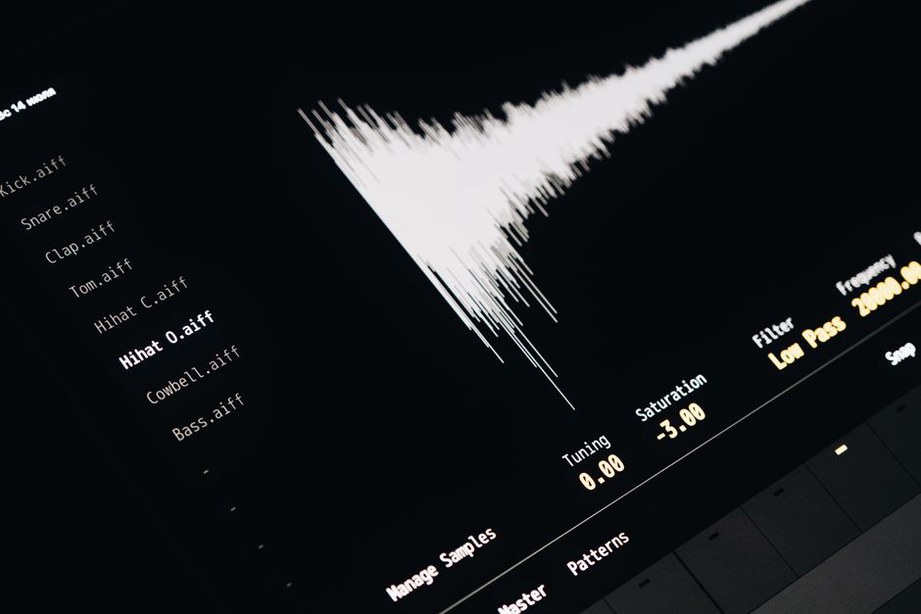
A pause might divide phrases, let resonance decay, expose the recording environment, or break the expectation that a sound will continue. A complete digital mute differs from a quiet-room recording: the mute removes the signal, while the room retains air movement, distant activity, and microphone noise. It may take a second listen to catch the difference. One pause feels sealed; the other remains inhabited.
Space also changes the apparent size of a sound. A brief click after a dense texture might go unnoticed. After a long, low-level interval, the same click has an unmistakable attack. Its level has not risen; the listener’s reference point has shifted. Sparse music can feel sharply defined without being loud.
Nor is a long gap necessarily restful. If the previous event ended without a clear cadence, waiting for the next one can be uneasy. A sustained wash might feel steadier. Rather than calling either passage “calming,” listen for what happens to expectation: does the music encourage prediction, hold it back, or draw your attention to the room?
Room tone is not an empty track
Field recordings make the distinction plain. Between identifiable sounds, you may hear distant traffic, electrical hum, insects, wind against a microphone, or the acoustics of an enclosed space. Nothing has to dominate for a place to remain audible. Our discussion of acoustic ecology in Japan and what field recordings leave in considers how those less conspicuous layers affect what we hear in a recorded environment.
Recorded quiet is selective. Microphone placement, gain, filtering, and editing determine which faint sounds survive. A close microphone can magnify a tiny movement while excluding its wider setting; a distant one may preserve the setting but soften the movement. Neither recording offers unmediated silence.
How composers build a sense of suspension
Literal gaps are only one way to make time feel suspended. A composer might limit attacks, keep pitches within a narrow range, or alter a texture so gradually that no single transition draws attention. None of these choices guarantees a particular mood.
- Long decay: A struck or plucked sound fades before another begins, so its tail becomes part of the phrase.
- Slow modulation: Pitch, filtering, or loudness shifts steadily; the change becomes clear only across a longer span.
- Restrained entrances: New sounds arrive without a forceful attack, maintaining continuity as the texture grows denser.
- Uneven spacing: Similar events recur at changing intervals, drawing attention to the time between them.
Drone shows why stillness need not mean sparseness. Several sustained tones can fill the frequency spectrum without much conventional rhythmic activity. Overlapping harmonics and beating provide motion within the sound, which a listener can follow without waiting for a melody to advance. An electroacoustic piece might take the opposite approach, using isolated sounds and hard cuts so that every interval feels exposed rather than immersive. Both can resist the pull of a beat or chord sequence.
Japanese ambient and experimental music has no single formula for restraint. Synthesizers, acoustic instruments, tape, and location recordings can each leave room for decay and low-level detail in different ways. To call that room an inherent national aesthetic would flatten the choices made in each recording. Better to ask what keeps sounding, what stops, and what the stop reveals.

The recording medium leaves its own motion
On cassette, a nominally quiet passage may still carry tape hiss, mechanical irregularity, or a faint trace of the recording chain. Those sounds can link a pause to the rest of the piece. A digital file may have a much lower noise floor yet still retain room tone or equipment noise. Neither format is inherently more intimate. What matters is what was recorded, how it was mastered, and how loudly it is played back.
Noise reduction can change those relationships. It may reveal a delicate event by removing hiss, but heavy processing can also take away the soft tail that connects it to the next sound. During a fade, listen for whether the ambience falls away smoothly or seems to shut off around the foreground sound. That boundary affects the pacing, intentionally or otherwise.
The listening setup can reshape a pause as well. Automatic volume normalization, abrupt transitions between files, and a phone speaker’s limited bass response all change its weight. Casual listening is no less valid for that. It does help explain why a passage seems empty in one setting and has a distinct contour in another.
A practical way to hear the gaps
Choose a short section with few obvious events. Listen twice at a comfortable, unchanged volume. First follow the entrances and endings: when does each sound begin, and does it stop sharply or decay? On the second pass, attend to what persists underneath. Do not turn the level up recklessly to chase faint details; a quiet passage may lead into a much louder event.
Three observations can keep the exercise precise:
- Check whether an interval contains room tone, electronic noise, reverberation, or a true cut to silence.
- Compare the first few seconds of a sustained sound with its later portion. Listen for beating, fading harmonics, or slight changes in pitch.
- Notice whether the next entrance arrives when you expect it, early, or late.
Headphones may bring out low-level details; speakers make the room’s contribution harder to ignore. Neither gives a definitive reading. If a gap feels different on each, try to name the sound responsible. Then, after a sustained tone ends, stay with its decay. The moment you can no longer separate it from the room may be hard to pin down—and worth hearing again.