
A cicada recording can sound like an unbroken wall of tone until a vehicle passes and gives away the microphone’s position. The insect dominates the file, but the road is part of the same place. Remove it and the recording tells a different story. Decisions about what stays, what gets edited out, and what counts as background sit at the heart of acoustic ecology in Japan, where recordings of living environments often circulate alongside ambient, drone, and electroacoustic music.
Acoustic ecology concerns the relationships among sound, listeners, organisms, and their surroundings. A field recording can help examine those relationships, but it is never a transparent copy of nature. Microphone direction, recording time, weather, human activity, and playback level all shape what can be heard. A musician might stretch a bird call or layer water against electronics; the same question still applies: what produced these sounds, and how much of that context remains in the finished work?
Nature is not a separate sound channel
Japan’s coastal margins, mountain forests, rivers, wetlands, farmland, and densely inhabited areas offer markedly different listening conditions. Dividing recordings into “natural” and “human” soundscapes can still obscure how a place works. A stream may run near a road; frogs may call beside managed rice fields; birds in an urban park may be heard against traffic. A title such as “forest” or “rain” can hide those relationships.
Season matters, but it does not supply a fixed soundtrack. Insect activity, bird vocalizations, water flow, and land use vary across the year and by region. Cicadas do not sound the same everywhere in Japan, and one dawn recording cannot stand for an entire season. Temperature, recent rain, and time of day may tell a listener more than an evocative place name. Even quiet depends on where the microphone sits: wind can mask small calls, while a sheltered recorder may miss weather that someone standing nearby would plainly hear.
Who gets to call a sound pleasant or intrusive? An insect chorus might make compelling drone material and be exhausting at close range. Distant road noise may frustrate someone seeking an untouched natural scene, yet help another listener understand where the recording was made. That tension is more revealing than a simple divide between purity and noise.
How a recording changes what can be heard
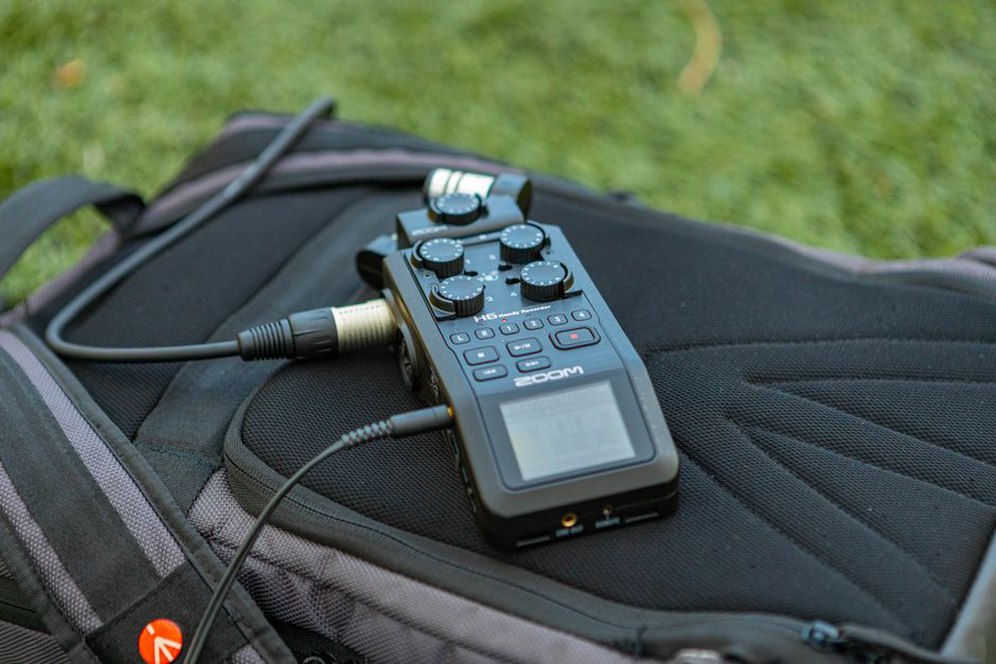
Microphone placement is an editorial decision made before any editing begins. A close microphone can isolate one insect or a trickle of water. A wider stereo arrangement conveys more distance and movement, but may pick up wind or handling noise. Hydrophones capture underwater vibrations that a person on the bank cannot hear directly; contact microphones can give a resonant surface unusual prominence. Each tool opens up part of an environment without offering a neutral account of it.
Keep the conditions audible—or document them
When a recording is meant to document a place, a few notes make it far more useful:
- Place and habitat: describe the setting at a responsible level of precision—a managed pond or wooded stream, for instance—rather than assuming a place name explains its acoustics.
- Time and conditions: note the date, approximate time, weather, and recent rain or strong wind that affected the sound.
- Recording position: say whether the microphone was near the ground, beside water, under shelter, or aimed at a particular source.
- Processing: disclose filtering, noise reduction, edits, speed changes, or added layers if the result is presented as documentary audio.
There are limits to useful precision. Exact coordinates for a sensitive nesting site could create risks that outweigh their value to listeners. A general habitat description may be enough, particularly for a musical work rather than a scientific record. Consent matters as well: an audible conversation raises different questions from distant, unidentifiable activity. Recording in public does not automatically justify releasing every sound captured there.
Wind protection, a stable mount, and a test recording can prevent common technical failures. Aggressive cleanup, though, can strip away evidence with the unwanted noise. A high-pass filter may reduce microphone rumble while thinning a river’s low frequencies; noise reduction can leave watery digital artifacts between calls. Keeping an unprocessed original lets a recordist make a musical version without losing the source.
When ecological listening becomes composition
Environmental recordings enter experimental music in ways that go well beyond playback. Loop a short excerpt and an irregular insect pulse becomes a steady rhythm. Slow a call and its roughness may come forward as its familiar identity recedes. Layer recordings made at different times and the result can sound coherent without representing any single event. These choices are not inherently deceptive. What matters is whether a work presents itself as documentation, composition, or something between the two.
Musician and sound artist Akio Suzuki offers one point of reference: listening to sounding places is itself part of his artistic practice. His work is no template for all Japanese environmental recording, but it does challenge the assumption that capturing more audio means hearing more. Yosi Horikawa’s field-recording-based work takes a different approach, arranging everyday sounds so that spatial movement and rhythmic detail become conspicuous. Neither approach makes “nature” a single genre.
Ambient and drone pieces can linger on changes a quick field visit might miss: a gradual shift in insect density, the interval between calls, the persistent low-frequency movement of water. Electroacoustic processing can bring forward frequencies obscured in an untreated recording, though it can also detach a sound from its source. For more on that ambiguity, Listening to Japanese Electroacoustic Music: Sound, Mediation, and Uncertainty considers how processing complicates what a sound seems to represent.
Listen for relationships, not just attractive sounds
Rather than trying to identify every source in an environmental piece, follow three kinds of change. Notice the foreground: a nearby call, a splash, a branch brushing the microphone. Listen beneath it for the continuous bed of insects, water, distant traffic, or electrical hum. Then pay attention to interruptions—a train, footsteps, a sudden lull, an animal entering audible range. The timing and relative levels of these sounds can tell you more about the recording than a species list.
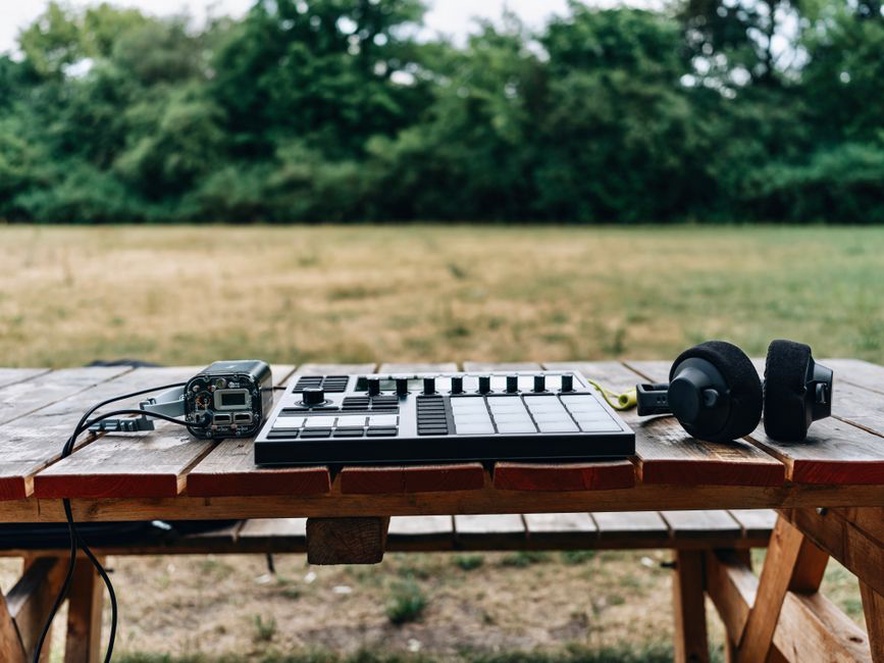
Headphones help expose quiet details, but loud playback can distort their scale. Amplify a faint background insect and it may become overwhelming; close-recorded water may seem like a much larger stream. Speakers show how the recording fills a room, while headphones make small spatial cues easier to inspect. Neither puts you at the original listening position. If you suspect an edit, listen to the ambient bed on either side of it: an abrupt change may reveal a join even when the foreground sounds continuous.
For collectors, release notes can matter as much as a named location. If a piece combines several takes, it should not be treated as one continuous environmental document. An unedited recording, meanwhile, may preserve duration but leave its circumstances obscure. A cassette transfer adds another layer: hiss, wear, and playback speed can change delicate high-frequency sounds. Those traces belong to the copy’s history, not necessarily to the habitat.
Before calling a passage a dawn chorus, check whether the recording or its notes establish the time. If they do not, stay with what you can hear: overlapping calls, a steady low background, one closer sound that enters briefly. It is a narrower description, but it does not invent a morning around the tape.