
Electroacoustic work begins when a room tone, bowed object, electrical hum, or damaged speaker stops being unwanted residue and becomes material: something with grain, shape, and duration. In Japan, this way of working has crossed paths with improvised music, sound art, experimental composition, noise, and small-scale recording cultures. There is no single national sound here, nor a neat historical line. Microphones, mixing desks, contact pickups, tape, laptops, and physical spaces keep altering one another.
The term electroacoustic is broad enough to be unhelpful if used loosely. It does not simply mean music made with electronics. More usefully, it describes work in which acoustic events and technological mediation cannot be separated: sound is captured, amplified, filtered, edited, replayed, or spatialized, and each stage changes what reaches the listener. A guitar through effects pedals may be electronic; it becomes electroacoustic in a fuller sense when pickup noise, speaker feedback, room response, and signal instability are treated as part of the piece.
From studio composition to unstable instruments
Japan’s postwar experimental music developed through institutional settings for electronic and tape-based composition as well as independent scenes with less formal infrastructure. Composer Toru Takemitsu worked with the Experimental Workshop (Jikken Kōbō), a multidisciplinary collective active in the 1950s that engaged with tape, electronic sound, performance, and visual art. Its importance is not that it supplied a blueprint for later underground music. Rather, it showed that recorded sound, reproduction technology, and collaboration could themselves become compositional material.
During the 1960s and 1970s, experimental activity spread across composition, free improvisation, theatre, and visual art. The line between composed electronic music and improvised sound became less fixed. Musicians were not simply using machines to generate tones; they were testing what happened when amplification exposed a surface, a tape loop failed to repeat cleanly, or a live signal fed back through an unpredictable chain of equipment.
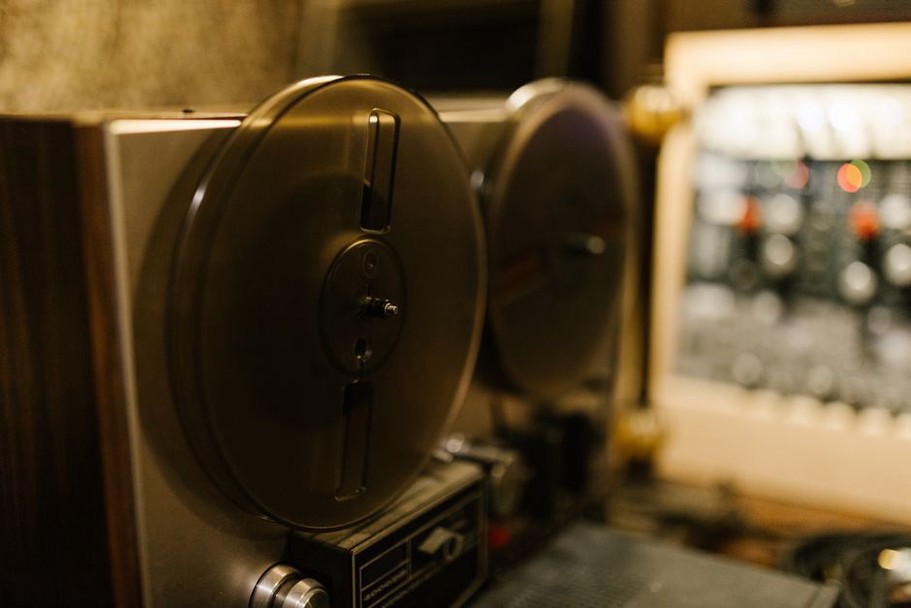
Takehisa Kosugi remains central to this broader history. Associated with the Group Ongaku collective and later Fluxus, Kosugi developed works concerned with listening, indeterminacy, transmission, and sound’s behavior in space. His practice is not an origin story for noise or ambient music. Its lasting value is methodological: it shifts attention away from virtuoso control and toward procedures, environments, and conditions in which sound can exceed the performer’s initial intention.
Feedback as a relationship, not an effect
In popular music, feedback often arrives as a dramatic accent. In experimental settings, it can operate as a system. Microphone placement, gain, speaker position, resonant frequencies, cable condition, and room acoustics all take part. A performer can steer that system without fully controlling it. This tension between intervention and response is one reason electroacoustic music can feel so physical even when its source remains hard to identify.
Artists associated with Japanese noise have pushed this relationship to an extreme, though noise is not synonymous with electroacoustic practice. Merzbow, the long-running project of Masami Akita, has used extensive processing and dense layers of sound across many formats and periods. Hijokaidan, formed in 1979, made live performance itself a volatile sound source, combining amplification, electronics, objects, and bodily action. These are high-intensity cases, but the same principle also appears in quieter work: technology can make the boundary between signal and interference audible.
A reliable entry point for basic context is Wikipedia’s overview of electroacoustic music, which distinguishes studio-based approaches from related electronic and acoustic practices. The category remains imperfect, particularly for artists whose work moves among composition, installation, improvisation, and performance art.
Small sound, close microphones
Some of the most consequential electroacoustic work happens at low volume. A contact microphone fixed to metal, wood, glass, or another resonant object does not record that object “faithfully.” It emphasizes vibration and mechanical detail while excluding much of the surrounding air. A cheap piezo pickup may exaggerate brittle high frequencies; a carefully placed condenser microphone can reveal tiny frictions, breathing, or reflected sound. These choices are not neutral. They set the scale at which the listener encounters an event.
Toshiya Tsunoda is closely associated with investigations of acoustic phenomena, including vibration, spatial reflection, and the unstable boundary between environmental and constructed sound. Rather than treating field recording as documentary proof of a place, this work can reveal what ordinary listening tends to miss: standing waves, pressure changes, resonances at boundaries, and the perceptual effects of microphone placement.
This helps distinguish electroacoustic listening from familiar “found sound” aesthetics. The point is not always to identify a train, factory, river, or street. It may be to hear how a microphone, recorder, surface, and listening space alter the source. Ventilation can become a study in periodicity; a resonant pipe can act like an instrument without being played in any conventional sense.
What to listen for in a recording
- Scale: Is the sound presented as a large environment or a magnified fragment of material?
- Mediation: Can you hear compression, distortion, edit seams, filtering, or re-amplification shaping the event?
- Spatial cues: Does the recording preserve distance and room reflection, or flatten them deliberately?
- Time: Are changes dramatic, or do they emerge through gradual shifts in texture and density?
- Source ambiguity: Does knowing the source improve the experience, or does the piece depend on uncertainty?
These are practical questions, not academic ones. They can prevent a common listening mistake: taking sparse music for empty music. In a sustained, low-level piece, the significant event may be a faint beat frequency, a small shift in spectral brightness, or the point at which an outside sound enters the recording space.
Improvisation, objects, and the circuit
Japan’s free-improvisation networks have offered another route into electroacoustic practice. Musicians extend instruments with prepared surfaces, small motors, pickups, radios, effects units, or homemade devices. The aim is not merely to make an instrument sound unfamiliar. It is to build a responsive setup whose behavior changes with touch, pressure, feedback, and other performers.
Otomo Yoshihide is a key figure in this area, known for work involving turntables, guitar, electronics, improvisation, and composition. His use of turntables often draws attention to playback mechanics: records, cartridges, rotation, surface noise, and amplification become active parts of an instrument rather than transparent delivery systems. That complicates the divide between recorded media and live performance. A record can be source material, object, score, and resistant machine at once.
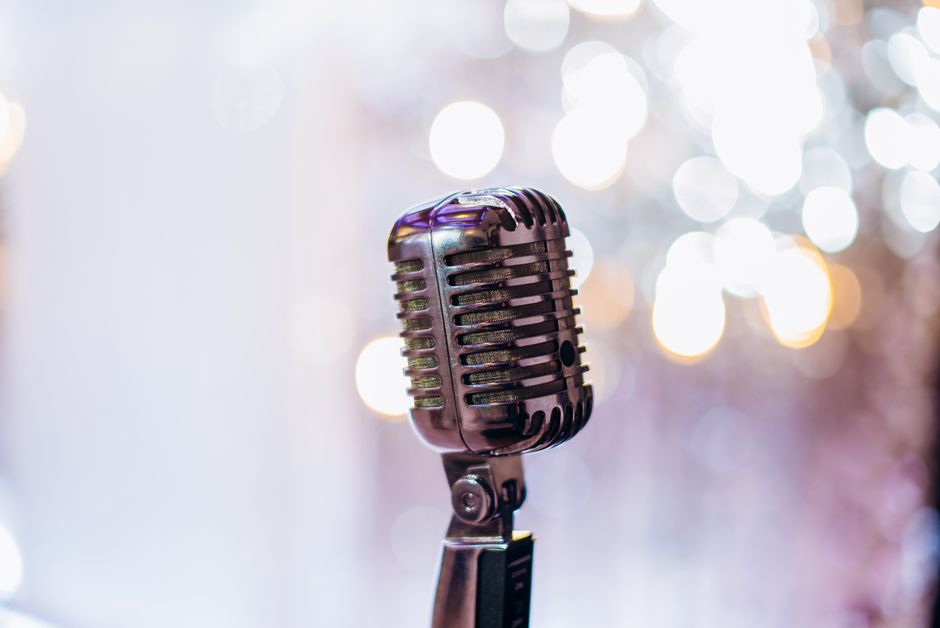
The electroacoustic element in such performances often depends on fragility. Loose connections, overloaded inputs, low batteries, poorly shielded cables, and resonant tables can all become audible. This does not mean every technical fault is artistically useful. It means that performers may decide not to erase every irregularity, because an irregularity can expose the material conditions under which sound is produced.
| Tool or condition | What it changes | Listening result |
|---|---|---|
| Contact microphone | Captures surface vibration | Magnified mechanical detail and reduced environmental depth |
| Feedback loop | Links microphone, amplifier, speaker, and room | Pitch drift, instability, and room-specific resonance |
| Re-amplification | Plays recorded sound back into a physical space | Recorded material gains new reflections and coloration |
| Tape manipulation | Alters speed, direction, continuity, or repetition | Memory-like loops, pitch shifts, and audible wear |
| Small speaker or transducer | Transfers sound into an object or surface | Object resonance becomes part of the signal |
Documentation without false certainty
Experimental releases can be difficult to trace. They may circulate through limited physical editions, event tables, personal exchanges, defunct web pages, or incomplete digital uploads. That makes discographical caution essential. A filename, scan, or repost may preserve evidence of an artifact without retaining enough context to identify it securely. The blog’s investigation of the orphaned sludge008.cu file and its place in Japanese noise archives shows how a dead or obscure format can become an archival problem rather than a dependable catalogue record.
For listeners and collectors, basic documentation is part of responsible engagement. Record the exact artist credit, title, format, label name as printed, date of acquisition, source, and any catalogue number. Keep scans or photographs of covers and inserts, but separate what appears on the object from later assumptions. Do not turn uncertainty into a confident genre label, release date, or attribution simply because a file has circulated widely.
This is especially important in electroacoustic work, where recording method and playback medium may matter artistically. A cassette’s hiss, an acetate’s surface noise, a CD-R’s sequencing, or a degraded digital transfer may be part of how a work reached listeners. None of these should automatically be treated as the artist’s intended sound.
A practical listening setup
Electroacoustic music does not require expensive equipment, but it benefits from repeatable conditions. Begin at a moderate volume in a quiet room. Headphones reveal fine detail, edits, and channel movement; speakers reveal bass interaction, air, and the room’s contribution. If possible, use both on separate listens rather than treating either as definitive.
- Play the piece once without trying to identify every source.
- On a second pass, note changes in density, pitch range, and apparent distance.
- Mark points where acoustic sound seems to become processed sound, or the reverse.
- Check whether small details remain audible at lower volume; if they disappear, raise the level only enough to recover them.
- Write down what you hear before consulting notes, credits, or track descriptions.
That final step matters because titles and equipment lists can narrow perception too soon. A work described as a field recording may be heavily edited; a piece made with electronics may retain audible room tone; an apparently abstract texture may be a vibrating object heard through a pickup. Keep the first listening note. Its uncertainty is evidence, not a flaw to be corrected.