
A sustained tone can change character without changing pitch. In a recording by Japanese experimental musician Sachiko M, a high sine wave may seem almost featureless until a second tone enters. Then the ear catches a pulse—beating produced by the interaction of close frequencies. What you hear depends on the tones and their levels, but also on the room and where you sit. “Smooth” misses those shifting relationships; texture gets closer to them.
Sonic texture describes how sounds behave together: whether an edge feels grainy or continuous, layers merge, or a surface holds steady before breaking apart. These are audible qualities, not necessarily literal ones. A noise recording contains no sand because it sounds gritty; “grit” names details changing too quickly for the ear to separate easily. Attention to those details runs through Japanese noise, drone, electroacoustic music, field recording, and work that fits none of those labels neatly.
What the ear means by rough, dense, or thin
Texture is not another word for loudness. A quiet passage can be crowded with clicks, overlapping hums, and reverberant tails. A very loud one can be spare if it holds a single steady tone. Distortion is no sure sign of roughness, either: a clipped signal might make a continuous wall, while a clean recording of a small rattling object sounds jagged and unstable.
It helps to pull apart qualities that everyday descriptions tend to bundle together:
- Grain: how easily the ear can pick out small events within a sound, such as crackles, pulses, or rapidly repeated attacks.
- Density: how many events or layers compete for attention at once.
- Edge: whether a sound begins and ends sharply or arrives and fades gradually.
- Continuity: whether the surface holds together, flickers, or is punctured by gaps.
- Depth: whether sounds seem near, distant, enclosed, or spread across a space.
These are listening distinctions, not measurements with universal thresholds. A burst that feels dense on headphones may reveal separate components through speakers. Naming those components tells us more than calling a whole track “harsh,” particularly when its sound changes minute by minute.
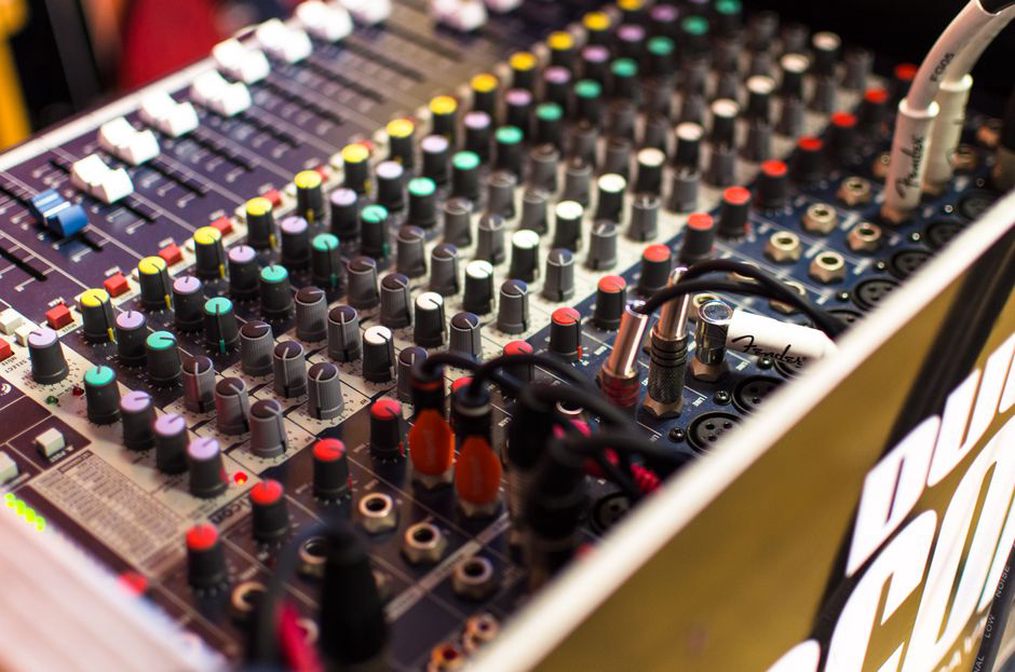
When layers become a surface
Merzbow’s recordings offer a useful case, though no single track can stand for Japanese noise as a whole. In especially saturated passages, feedback, distortion, and repeated gestures can fuse into a broad band of sound. Listen past the first impression of a wall: a low rumble may hold steady while a brighter scrape crosses it, or a brief cut may expose a quieter layer underneath. The surface and the events moving within it are worth hearing separately.
Hijokaidan’s long-running live practice presents another challenge. With multiple performers and amplified sound, individual sources can become hard to identify. That uncertainty is part of the experience; it does not make the music random or formless. Follow a layer as it thickens, an instrument’s attack as it comes through, or an apparent pause that gives the next burst more weight. Treating all Japanese noise as maximum-volume saturation misses the work done by interruption and contrast. For a look at a different setting, The Unique Soundscape of Japanese Noise Festivals considers festival sound rather than a single fixed noise aesthetic.
Grain versus gesture
A gesture is an action with a shape you can follow: a scrape accelerates, a tone rises, a switch cuts the signal. Grain is the smaller fluctuation within it. A feedback sweep can be one gesture even as its surface shivers with tiny changes. That difference helps explain why two performances using similarly abrasive sounds may feel unlike each other. One follows broad arcs; the other keeps the ear on granular instability. At high levels, protect your hearing. Turning up the volume is no test of understanding: loudness can hide detail as readily as reveal it.
The apparent stillness of sustained sound
Drone and minimal electronic work draw attention to slower, smaller differences. In Sachiko M’s sine-wave music, the absence of familiar instrumental grain can make the interaction between tones especially noticeable. Beating may seem to move through a room, but a fluctuation you hear is not necessarily a pulse on the recording. Playback equipment, speaker position, and reflections affect what reaches each ear. It is worth distinguishing the steady tones from the changing pattern heard around them.
Ryoji Ikeda’s work often puts precise electronic tones and clicks alongside abrupt changes of level. Calling the effect “digital” says little about how it works: hard-edged attacks meet sustained signals, and sparse intervals change the force of the next event. Texture and rhythm can blur here. Repeated clicks register first as separate beats, then as a near-continuous buzz when they come fast enough.
Ambient music has its own fine detail. Hiroshi Yoshimura’s quieter recordings let notes decay and overlap without pushing each one forward. Hearing where one decay meets the next is more useful than calling the result calm. Sonic Minimalism in Japanese Ambient Music: Listening for Detail takes up that smaller-scale listening; a restrained surface can be as carefully organized as a crowded one.
Recorded objects and uncertain sources
Electroacoustic music can make an ordinary sound hard to recognize without making its behavior any less important. Record a metal object, then slow or filter the sound, and an impact may stretch into a long resonant band. You may no longer know what was struck, but you can still hear a sharp onset followed by decay. Identifying the source and describing its texture are different tasks; the first does not automatically explain the sound’s place in a composition.
Toshimaru Nakamura’s no-input mixing board is an instrument whose sound comes from its own signal paths rather than a conventional external input. Feedback within the system can produce tones, hiss, and abrupt changes. A small adjustment can shift the balance between a sustained layer and an unstable edge. For the basic setup, the no-input mixing board overview is a starting point, though it cannot tell you how a particular performer handles it.
Field recordings bring another kind of ambiguity. Rain recorded up close can resemble broadband hiss; a distant motor can settle into a drone. Location matters, but without documentation, claiming to hear a particular street or place risks inventing a story for the sound. Start with what is audible: steady background activity, isolated foreground events, or a shift in acoustic distance. Those features remain even when the place is unknown.
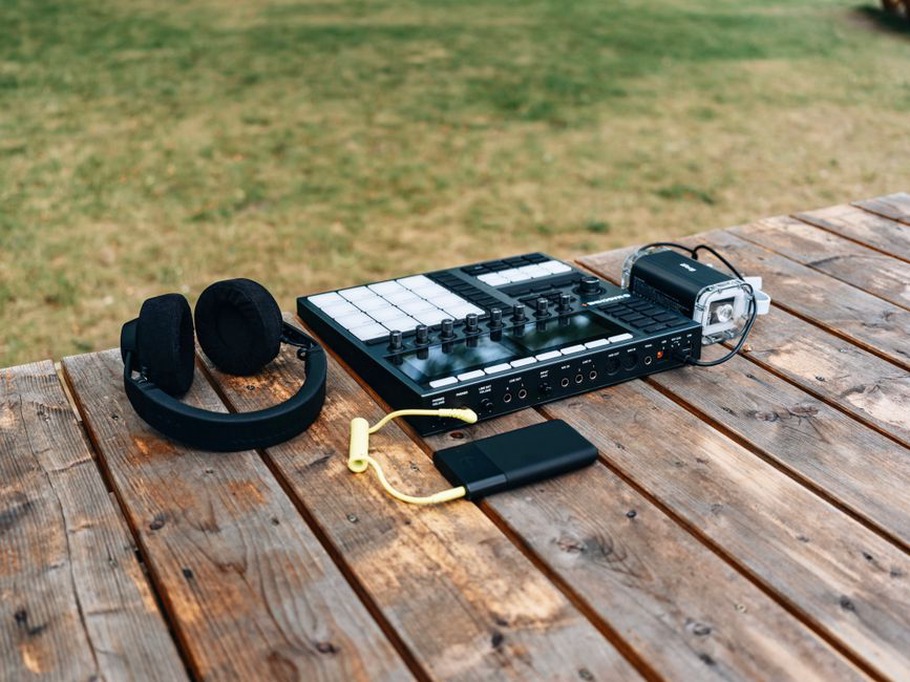
Texture survives imperfectly across formats
The medium is not a transparent container. Cassette hiss may sit beside a quiet electronic tone; dropouts can make a continuous layer flicker. A worn tape can also add artifacts that were not on an earlier copy. None of this means every imperfection was intended by the musician, or that the noisier copy is more authentic. For collectors and listeners, the question is whether a detail belongs to the work, to a particular release, or to damage that came later.
Digital transfers have their own pitfalls. Heavy noise reduction can strip away the faint fluctuations that give a low-level passage its grain. Normalizing a file may make quiet sounds easier to hear, but it cannot recover information already lost. Speakers may bring out bass movement that small headphones barely reproduce; headphones may make tiny left-right differences easier to place. Comparing versions helps when their provenance is reasonably clear. Otherwise, report what differs without assigning it confidently to the artist.
A close-listening method for one passage
Pick thirty to sixty seconds rather than trying to classify a whole release at once. Keep the volume comfortable. On three listens, give yourself a different task each time:
- Mark the largest changes: entrances, cuts, swells, and silences.
- Follow one layer through them. Does it remain steady, pulse, break up, or disappear beneath another sound?
- Listen to its edges. Are the attacks sharp? Does a tail decay smoothly or stop abruptly?
Then write one sentence about how the layers relate instead of piling up adjectives. “A low tone continues while irregular clicks grow closer together, then stop” gives someone else something to check. “Dark, intense, and atmospheric” records a reaction but says little about the sound’s construction. You need not guess the equipment or name an undocumented recording site.
Finally, replay the passage at the same comfortable level through headphones and speakers. If a faint pulse appears only on speakers, note the playback setup alongside what you heard. The room may be contributing to that pulse; it need not be another layer in the recording.