
A contact microphone clipped to a fence does not reveal some hidden, untouched vibration. It records a chain of events: metal under tension, traffic travelling through the ground, cable handling, preamp gain, and the recorder’s limits. Japanese sound art is often most compelling when it leaves that chain audible instead of pretending that technology can deliver nature unaltered.
That is why this category brings together practices often kept apart: composed electronic music, environmental recording, installation, performance, instrument building, radio work, and experiments with everyday media devices. The useful question is not whether a piece is natural or technological. It is how microphones, tape, speakers, circuitry, room acoustics, weather, architecture, and bodies rearrange one another into a way of listening.
Nature is not the opposite of the apparatus
In sound work, “nature” may refer to woodland, a coastline, a river, insects, wind, or rain. It can also describe the unruly behaviour of materials: tape shedding particles, a speaker cabinet resonating, a cheap oscillator drifting with temperature, feedback shifting as someone moves across a room. None of this exists outside mediation. Recording begins with choices: microphone position, what it excludes, duration, and whether the result is cut, layered, slowed, or replayed.
This does not make environmental listening cynical. It makes it more precise. A recording of rain on a roof can preserve a relationship between precipitation, building material, interior space, microphone placement, and recording level. Its meaning may lie in that relationship, rather than in an imagined access to rain alone.
Japanese artists working with electronics and recorded environments have long treated mediation as material. Toru Takemitsu, for example, sustained an interest in sound, silence, and the Japanese garden without reducing them to decoration. His orchestral and electronic work established an important premise: close attention to an environment can shape composition without becoming a literal reproduction of scenery. A concise reference to his life and music is available in Encyclopaedia Britannica’s biography of Toru Takemitsu.
The later experimental field is not a single lineage so much as a set of overlapping methods. Some artists bring weather or wildlife recordings into studio montage. Others use live microphones so an installation changes with its site. Others make electronic sound whose apparent independence is unsettled by hum, vibration, acoustic reflection, or physical decay. The friction between control and contingency remains central.
Historical routes: studio composition, expanded instruments, and site
Japan’s postwar electronic-music institutions gave artists access to equipment and working conditions that were otherwise difficult to obtain: tape machines, oscillators, filters, editing facilities, and later computer systems. NHK’s Electronic Music Studio, founded in 1955, was a major centre for musique concrète and electronic composition. It enabled composers including Toshiro Mayuzumi, Minao Shibata, Joji Yuasa, and Toru Takemitsu to work with recorded and synthesized sound as compositional material.
This studio history matters to sound art because it foregrounded techniques that later moved beyond the concert work: cutting and splicing, altering recorded material, placing sound in space, and treating acoustic events as objects with texture and duration. Technology did not remove the world outside the studio. Tape made parts of it portable, repeatable, and available for recontextualization.
During the 1960s and 1970s, artists were also testing the boundaries between music, performance, visual art, and event-based practice. Takehisa Kosugi, associated with the group Ongaku and later Fluxus, developed works in which small physical conditions could become the work itself: sustained tones, objects, movement, chance, and altered hearing. The concern was not a fixed repertoire of sounds, but a changed relationship to space, attention, and agency.
That approach still helps explain installations and performances in which a technological system remains incomplete until a site activates it. A loudspeaker is never neutral. It directs sound, has its own frequency response, vibrates against the floor, and establishes a zone of listening. A microphone does not merely feed a recorder; it can enter a feedback system shaped by room geometry and gain. “Nature” enters through such practical conditions, including indoors.
Four ways technology can meet an environment
1. Recording as framing
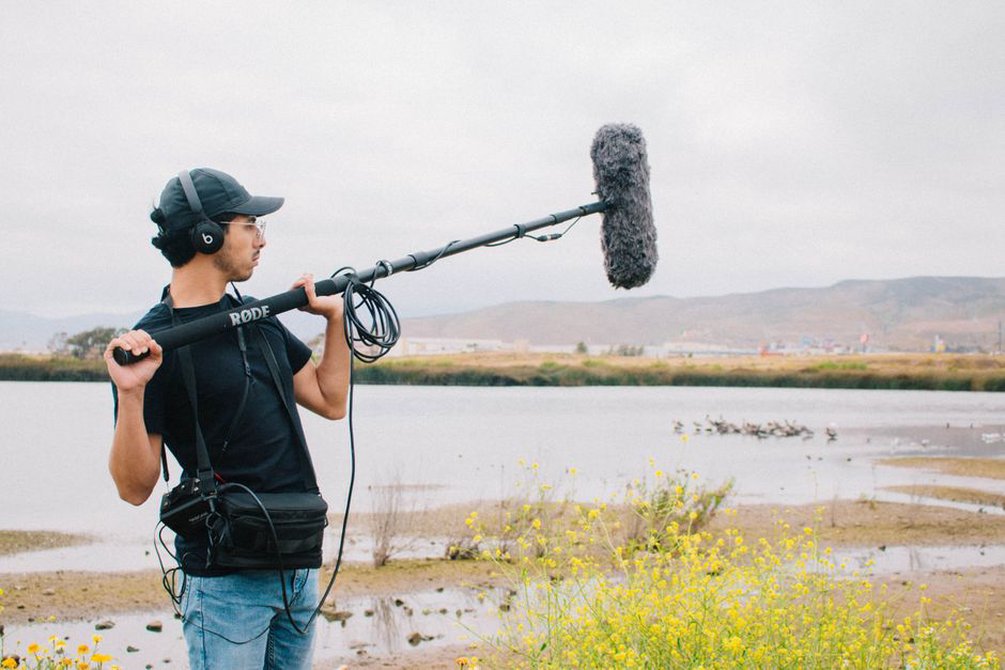
Field recording need not be documentary in a narrow sense. It can isolate details routine listening misses: intermittent drainage, a distant public-address system softened by fog, insects masking electrical infrastructure, or waves striking a concrete barrier. Framing has consequences, though. Directional microphones can privilege a distant source; omnidirectional microphones expose a broader acoustic field, along with more wind and handling noise. Automatic gain control may make the background swell and recede unnaturally. Editing can create continuity that never existed at the site.
Good documentation leaves enough information for a later listener to understand the conditions: date, a general location at an appropriate level of privacy, weather, microphone type, placement, level settings, and major edits. Where people are identifiable, where ritual or private activity is present, or where a location is ecologically sensitive, publication may be inappropriate even when recording was technically possible.
2. Feedback as ecology
Feedback is often treated as an aggressive electronic effect, yet it is a responsive system. Microphone position, speaker direction, cable length, room absorption, opening doors, and moving bodies all alter the loop. Performers can steer feedback in a live setting, but never fully command it. The room becomes a participant.
This is one reason Japanese noise and sound art should not be reduced to an opposition between “machine” and “organic” sound. Dense feedback can expose the physical character of an electrical setup. A nearly silent installation can bring ventilation, floor vibration, and passing traffic into focus. In both cases, infrastructure becomes audible as part of an environment rather than its interruption.
3. Electronics that drift, fail, and age
Analog circuits respond to voltage, heat, component tolerance, and unstable contacts. Tape responds to speed variation, head alignment, magnetic wear, and repeated handling. Digital systems bring other conditions: buffer errors, compression artifacts, automated processing, file corruption, and dependence on software. A material-minded practice may use these behaviours deliberately, but malfunction should not be romanticized. Failure matters only when its technical and contextual conditions can be heard or understood in the work.
Akio Suzuki’s work offers a clear model of expanded listening. Across performances, installations, and sound objects, he has used resonance, echo, movement, and site-specific acoustic properties to make listening a physical activity. A walk, a stone, a tube, or a carefully placed sound source can become an instrument when attention shifts toward its acoustic behaviour.
4. Playback as a new site
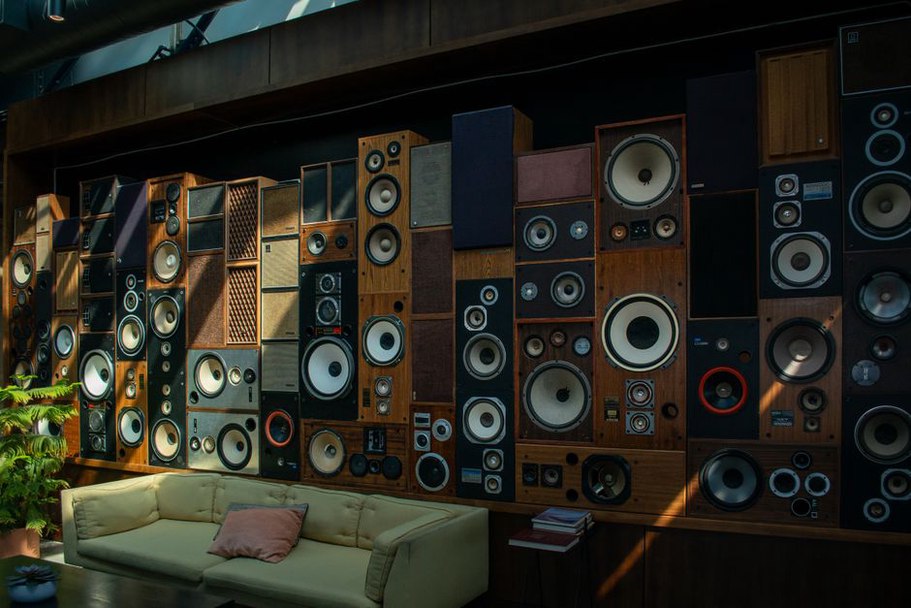
A recording enters another environment when it is played back. A cassette on a portable player in a kitchen, a multichannel installation in a gallery, and headphones on a train each create different spatial and social conditions. This matters especially for drone and low-frequency work: speaker placement and room modes can turn a restrained signal into pressure, while headphones may exchange bodily vibration for close internal detail.
For collectors and small labels, the object itself can retain part of this history. Cassette duplication, home-printed sleeves, handwritten notes, and uneven transfer quality may document how sound circulated through limited means. They are not aesthetic virtues by default. They are traces of a production chain and are best considered alongside the audio and any surviving documentation.
Listening without the pastoral shortcut
Writing about Japanese sound art often slips into pastoral language: purity, calm, timelessness, harmony. These terms flatten both the work and the places involved. A riverbank may contain traffic, flood-control infrastructure, tourism, construction, birds, and wind. A quiet electronic piece does not necessarily represent peace; a loud one does not necessarily represent violence. Listening should start with what has actually been organized, rather than an inherited mood assigned to a country or setting.
Concrete listening notes are more useful. Instead of writing “natural ambience meets digital texture,” identify audible operations: a loop restarts every forty seconds; a high tone shifts when a door opens; an unedited recording retains handling noise; filtered noise obscures a bird call; two speakers produce a beating pattern at the centre of a room. Such descriptions help separate sound design, environmental capture, acoustic accident, and compositional choice.
Precision also improves archival work. The task is not simply to preserve audio files, but to preserve uncertainty: incomplete credits, unclear dates, unlabelled formats, changing artist names, and unidentified source sounds. The blog’s piece on preserving the ephemeral sounds of Japanese noise music addresses why recordings, physical media, and contextual notes should be kept together where possible.
Practical methods for musicians and listeners
A modest setup is enough to test these relationships. The aim is not to imitate a setting in the studio, but to hear how each device alters an existing situation.
- Record the same place twice: once with the microphone close to a resonant object and once from several metres away. Label both takes with placement and gain information.
- Monitor before recording: use headphones to identify wind, cable movement, clothing friction, and distant machinery. Decide whether each is unwanted noise or useful context before pressing record.
- Change one variable at a time: when building a feedback patch, alter speaker angle before changing gain. This makes cause and effect easier to hear.
- Keep an unprocessed master: edits, equalization, and noise reduction may be useful, but preserving the original allows later comparison.
- Document playback: note the speakers, room, level, and placement used for a mix or installation. These details can matter as much as the source recording.
A compact documentation template
| Element | What to record | Why it matters |
|---|---|---|
| Site | General location, date, time, weather | Places acoustic events in a real set of conditions |
| Capture chain | Microphone, recorder, settings, placement | Clarifies what the apparatus contributed |
| Intervention | Edits, processing, looping, layering | Separates captured material from later composition |
| Playback | Format, speakers or headphones, room | Documents how the work becomes spatial again |
| Ethics | Consent, privacy, access restrictions, sensitive habitat | Prevents an archive from erasing its social conditions |
For a first exercise, place one speaker facing a wall and play a low, steady tone at a restrained level. Move a handheld recorder slowly along the wall, then compare that recording with the original signal. The shifting reflections, cancellations, and mechanical traces are not a representation of nature. They are a small, documentable environment made by material, architecture, and technology together.