
A feedback tone can arrive as an abrasive burst, settle into a sustained pitch, then recede until a tiny contact-microphone sound seems startlingly sharp against it. Is that passage noise, drone, or electroacoustic music? The answer may change before the piece ends, as sounds take on different roles.
“Hybrid” means little unless it describes a relationship between materials. A field recording laid beneath distortion might be no more than atmosphere. More interesting is what one method does to another: does amplification reveal detail in an environmental sound or wipe away its sense of location? Does repetition make a brief accident part of the composition? Japanese experimental music offers many ways to pose these questions, but no single national formula for answering them.
Listen for a change of function
Merzbow’s extensive work is often reduced to one word: noise. Yet a dense surface can direct attention as precisely as a sparse arrangement. Changes in frequency, duration, and layering can make a mass of sound feel continuous even as smaller events break through. Sachiko M’s sine-wave practice poses a different listening problem. A near-static tone may seem self-contained until the room, another performer, or the listener’s position changes how it is heard. Neither case needs a story about noise “becoming” ambient. The question is what a sound does in a particular recording or performance.
Improvisation can leave those roles unsettled. In performances by musicians associated with Tokyo’s Off Site and the onkyo scene, electronics, acoustic gestures, and near-silence could share the same fragile space. “Quiet music” misses the choices involved: whether to make a sound, how long to let it hang, and what another player might do in response. For a separate look at what quietness can do, Japanese Ambient Soundscapes: Environmental Music, Studio Space, and Close Listening examines environmental music and studio space without making softness a genre label.
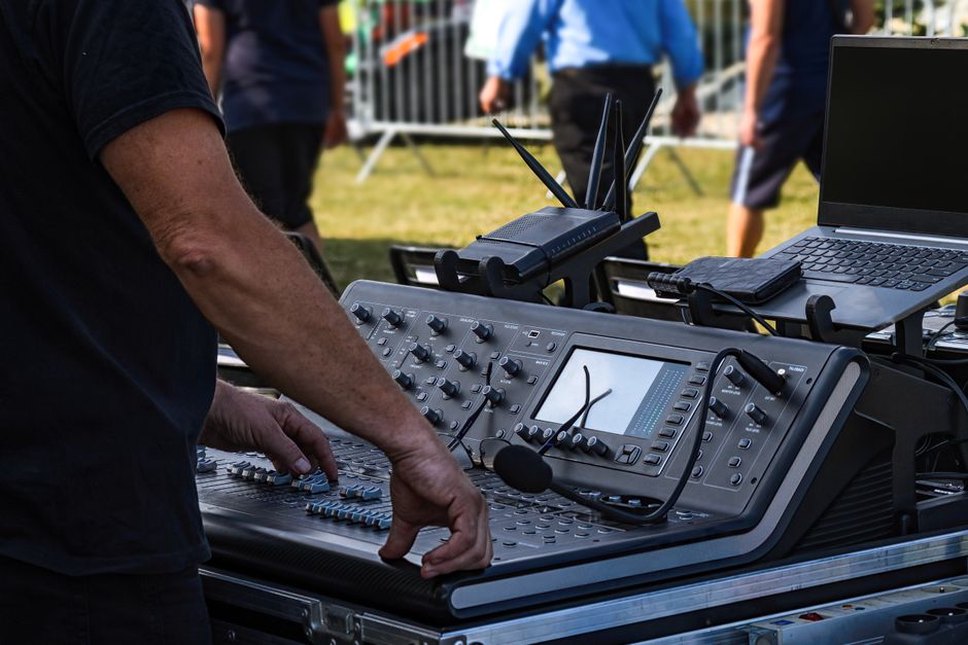
Three kinds of crossing
- Source crossing: an acoustic instrument, an electronic oscillator, and a recording of a place enter the same piece. Each may retain—or lose—some trace of its origin.
- Process crossing: feedback is edited like tape, a recording is manipulated live, or a played gesture becomes material for computer processing.
- Context crossing: a sound first heard as a live event changes when issued on cassette, installed in a room, or played through headphones.
These distinctions give us more to say than “genre-blending.” A sustained guitar note and a sustained oscillator might share a pitch and duration, yet behave differently under touch, amplification, and the room’s acoustics. The useful description names what they have in common without flattening the differences.
The medium changes the experiment
The experiment does not stop at the microphone. On cassette, saturation, hiss, and imperfect duplication may become audible parts of a release. Live, the same material might depend on speaker placement and a performer’s response to feedback. A digital file can retain a detailed edit while doing away with the physical break of turning a tape over. No format is automatically more authentic; each affects what can be composed and what a listener can examine.
This matters with independent releases, where documentation can be sparse. A title, cover, or label note may suggest a source or method, but it cannot prove what produced a sound. Texture alone rarely identifies a device either. Private collections sometimes preserve information missing from commercial listings, though they bring uncertainties of their own. The account of private archives of Japanese noise music takes up that archival problem in more detail.
Format shapes sequence, too. A cassette side can hold several short, contrasting experiments in one listening span; a long digital track may encourage uninterrupted immersion. When comparing editions, collectors need to check more than titles. Channel balance, running order, edits, and the length of a pause can all change how a transition lands. If the credits are unreliable, describe what you hear before attributing a technique or instrument to an artist.
Where place enters—and where it disappears
Field recordings put “hybrid” to the test. A recognizable station announcement carries a sense of place and public use. Filter it, slow it, or bury it beneath a drone, and that context may become hard to hear. This is more than a shift from “real world” to “abstract sound”: it affects who or what remains perceptible in the recording. An unprocessed voice can raise questions about consent and context, and heavy processing does not automatically resolve them.
Environmental sound can also keep its location audible while disrupting a composition’s apparent control. Wind against a microphone, a passing vehicle, or uneven room tone may resist tidy repetition. None is inherently more honest than studio sound. What matters is whether the piece allows that irregularity to shape its structure instead of using “place” as decoration.
A practical way to hear the seams
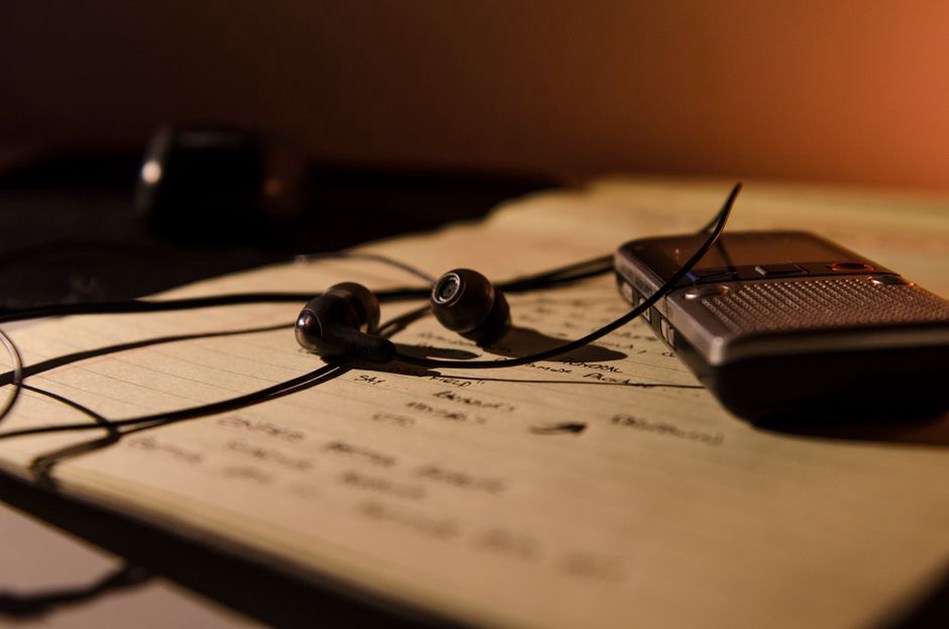
Start without guessing the equipment. Choose one track and mark three moments: the first audible change in texture, a point where a sound takes on a new purpose, and a transition whose source you cannot confidently identify. On the next pass, follow what persists behind the foreground.
- Note whether a sound continues, repeats, or enters for the first time. Similar timbres can play different structural roles.
- Listen for clues to space: room reflections, close-miked detail, stereo movement, or sounds that seem distant.
- Check the release credits before naming a source. Keep uncertain impressions as impressions.
There are limits to what any pass can establish. A performance video may show a device but not the full signal path. Headphones can reveal a faint layer lost on speakers; speakers may make a low-frequency interaction with the room easier to hear. Genre tags help you find recordings, but they say little about how those recordings work.
Try one short passage twice at the same volume. Follow the loudest element first; then listen for the faintest sound that carries on beneath it. If that quiet layer becomes the basis of the next section, what seemed like background has been shaping the piece all along.