
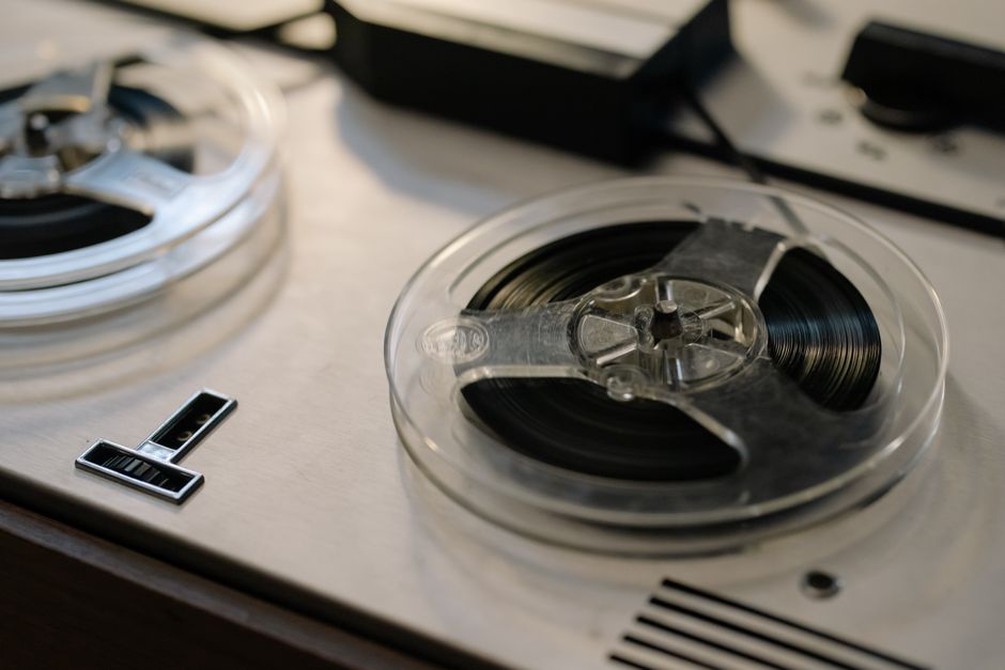
When Toshi Ichiyanagi returned to Japan from New York in the early 1960s, the tape recorder offered a different way to compose. A sound could be cut, repeated, slowed, or heard without any sight of what made it. Tape did not mark the beginning of Japanese electronic music, but it brought one of its recurring questions into focus: how much of a sound’s source should remain audible once a machine gets hold of it?
There is no tidy path here from laboratory equipment to laptops. Japanese composers, improvisers, noise artists, and ambient musicians have worked with sharply different ideas about control, often at the same time. A synthesizer might serve a notated composition, a pop arrangement, or an unstable live setup. A cassette might be a release format, a tool for reworking sound, or the affordable means of reaching a distant listener. What the equipment was used for tells us more than the date it appeared.
Before the portable studio: tape, institutions, and experiment
Electronic composition in Japan developed alongside postwar broadcasting and the circulation of avant-garde ideas across borders. NHK’s electronic music studio, established in Tokyo in 1955, gave composers access to equipment that was costly and difficult to assemble independently. Tape machines, oscillators, filters, and mixing facilities allowed them to build sounds beyond the reach of a conventional concert performance. Access still depended on institutional resources; the studio was hardly open to every musician who wanted to use it.
Tōru Takemitsu’s tape work Vocalism A·I, made with Shuntarō Tanikawa, is an early example built from recorded voices. Tape did not erase the human performer. It made the voice available for another kind of arrangement, in which recognizable speech could become texture or rhythm. Listening to early electronic work, it helps to ask less whether a sound is synthetic than what recording has done to an acoustic source.
The experimental network around Sōgetsu Art Center offered another meeting place for composers, visual artists, and performers. Ichiyanagi brought connections to John Cage and American experimental practice into his work in Japan, while figures including Takehisa Kosugi explored procedures that left room for chance and collective decisions. Their histories intersect, but they do not add up to a single “Japanese” sound. A broadcast studio, an art venue, and a musician’s improvised apparatus each set different limits on what could be made and heard.
Why the room and the reel both mattered
Tape let a composer revise in detail before playback. Live electronics made decisions—and failures—audible as they happened. Neither was inherently more adventurous. The practical difference was whether the work’s final shape was fixed on a recording or negotiated during performance. Later noise and electroacoustic musicians would return to that tension, even with smaller, cheaper machines.
Synthesizers enter several different histories
By the 1970s, synthesizers and electronic keyboards were no longer confined to specialist studios. Isao Tomita’s Snowflakes Are Dancing (1974) reworked Debussy with synthesizers and reached listeners beyond the experimental concert circuit. The result could sound effortless; making it was not. Early synthesizer recording could mean constructing individual parts through repeated overdubs, rather than calling up a finished orchestral preset.
Yellow Magic Orchestra released its self-titled debut in 1978 and Solid State Survivor in 1979. Haruomi Hosono, Ryuichi Sakamoto, and Yukihiro Takahashi put synthesizers and programmed rhythm at the center of widely circulated pop records. YMO belongs in any account of Japanese electronic music’s public visibility, but its success did not displace smaller experimental circuits. Related instruments could underpin tightly arranged songs or works built around duration, feedback, and uncertain outcomes.
It helps to distinguish the instrument from the system. A keyboard presents electronic sound as notes to play. A system might include oscillators, cables, pedals, microphones, speakers, and a room; their interactions matter as much as the first gesture. Musicians have moved between those approaches, so a photograph of the gear tells only part of the story.
When electronics stopped promising clean sound
Merzbow, the name adopted by Masami Akita, became closely associated with Japanese noise from the late 1970s onward. Across an extensive recording and performance practice, distortion, accumulation, and the physical pressure of sound came to the fore. But noise was never just an extreme setting on a machine. It could be shaped through density, interruption, frequency balance, or the moment a source ceased to be recognizable. Early cassette releases also circulated the work on a medium whose hiss and limited fidelity were part of the listening experience, whether sought out or not.
Other artists asked different things of electronics. The Incapacitants, formed by Toshiji Mikawa and Fumio Kosakai, developed forceful live work in which feedback and performer response matter greatly. Otomo Yoshihide has moved among turntables, improvisation, composition, and feedback, changing the role of a sound-producing device as he goes. Ryoji Ikeda’s later work takes another route, with precisely articulated pulses, tones, and digital processes. This is no ladder from rough analog noise to refined digital sound. These are competing choices about control, exposure, and whether a listener can locate a cause.
The “ghost” in electronic music is more useful as a listening idea than as a mystique. A recording preserves a performer’s decisions but can conceal the actions behind them. Feedback may seem to act on its own, though speaker position, gain, and movement govern its behavior. A digital tone can seem immaterial until its frequency and volume make the playback system impossible to ignore. Agency keeps shifting among musician, circuit, recording, room, and listener.
The cassette as a working part of the circuit
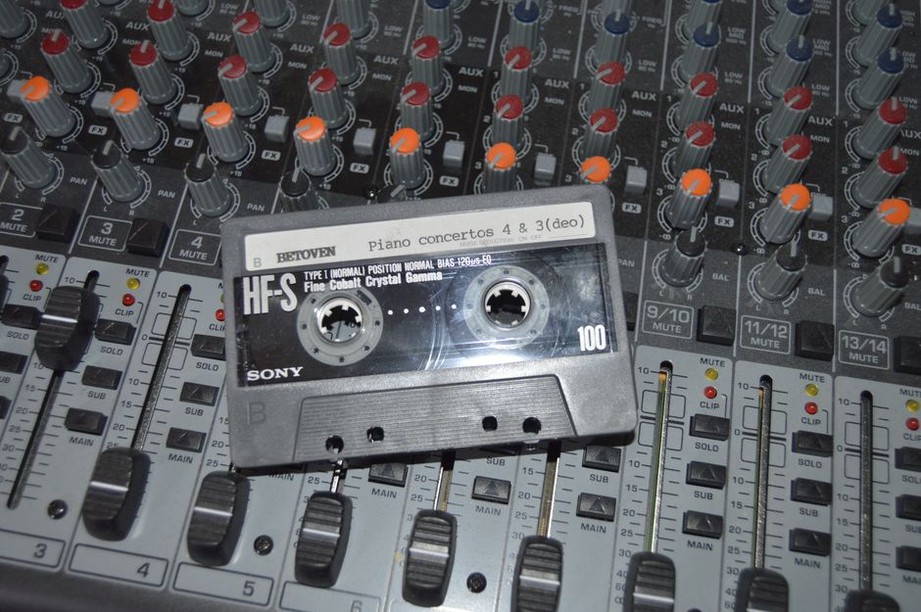
Small-run tapes lowered some barriers to releasing and exchanging difficult music; they did not all sound alike. A cassette could carry a finished studio piece, document a performance, or supply material for copying and reworking. Successive dubs could lose high frequencies and pick up noise. The format also asked listeners to turn the object over at a particular point. None of this was automatically an artistic intention: a musician or label might use those conditions, tolerate them, or try to work around them.
Distribution mattered just as much. Mail exchange, specialist shops, independent labels, and later online communities carried recordings beyond the places where they were made. A cover and its accompanying notes might be a listener’s only evidence of who played or how a tape was recorded. Collectors have good reason to separate documented facts from guesses. For musicians, the lesson is practical: capturing a recording is one task; getting it to another listener is another. That work behind the routes is examined further in [DIY infrastructure in Japanese ambient music].
Ambient music complicates the idea of progress
Histories of electronic music often privilege records that are louder, faster, or more technically intricate. Japanese ambient and environmental music calls that measure into question. Hiroshi Yoshimura’s Music for Nine Post Cards (1982) puts modest means and recurring melodic figures at the center of the work. Midori Takada’s Through the Looking Glass (1983) uses percussion and repetition in ways that resist a neat division between electronic and acoustic practice. Neither album needs a story about escape from urban life to account for its attention to pace, placement, and timbre.
Haruhiko Shono’s Watering a Flower (1984), made for a shop environment, raises a different question: what happens when music shares space with other activity? Playback level, duration, and partial attention become part of its circumstances. Close headphone listening may uncover details its original setting did not foreground, but neither encounter settles what the work is. Reissues and streaming have brought some environmental recordings to new audiences while separating them from the spaces and purposes that shaped them.
Later artists have tested the line between ambient continuity and audible disruption. Chihei Hatakeyama’s guitar-based drones rely on layering, processing, and slow change rather than an obvious succession of electronic events. The story is not one of “real” instruments giving way to synthetic ones. Recording and amplification have widened the ways an instrumental sound can be rearranged.
Digital tools changed access, not the underlying questions
Affordable computers and audio software made editing, multitracking, and distribution possible without a broadcast studio. One machine can now bring together field recordings, synthesis, acoustic instruments, and software processing. Editing can be more exact, versions can multiply, and a release may circulate without a physical edition. None of that guarantees a distinctive piece. The older questions persist: which sounds keep something of their origin, which lose it, and how is the result meant to be heard?
Field recordings make the continuity plain. A microphone can document a place, but selection, framing, and amplification turn that document into a constructed listening situation. A brief recording of ventilation, for example, could remain recognizable, become a low drone, or supply a nearly unidentifiable texture. Editing and context make the difference, not whether the file was recorded digitally. An account that treats contemporary electronic music as purely software-made misses the microphones, speakers, surfaces, and rooms in between.
For listeners tracing these histories, a few direct comparisons can reveal more than chronology alone:
- Locate the source. Does a voice, instrument, or recorded environment remain identifiable after processing?
- Follow the decisions. Does the piece sound assembled through edits, or do changes seem to respond to live conditions?
- Notice the playback format. Compare how tape noise, a digital master, or a room recording affects the edges and scale of a sound.
- Check the setting. A studio composition, installation, cassette exchange, and live set each ask for a different kind of attention.
These are comparisons, not tests of authenticity. Releases rarely document every piece of equipment or every production decision, and a passage that sounds live may have been carefully edited. When the evidence is thin, keep what you can hear separate from your account of how it might have been made.
What the machines leave behind
Preservation is part of electronic music’s history. Tape deteriorates; obscure cassette editions may survive without reliable notes; software and digital storage systems change. Even when the recording survives intact, noise reduction, equalization, or new track divisions can alter how a transfer presents it. A reissue gives us access, not a transparent view of an earlier listening situation.
If two versions of a work are available, compare their first thirty seconds at matched volume. Listen for hiss before the first intended sound, the decay after a loud event, or a gap where a cassette side or track boundary once fell. Those differences do not, by themselves, identify the better version. They tell you where the music meets the format carrying it.