
A home-recorded track can be quiet without being clean. Leave a microphone open while moving a cable, and it may catch the connector’s crackle alongside the sound you meant to record. On an independent release, that crackle might be removed, buried, or left in place. Leaving it does not prove the musician lacked better equipment. It may bring the conditions of production into the music.
In Japan’s experimental underground, “DIY” covers several kinds of control: recording without a conventional studio, deciding what to edit, preparing a physical edition, and getting it to listeners. None produces a particular sound. Dense noise, a nearly motionless drone, and a small electroacoustic piece can all be self-produced without revealing that process in the same way. Rather than asking whether a release sounds rough, ask which decisions its maker kept close.
Production begins before recording
A domestic room gives a musician access, not neutrality. Work can happen in short stretches, without booking a studio or asking an engineer to preserve an unfinished setup. That flexibility matters when a piece develops through repetition: adjust a contact microphone, move a speaker, listen back, try again. But the room has limits. Neighbors, traffic, appliance hum, and space for equipment can determine when music is made and how loud it gets.
Those constraints cannot explain an entire national scene. Homes, rehearsal rooms, small venues, shared studios, and musicians’ resources all differ. A Japanese artist might record quietly at home and perform at punishing volume elsewhere; another might make a loud recording with close-miked objects or direct electronic signals. To hear an intimate track and infer a small apartment is to mistake one possibility for a fact.
Home production changes the division of labor, too. One person may play, record, edit, sequence, write the notes, and prepare the cover. That does not mean they do everything alone. A friend might master the audio, photograph artwork, duplicate tapes, translate text, or arrange a show. DIY often rests on a network of small contributions that people work out together, rather than one musician alone with machines.
The room is an instrument only when someone uses it
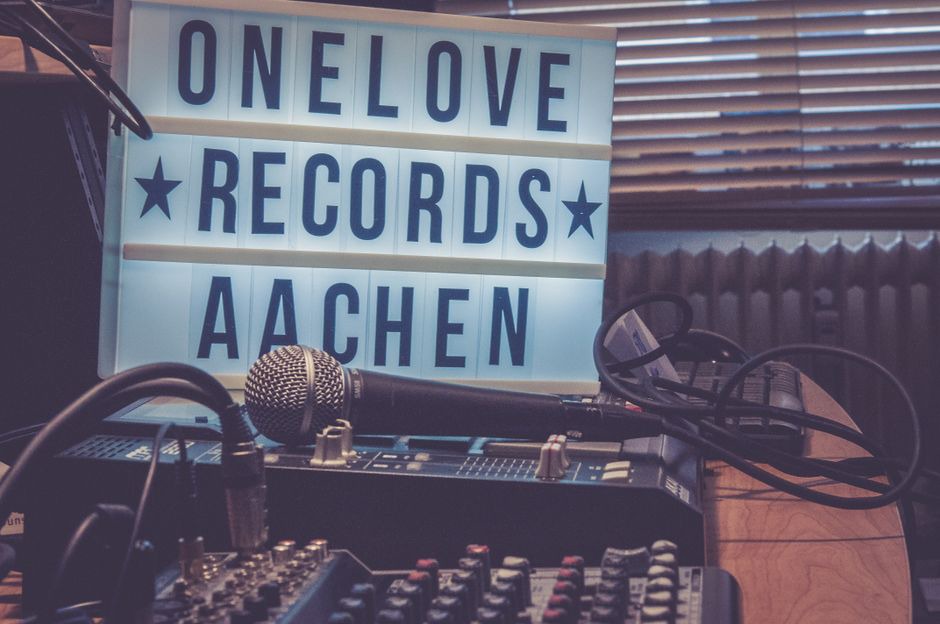
Room sound is easy to romanticize. Reflections, electrical noise, and sounds from outside can add depth; they can also obscure detail or make repeated takes hard to compare. Placing a microphone near a wall, shifting a speaker, or leaving a doorway open is a spatial decision. A faint background sound that survives an edit may be incidental, however compelling a listener finds it.
With field-based work, that distinction matters even more. Recording a place involves decisions about access, microphone position, duration, and what should remain private. Portable equipment does not automatically make a recording a personal document. Our discussion of place and ethics in Japanese experimental field recording considers why a location name on a sleeve is not enough context for captured sound.
What inexpensive tools actually change
Affordable equipment makes more kinds of takes possible; it does not guarantee a recognizable aesthetic. A handheld recorder can capture long stretches with little setup. A cassette deck can copy or alter an existing recording. A small mixer can combine live inputs, while a computer can place a cut precisely or keep several versions of a piece. Each tool makes some experiments easier and brings its own work.
Take a short feedback composition. Using a mixer, effects pedals, and a recorder, a musician can play the signal chain as an instrument, changing connections and levels during the take. Editing software then opens another set of choices: keep the full performance, cut a long setup, or assemble several passages. None is inherently more DIY. What matters is how the finished form handles risk, revision, or control—and whether the artist wants any of that process to be audible.
Cassettes are versatile, but easy to mythologize. Hiss, a limited frequency range, saturation, and unstable speed can be audible, especially after repeated copying. Yet a cassette release may begin with a carefully prepared digital master, while a rough digital file may never touch tape. The format affects playback and duplication; it cannot tell you how spontaneously the music was recorded. A drop in level might be deliberate, a fault in the source recording, or damage to one copy.
That uncertainty matters. Calling every irregularity “authentic” amounts to guessing at an artist’s intentions. It can also hide skilled decisions: careful gain control, patient editing, or the difficult choice to leave a compelling passage alone. Self-production can be precise.
Constraints can become compositional rules
A limited setup may lead a musician to set rules, not merely work around shortages. A single microphone fixes a perspective. An uninterrupted take preserves transitions an editor might smooth away. A fixed number of tape tracks forces decisions about what to combine during recording. None of these choices is a virtue by default; each changes the relationship between sounds.
- One-take recording keeps performance time audible, including hesitant or unstable moments.
- Repeated copying can change texture while making the original source harder to identify.
- Minimal editing may retain room tone and handling noise, but it may also leave an otherwise strong piece unfocused.
- Detailed editing can make tiny events legible without making the finished music sound polished or conventional.
These are ways to describe methods, not a checklist for identifying Japanese experimental music. Two releases can use the same tool for opposing ends. A long uncut performance may draw attention to a player’s decisions; another long piece may let individual gestures disappear into sustained sound.
The cover, copy, and catalog entry are production too
Self-production continues after the audio is finished. Someone must decide how listeners will identify the work: artist name, title, track order, format, date, and notes about performers or sources. On a small physical edition, those details might be on a folded insert, a stamped sleeve, a label on the shell, or nowhere at all. The choice affects how the release circulates and what can be understood about it years later.
A handmade cover need not make the music more honest. It may be economical, visually deliberate, or simply the feasible way to finish a short run. Nor is a plain photocopied insert necessarily a sign of haste. Layout, legibility, and the placement of a track list are editorial choices. Credits naming a location or collaborator can change how we hear a piece that initially seems private.
Small editions also require repetitive labor: copying and checking tapes, cutting and folding paper, labeling objects, packing orders, and answering messages. A casual-looking artifact can hide hours of it. When a musician runs a label as well, releasing someone else’s work brings responsibilities beyond making their own music available. Clear credits and an agreed presentation are part of that work.
Scarcity is not an artistic technique
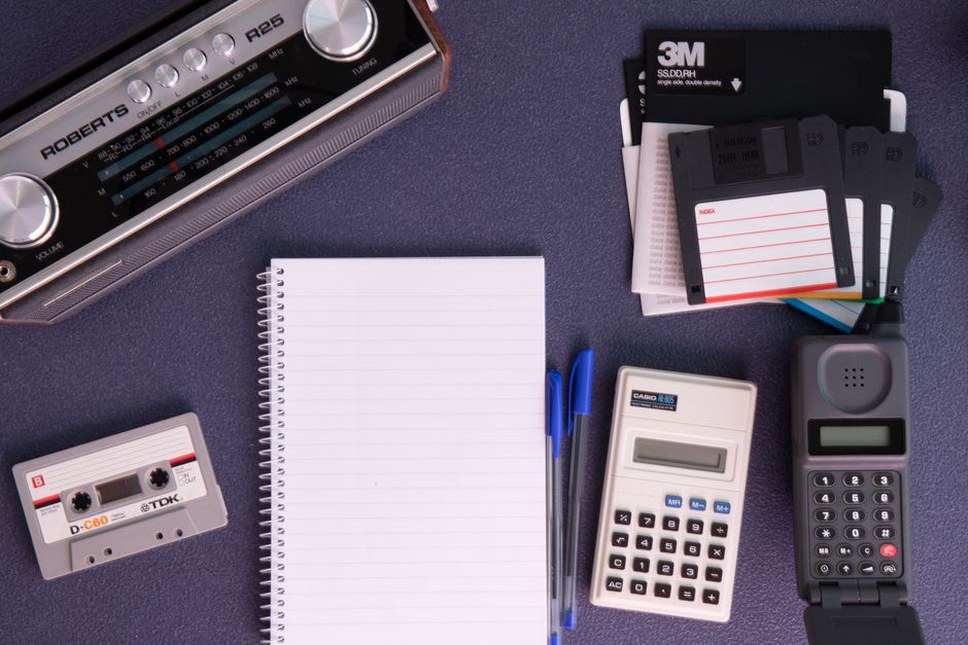
A release may be hard to find because its maker had little time or money, a format was discontinued, distribution was informal, or documentation was incomplete. Those circumstances shape its history, but rarity says nothing by itself about the sound. Collectors can treat an elusive object as though scarcity were part of the composition, putting more weight on the market for an edition than on the choices heard inside it.
Incomplete documentation calls for the same caution. An unlabeled file, an uncertain date, or a cassette with altered packaging does not need a confident backstory. Record what is visible, distinguish it from what others have reported, and leave unresolved details unresolved. That gives the artist’s work—and the listener’s judgment—room to stand without inherited guesswork.
Local exchange is more than distribution
DIY circulation often depends on direct contact: performances, independent shops, small labels, mail exchange, and conversations among musicians and listeners. Digital files offer another route, sometimes carrying a piece far beyond where it was made. No route guarantees an audience. Each needs maintenance, whether that means handing over a tape after a set or keeping files and credits accessible.
Circulation can affect the form of experimental work. A short download might appear as separate tracks; on cassette, the same material could be sequenced around two sides. A live recording shared among participants might keep the event’s full duration, while a later edition edits it into a more focused release. These are decisions made with a listener in mind, not packaging added once composition is over.
Collaboration can be as local as distribution. Musicians share equipment, invite each other onto bills, exchange recordings, and help solve practical problems. But a network is not automatically open to everyone. Space, time, language, money, physical access, and personal connections affect who can take part. Calling a scene “grassroots” should not erase the people who keep rooms available, communicate plans, or make performances possible.
How to hear the labor without inventing a story
Production choices can be heard, but they rarely come labeled. A sudden change in background hiss could mark an edit between takes. It could also come from an instrument switching on, a change in recording level, or a cassette copy. Close listening is useful when it raises a question to check against credits or other versions. A sonic clue alone cannot prove a method.
When listening to a self-produced release, it helps to keep three kinds of evidence apart:
- What you can hear: transitions, noise floors, spatial changes, repeated sounds, and differences between tracks.
- What the release states: credited instruments, recording or mastering information, format, and notes on process.
- What remains unknown: the exact equipment, the number of attempts, why an edit was made, or whether a fault was intentional.
This keeps the music from turning into an equipment puzzle. A drone made from a modest source can hold attention through its pacing and internal changes, whether or not you identify the device. A noise piece gains nothing when its loudest passage is assigned to an imagined malfunction.
Comparing versions helps, when they are legitimately available. A live performance and a studio recording of the same material may show which elements can change: duration, placement of silence, density, or abrupt endings. Neither has to be definitive. The comparison shows where the musician keeps making choices rather than following the limits of one piece of equipment.
DIY does not mean outside every institution
Homegrown work can pass through venues, arts organizations, established labels, radio, or commissioned settings. A musician may record one project independently and work with engineers on another. Professional support does not cancel earlier self-production; a home recording does not place its maker outside economic or social structures. DIY describes particular working arrangements better than it serves as a permanent label for an artist.
“Do it yourself” can also conceal costs. Editing, duplicating, correspondence, and packing take time that cannot be spent earning elsewhere. Equipment has to be bought, borrowed, maintained, or repaired. An effortless-looking small-label release may represent considerable unpaid labor. Admiring its independence need not mean treating exhaustion or limited resources as creative ideals.
Start with the sleeve when testing your assumptions. Do the recording and release dates differ? Are the performer and label the same person? Do the mastering or artwork credits name collaborators? Then play the first minute without trying to identify the gear. If a low hum sits beneath the opening sound, listen for when it changes. That change offers more to work with than a confident guess about the machine.