
The name badge520 doesn't appear on flyers, label catalogs, or Discogs in any official capacity. It surfaces in forum signatures, in the metadata of decade-old blog downloads, and occasionally in the liner notes of ultra-limited CD-Rs that were pressed in runs of twenty or thirty copies. For collectors navigating the deeper strata of Japanese noise and experimental music, badge520 functions as a kind of ghost signpost — a persistent, anonymous presence that has been documenting and distributing material from the fringes since the early 2010s.
Understanding what badge520 actually is requires abandoning familiar categories. It is not a label, not a blog in the conventional sense, not a netlabel, and not a review site. It is closer to a personal archive that happens to be public, maintained by someone whose identity remains unknown despite over a decade of activity. The name itself suggests nothing: a generic product code, a serial number, a piece of industrial detritus. That anonymity is deliberate, and it shapes everything the archive touches.
What badge520 Actually Contains
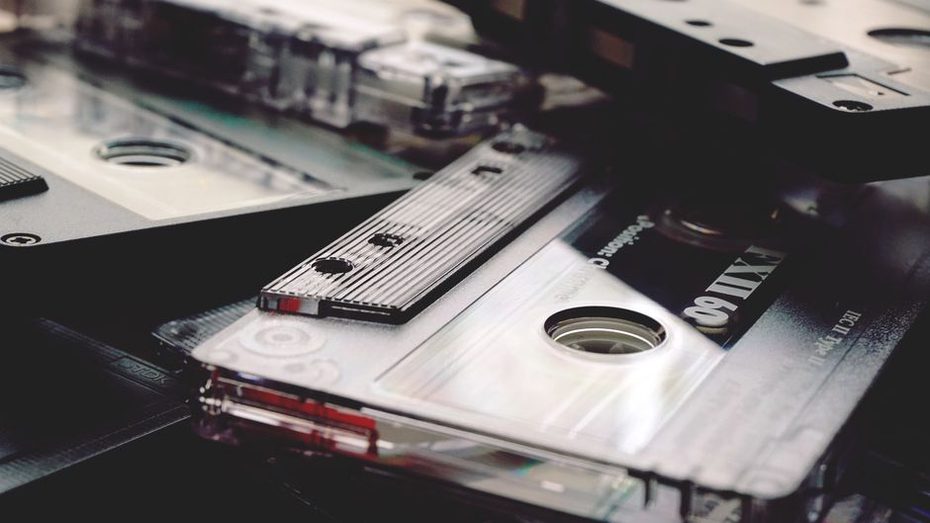
The core of the archive consists of lossless digital transfers of out-of-print cassette releases, CD-Rs, and lathe-cut records from Japanese underground artists and micro-labels. Many of these releases originally had pressings of fewer than fifty copies and were never distributed outside a small circle of Tokyo record shops or mail-order lists. badge520 does not host the files directly in most cases; instead, it provides links to external storage, often with a brief textual note about the release — recording conditions, lineage of the transfer, or corrections to previously circulated misinformation.
The selection leans toward electroacoustic drone, minimalist field recording, and harsh noise wall, but there are also outliers: a live recording of a contact-mic performance on a construction site, a cassette of sine-wave studies by a musician who later disavowed their own work, a split release between two artists who have since vanished from all public records. Nothing is presented as a recommendation. The tone is flat, technical, and devoid of hype. A typical entry might read: “Transfer from original chrome cassette. Azimuth adjusted. No NR. Surface noise present on side B from tape wear.”
Why Anonymity Matters Here
In a scene where personality and mystique often drive interest — where labels like 004tt: The Japanese Noise Label That Doesn’t Want to Be Found build entire identities around obscurity — badge520 takes the opposite approach. It erases the curator entirely. There is no about page, no interview, no social media presence linked to the name. Attempts to trace the operator through WHOIS records or old forum accounts lead to dead ends. Some collectors speculate that badge520 is a former label runner who burned out on the scene; others believe it is a collective that rotates responsibility. Neither theory has evidence.
This anonymity serves a practical purpose. By removing the curator's taste, reputation, and biography from the equation, badge520 forces the listener to confront the music without narrative framing. There is no story about how the tape was discovered in a secondhand shop in Shimokitazawa, no anecdote about the artist's eccentricities, no value judgment. The archive presents the transfer as a fact — here is a sound document, judge it yourself. In an ecosystem flooded with curated narratives and influencer-driven discovery, that radical neutrality feels almost subversive.
The Technical Side: Transfers and Quality Control
What separates badge520 from the countless dead links and abandoned blogs of the early internet is the consistency of its technical execution. Each transfer is done on professional-grade playback equipment, with proper azimuth calibration and documentation of the tape formulation. The operator notes whether Dolby noise reduction was used on the original recording and whether it is applied during transfer. For CD-Rs, they include checksums and often a photograph of the disc surface to show pressing quality.
This level of detail matters deeply to collectors who treat these documents as primary sources. A poorly transferred cassette can smear high-frequency detail or introduce wow and flutter that was never in the original recording. badge520’s transfers are often cited in collector forums as reference versions — the gold standard for how a particular release should sound. Some artists whose work appears in the archive have privately acknowledged that the badge520 transfer sounds better than their own master tapes, either because the original playback deck was misaligned or because the master was lost and the badge520 copy came from a well-preserved duplicate.
Relationship to Field Recording and Electroacoustics
A significant portion of the archive is devoted to field recording and electroacoustic composition — works that exist at the boundary between intentional sound design and environmental documentation. badge520 often includes the original recording notes when available: microphone placement, recorder model, weather conditions, post-processing chain. For practitioners looking to understand how a particular texture was achieved, these notes are invaluable. In many ways, the archive functions as an unofficial companion to practical technique guides like Field Recording for Experimental Music: Microphone Techniques and Practical Tips, offering real-world examples of the principles described there.
The emphasis on provenance also connects to broader structural tendencies in experimental music. The archive implicitly demonstrates how binary structures — presence/absence, original/copy, documented/lost — shape the way we understand these recordings. The act of transferring a tape is itself a binary operation: the magnetic flux is read and converted into a digital stream of ones and zeros. badge520 makes that process visible, refusing to pretend that the digital copy is a transparent window onto the original event.
How to Navigate the Archive
There is no search function, no tags, no categories. The archive is organized chronologically by upload date, with occasional thematic clusters when the operator processes multiple releases from the same artist or label in a single session. The only way to find something specific is to scroll, or to use external search engines with the site: operator. This deliberate lack of navigability frustrates some users, but it also rewards patience and deep browsing. You might go looking for a specific 1994 live recording and emerge three hours later having discovered a dozen releases you never knew existed.
For collectors, the most useful section is the correction log — a running list of errors in Discogs entries, incorrect dates in liner notes, and misattributed performances that badge520 has identified and documented. These corrections are often accompanied by scans of physical evidence: ticket stubs, handwritten setlists, postmarks. The archive thus serves not only as a repository of sound but as a peer-reviewed correction mechanism for the historical record of the Japanese underground.
The Ethics of Unauthorized Archiving
badge520 operates in a gray area. Many of the releases it transfers are still technically in copyright, owned by artists who may have no idea their work is being distributed. The archive does not host files directly, which provides some legal insulation, but the intent is clearly to make rare material accessible rather than to respect exclusive distribution rights. Some artists have expressed discomfort with this approach, while others have quietly thanked the operator for keeping their work alive after their own masters were lost in a flood or a move.
There is no blanket ethical stance that covers all cases. Each release exists in its own context: a tape that was given away free at a show in 1998 has different stakes than a limited edition sold for ¥3000. badge520 does not distinguish between them in its presentation, leaving the listener to decide. What the archive does make clear is that its purpose is preservation, not profit. There are no ads, no donation buttons, no Patreon. The operator absorbs the cost of tape decks, storage, and bandwidth without asking for anything in return.
The last update to the archive was five months ago. Some users worry that badge520 has gone silent permanently — that the operator has moved on, or that the hard drives have failed. Others point to historical gaps of eight or nine months between updates and see nothing unusual. The only way to know is to keep checking, to keep scrolling through the chronological list, and to wait for the next transfer to appear without fanfare.