
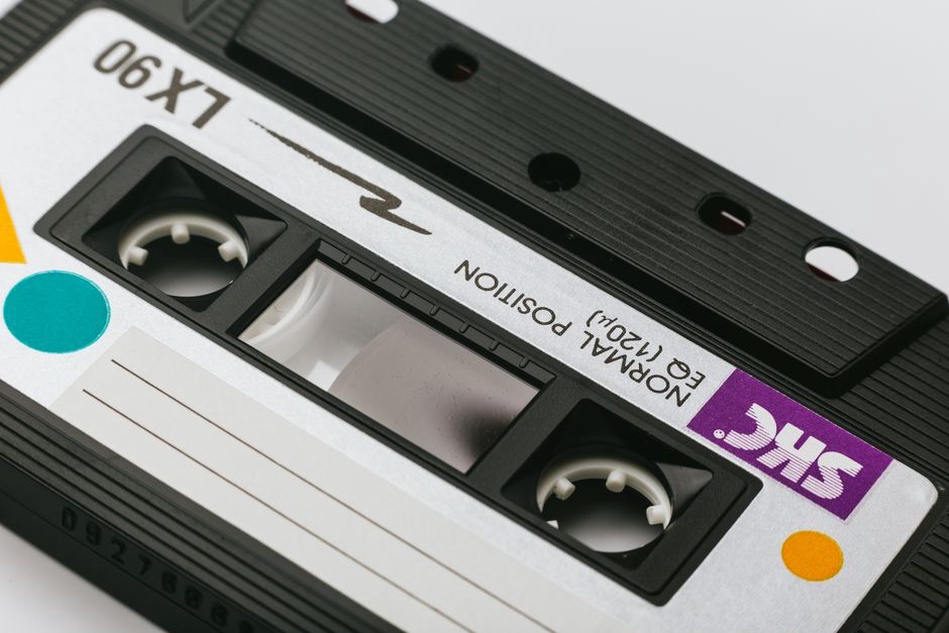
The B2 cassette shell is not a myth, but it might as well be. Walk into any second-hand electronics shop in Tokyo or Osaka, and you will find bins of used audio cassettes—mostly TDK, Sony, Maxell, in their standard clear or white housings. But every now and then, if you dig deep enough, you pull out a cassette that feels different. Heavier. The plastic is opaque, sometimes black or deep gray, and the label is minimal: a hand-stamped logo, a typed tracklist, no barcode. This is a B2 shell, and it was never meant for commercial distribution.
For collectors of Japanese noise, drone, and electroacoustic tape releases, the B2 shell is a quiet signal. It tells you that what you are holding was likely produced in a run of fewer than fifty copies, assembled by hand in someone's apartment, and sold through a network of like-minded listeners rather than any retail channel. The format itself—the physical object—carries information that the music alone cannot convey. Understanding what the B2 shell is, how it was used, and why it still matters requires looking at the infrastructure of DIY cassette culture in Japan from the late 1980s through the early 2000s.
What Exactly Is a B2 Shell?
Cassette shells are categorized by the industry-standard numbering system: C-60, C-90, C-120 refer to tape length in minutes per side. But the shell type—the plastic housing—is a separate specification. The B2 designation refers to a specific mechanical design: a two-screw shell with a solid back, reinforced pressure pad, and a smooth, low-friction tape path. Unlike the cheaper snap-together shells used for mass-market blank cassettes, B2 shells are assembled with small screws, making them easy to open, clean, and reload. They were originally manufactured for professional and industrial use—dictation machines, answering machines, data storage—where reliability mattered more than cost.
Japanese underground labels gravitated toward B2 shells for a simple reason: they could buy them in bulk from surplus electronics suppliers, load them with whatever tape stock they could source, and print their own labels on a home printer or typewriter. The shell itself became a canvas for the label's identity. Some labels used matte black shells exclusively. Others preferred translucent smoke or dark blue. The choice was never arbitrary—it communicated something about the label's aesthetic, even if that message was only legible to a small circle of initiates.
The Infrastructure of the B2 Economy
To understand why B2 shells matter, you have to understand the supply chain. In the 1990s, a handful of specialty stores in Tokyo—places like Disk Union's used equipment floor, or the electronics surplus markets in Akihabara—sold NOS (new old stock) B2 shells for a few hundred yen per dozen. Labels like 004tt and 008tt built their entire distribution model around this supply. They would buy a batch of shells, dub tapes in real time on a dual-deck system, and mail them to subscribers in padded envelopes. The B2 shell was not a stylistic choice; it was a logistical necessity. It allowed labels to produce small runs without investing in custom packaging or professional duplication.
The economics of the B2 release were brutal. A typical run of 30 copies might sell out in a month, but the profit margin was negligible. Most labels operated at a loss, subsidized by day jobs or by selling other releases. The B2 shell was part of an economy of scarcity, but not the manufactured kind. It was a natural consequence of limited resources: time, money, access to duplication equipment, and the patience to assemble each tape by hand.
Sound Quality and the B2 Difference
There is a persistent belief among collectors that B2 shells produce better sound quality than standard consumer cassettes. The truth is more nuanced. The B2 shell's reinforced construction does reduce wow and flutter compared to flimsier shells, especially on older tape decks. The pressure pad design also maintains more consistent contact between the tape and the playback head. But the tape stock inside the shell—the actual magnetic medium—matters far more. Many B2 releases used Type I (ferric) tape, sometimes of mediocre quality, because that was what was available. The shell could not compensate for a poor recording or degraded tape stock.
What the B2 shell did provide was durability. A well-made B2 cassette could survive hundreds of plays without shedding oxide or jamming. For labels producing music that was intentionally abrasive—harsh noise walls, feedback loops, distorted field recordings—robustness was not a luxury. It was a requirement. The music itself could destroy a consumer-grade tape in a single listen.
Reading the Labels: What B2 Releases Tell Us
The visual language of B2 releases is worth studying. Because the labels were often hand-made, they carry traces of the person who made them. Handwriting, rubber stamps, photocollages, typed text with correction fluid—these are not design choices in the conventional sense. They are evidence of a specific moment in time, a specific person sitting at a kitchen table, cutting labels with scissors and glue. The B2 shell preserves that evidence in a way that digital files cannot.
Some labels developed signature visual codes. A label that used red stamp ink for all its releases was signaling continuity. A label that switched to blue ink for a particular series was marking a subcategory. A label that left the shell completely unlabeled, with only a handwritten number on the spine, was making a statement about anonymity and anti-commercialism. These codes were never explained in liner notes. They were meant to be decoded by the listener, or not.

The B2 Shell in the Digital Age
B2 shells are no longer manufactured. The last factories that produced them closed in the early 2000s, and the remaining stock has been steadily consumed. Today, a sealed box of 100 B2 shells can fetch several hundred dollars on auction sites. New labels cannot produce B2 releases unless they are willing to recycle used shells—a practice that some have adopted, cleaning and reloading old dictation tapes with fresh ferric stock.
This scarcity has changed the meaning of the B2 release. What was once a pragmatic choice has become a marker of authenticity. A new release on a B2 shell commands attention in a way that a CD-R or a digital download cannot. But it also raises questions. Is the format itself being fetishized? Does the physical object matter more than the music it contains? For some listeners, the answer is yes. For others, the B2 shell is simply the most honest container for music that was never meant to be convenient.
Practical Tips for Collectors
If you are building a collection of Japanese underground cassette releases, the B2 shell is a useful diagnostic tool. Here is what to look for:
- Weight. A genuine B2 shell is noticeably heavier than a standard consumer cassette. If it feels flimsy, it is not a B2.
- Screws. B2 shells have visible screws on the back, usually two or three. Snap-together shells have no screws.
- Label quality. Hand-stamped or typed labels are common. Professionally printed labels are rare and may indicate a later reissue.
- Tape stock. Look at the leader tape. If it is clear or white, it is likely Type I. If it is brown or black, it may be Type II (chrome) or Type IV (metal). B2 shells were sometimes loaded with premium tape stock for special releases.
- Origin. Check the shell for a manufacturer's mark. Most B2 shells were made by companies like Fuji, TDK, or Sony for the OEM market. A mark like "Matsushita" or "Hitachi Maxell" is a good sign.
For musicians interested in using B2 shells for their own releases, the practical path is to buy used shells from thrift stores or online surplus sellers. Clean them carefully with isopropyl alcohol and a lint-free cloth. Replace the pressure pad if it is worn. Use a high-quality tape stock—Type II is recommended for most experimental music applications. And accept that your run will be small. That is not a limitation. It is the point.
The B2 Shell and the Network of Invisible Labels
Many of the most interesting Japanese underground labels of the 1990s operated without any public presence. They had no website, no catalog, no distribution deal. They existed as a PO box number and a list of subscribers. The B2 shell was the only physical manifestation of the label's existence. To hold one was to hold the label itself. This is the logic behind labels like 012tt, whose entire output fits in a single shoebox. The format is not a container for the music. The format is the music's only possible home.
The B2 shell also connects to the broader tradition of binary structures in Japanese experimental music—the idea that a limited set of elements can generate infinite variation. Two screws, two sides, two channels. The shell is a binary object, and the music it holds is often built from binary processes: on/off, feedback/no feedback, signal/no signal. The convergence is not accidental. It is a reflection of the material conditions under which the music was made.
For a deeper look at how labels used the B2 shell as a deliberate strategy of invisibility, the article on 004tt: The Japanese Noise Label That Doesn’t Want to Be Found traces one label's use of unmarked shells and minimal packaging. The logic is the same: reduce the object to its essentials, remove all marketing, and let the music speak for itself. The B2 shell makes that possible.
Practical guidance for recording onto B2 shells—including microphone placement, tape biasing, and real-time dubbing techniques—is covered in Field Recording for Experimental Music: Microphone Techniques and Practical Tips. That article focuses on the recording process, but the principles apply directly to the B2 release workflow: minimal equipment, maximum attention to signal path, and acceptance of imperfection.
The B2 shell is not a format you can buy at a store. It is a format you have to find. And when you find it, you have to listen carefully, because the music was never intended to reach you. It was intended to exist, briefly, in a small number of hands, and then to decay. The B2 shell slows that decay, but it does not stop it. That is what makes it worth preserving.