
At a Japanese railway crossing, a recorder might pick up a warning bell, motors, footsteps, wind and the scrape of its own casing. The resulting track is not simply a portrait of the crossing. Where the microphone sits—and what gets cut later—determines which sounds press forward and which almost vanish. Acoustic ecology gives us a way to hear those choices alongside the people and activities sharing the site.
That way of listening extends beyond recognisable field recordings. A nearly motionless drone can bring out a room’s resonance; harsh noise can show how a venue contains sound or lets it escape. In the quieter passages of an ambient piece, ventilation or passing traffic may become audible. The question is less whether a sound came from a city or a forest than where the work places its listener, and what remains out of earshot.
Acoustic ecology is a relationship, not a sound library
Acoustic ecology studies sonic environments and how living beings perceive and alter them. For someone listening to experimental music, the useful unit is often a relationship rather than a sample: a signal heard through competing sounds, a source changed by its surroundings, or an ear adjusting to distance and duration. A bell might serve as a local cue, interrupt a conversation, become a rhythmic figure on a record, or fade into the background for someone who hears it daily. Its role depends on who is listening.
Soundscape can imply a complete sonic view, like a panoramic photograph. A recording offers no such thing. Microphones have pickup patterns; recordists choose where and when to work; playback equipment changes scale and emphasis. A short recording of a quiet shrine approach cannot tell us whether the area is usually quiet, just as traffic recorded on one street cannot stand for every street in Japan. Some of the most revealing work leaves its limits audible through proximity, filtering, abrupt cuts or the sound of the recorder itself.
That distinction matters especially when writing about Japan. Transport networks, coastal settlements, residential streets, forests and controlled interiors have different acoustic conditions; none supplies a national sonic essence. A site also changes with the season, weather, construction and daily use. Treating a distant announcement as shorthand for “Japan,” or a quiet recording as proof of a uniquely contemplative culture, replaces attention with a stock image.
What an environment does to sound
A site alters sound before an artist touches it. Walls reflect some frequencies and absorb others. Sound disperses differently in open air than in a narrow passage. Rain masks fine detail; a low mechanical hum may linger after its source moves out of sight. Experimental music can make these practical conditions part of a piece’s structure. Sound is always heard somewhere, under particular conditions, even when the source is hard to name.
Distance, masking and competing signals
Distance changes more than volume. It can soften transients, make speech less clear and let reflections compete with direct sound. Where several sources overlap, one may mask another without making it disappear. Listen during the gaps: a footstep behind a sustained motor tone, reverberation after a strike, an electrical buzz between bursts of noise. A list of sources would miss how they meet.
Quiet passages complicate matters too. They might expose the recorded room, the medium or the space where you are playing the release. By ear alone, you cannot always tell whether a low-level sound belongs to the original location, an edit or a pause in performance. It is better to describe what you hear than to assign every faint sound an origin.
Rhythms that do not follow a score
Environmental rhythms seldom behave like tidy loops. A train approaches and recedes; ventilation cycles; footsteps overlap without a fixed pattern. Some artists keep those shifts intact. Others repeat, stretch or cut the material until its source becomes uncertain. A recognisable recurrence can locate an activity in time, while a loop can make a passing event seem permanent. Neither choice is inherently more honest. Each gives the listener a different account of the site.
Four ways experimental work engages an acoustic environment
Genre labels can help direct attention, though a single performance may combine location audio, sustained tones and abrasive electronics. These approaches bring different relationships with a setting into focus:
- Field recording retains traces of a site, including sounds the recordist could not fully control. Often, the revealing detail is the balance between the intended subject and its audible surroundings.
- Electroacoustic work may edit, filter or spatialise recorded material until its connection to the original location becomes uncertain. The processing is part of what we hear, not something to look past.
- Drone and ambient music can provide a sustained reference against which small changes in a room or recording become conspicuous. Steadiness does not mean nothing is happening.
- Noise performance can bring sound pressure, masking and a venue’s limits to the fore. It may just as readily cover up the environment as disclose it.
There is no ladder here from documentary accuracy to abstraction. A recognisable birdcall may tell us little about its recording conditions, while a heavily processed tone may make a particular room’s resonance unmistakable. The ecological question is what relationships a work lets us hear, not how quickly we can identify a source.
Examples that resist a single reading
Several Japanese artists put this approach to the test. Hiroshi Yoshimura’s Music for Nine Post Cards (1982) is often heard as a self-contained ambient record, but its spare keyboard figures also leave room for sounds where it is played. That does not make it a field recording. It means the listening space helps decide whether a quiet interval feels empty, sheltered or porous. Our account of Japanese ambient beyond the playlist looks more closely at placement and attentive listening.
Akio Suzuki places the emphasis on listening and sounding in relation to a site. His long-running Otodate project marks spots where listeners can stop and attend to their surroundings. A mark promises no particular sound, nor does it certify quiet. It changes where someone stands and what they notice; the experience depends on the time as much as the place.
Toshimaru Nakamura’s no-input mixing board makes a less obvious case. Its tones arise from the mixer’s internal feedback rather than a sound captured outdoors. In performance, those tones and abrupt changes meet the room’s acoustics and the responses of other musicians. Calling the source environmental would blur an important distinction. Ignoring the room would miss how the sound gains scale and edge.
Merzbow tests the limits of this kind of listening. Dense noise can overwhelm faint sounds in a room, while loud playback can make attention to the surroundings physically difficult. Such a performance does not automatically reveal its venue. The acoustic-ecological interest may lie instead in the friction between amplification, duration, the room and what a listener can still hear. That is more precise than calling the experience immersive.
The recording is not the site
Location audio involves at least three spaces: the place recorded, the space built through editing and mixing, and the room where the record plays. Headphones shut out much of that last room while bringing handling noise or faint hiss close to the ear. Speakers let the recording mingle with walls, furnishings and sounds from outside. Neither recreates the original site.
Field recordings can sound more transparent than they are. Stereo width may suggest one stable listening position even when a track combines separate takes. Equalisation can remove a persistent hum; compression can raise details that were barely noticeable on location. These are not faults, but they affect the account a recording gives. Notes on location, equipment or edits can clarify the method. Without them, the audible result is not proof of an unedited encounter.
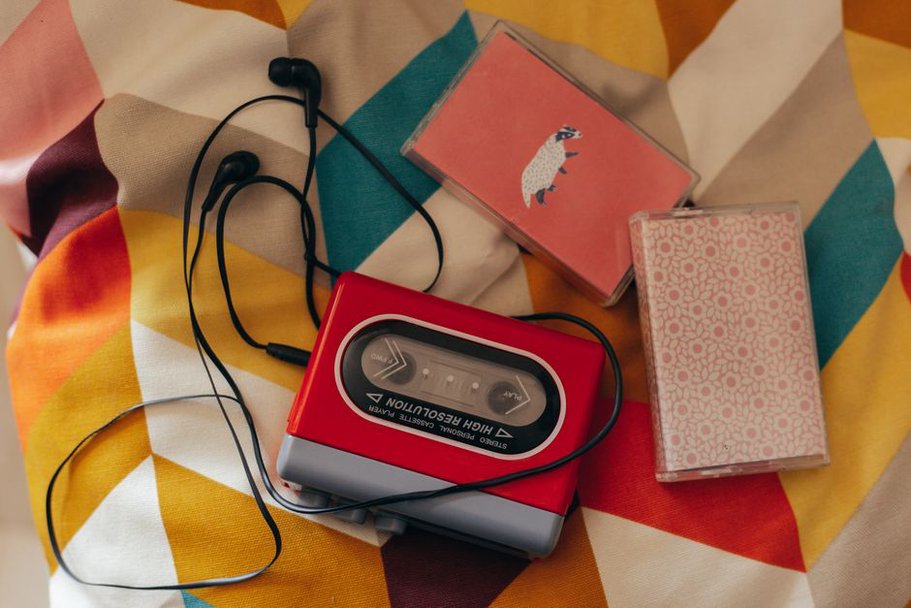
The format matters as well. Cassette hiss may hide quiet location detail even as it becomes part of the work’s texture. Playback speed and machine condition can affect pitch or stability. Sparse documentation on a small DIY edition may leave a precise geographical claim impossible to verify; noise reduction on a later digital transfer may change what remains audible. Comparing versions can teach a collector a great deal, provided audible differences are kept separate from guesses about where or how the material was captured.
Whose environment becomes audible?
Recording in public or semi-public space involves more than microphone technique. A passing voice may be incidental texture to a recordist and a recognisable part of someone else’s life. Even without intelligible speech, repeatedly recording near a residence, workplace or sensitive site can affect the people there. Consent, local rules and the option to move away matter more than getting an uninterrupted take.
Environmental sounds also carry unequal burdens. Industrial noise might be compelling over a short release and exhausting to live beside. Recording at an unusually quiet hour may leave out the activity that defines a place for those who use it every day. An artist can still work with such material, but a critic should be careful about what the recording is taken to show. A striking sound is not evidence that the conditions behind it are desirable.
Nature recordings call for the same caution. Insects, water or wind do not prove that a location is undisturbed: infrastructure might fall outside the microphone’s range, be masked by weather or be removed in editing. Human-made sound, in turn, does not make an environment ecologically empty. It is more useful to hear coexistence and interference than to sort sounds into pure and impure categories.
A listening method for recordings and performances
A few focused listens can tell you more than trying to name every source at once. Start at a moderate volume, especially with noise releases that have sudden peaks. Keep one set of notes for what you hear and another for what you can establish about its origin.
- Map the foreground. Which sounds dominate? Do they stay put, or trade places with quieter details?
- Follow one background sound. Track it through louder events. Does it continue, vanish beneath another sound, or return at a different level?
- Attend to transitions. A hard edit, fading resonance or shift in hiss may point to a new take, room or processing choice, though it may not tell you which.
- Change the playback context. Compare headphones and speakers at safe levels. Notice which spatial impressions persist and which appear to come from your room.
- Check the available documentation. Keep stated locations and methods separate from your guesses, especially when a recording circulates with little context.
At a live event, the comparison is spatial rather than repeatable. Moving a short distance can change the balance of direct sound and room reflections; no single spot gives the definitive version. Ear protection reduces risk at high levels and changes what you hear. That trade-off is preferable to assuming intensity must be endured without it.
Try a final check with thirty seconds of a quiet passage, once on headphones and once on speakers. Note a background sound you hear both times, then a detail that changes or disappears. The difference marks where the recording meets the room you are actually in.