
The quiet clicks on Hiroshi Yoshimura’s Music for Nine Post Cards (1982) can slip beneath its keyboard phrases. They matter: the recording never pretends its tones arrived without a player or a machine. Notes leave room for their attacks, their decay and slight changes in touch. Yoshimura’s music is often called calming, but this album does something more specific. It can share a room with other activity without fading into acoustic blankness.
That distinction helps explain the continuing interest in pioneering Japanese ambient music. The artists now grouped under that label did not make a single kind of sound. Some composed with particular spaces in mind; some treated percussion as an electronic sound source; others allowed environmental audio to blur the boundary between a composition and its location. Their different working methods matter as much as any familiar synthesizer tone or soft reverberation.
Before the category became a sound
Kankyō ongaku, usually translated as “environmental music,” can describe music made with an environment in mind. It is not another name for every spacious-sounding Japanese recording, and it does not imply a shared aesthetic program. The late-1970s and 1980s records now discussed as Japanese ambient emerged through changing uses of electronic instruments, design commissions, independent releases and experiments with recorded sound. Where a piece was meant to be heard may tell us more than its mood.
Brian Eno’s ambient recordings offer a useful comparison, though resemblance is not a complete history. Works circulating under the Japanese ambient label can contain audible physical effort, precise instrumental writing and sounds that refuse to settle into an even background. Later international interest has sometimes flattened those differences into one atmosphere. Listening to individual records, and checking their original contexts where possible, brings back some of their friction.
Hiroshi Yoshimura and music addressed to a place
The room is not an empty backdrop
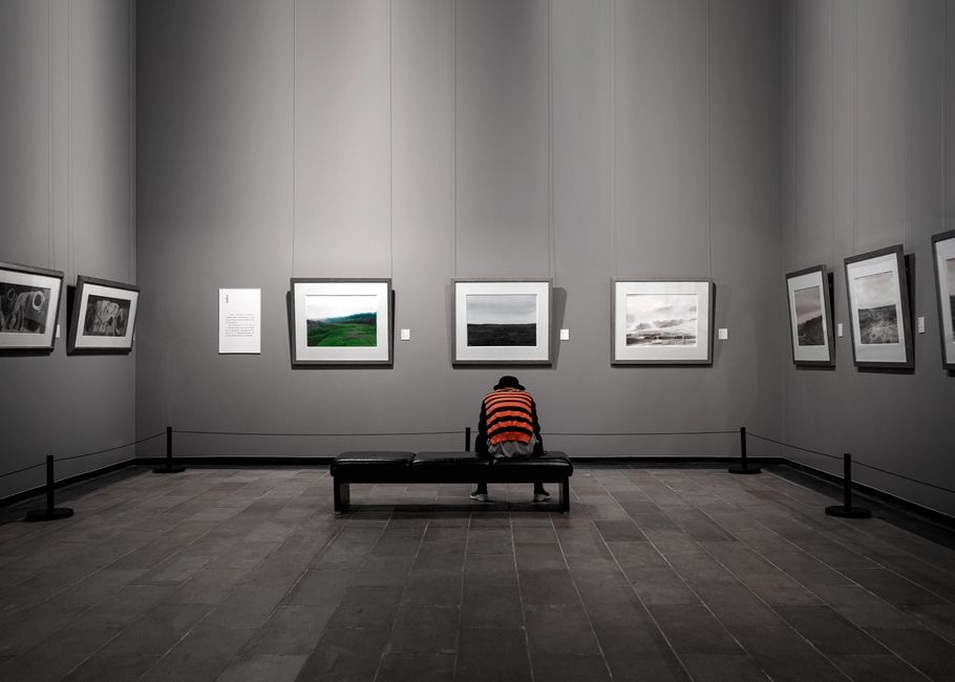
Yoshimura’s Music for Nine Post Cards grew from a commission connected to the Hara Museum of Contemporary Art in Tokyo. Its short keyboard pieces have clear melodic outlines but rarely press toward a dramatic resolution. A phrase appears, leaves space behind it and may return with a small change. The music can accommodate a listener’s shifting attention without asking to be mistaken for silence.
Green (1986) makes a useful comparison. Its synthesizer colors and carefully spaced events feel broader in scale than the exposed keyboard playing on Music for Nine Post Cards. Heard in sequence, the two records show why “gentle” says too little about Yoshimura’s practice. The interval between events, the way a tone fades and the detail brought into the foreground are compositional decisions, not just a matter of low volume.
Yoshimura also made music associated with architectural and public environments. Headphones cannot reproduce the conditions of an installation or commission: movement, nearby activity and uneven attention all affect what reaches the ear in a designated space. On a reissue, those conditions become partly a matter of historical context. The recording still rewards close listening, but its original use is not stored intact in the audio file.
Midori Takada: percussion as a changing acoustic system
Midori Takada’s Through the Looking Glass (1983) does not smooth over a room with a continuous pad. Percussion notes arrive as individual actions. Their resonances overlap, pull apart and sometimes turn rhythm into suspended time. Instruments including marimba and gong keep the physical source in view. Even the spacious passages have a pulse made by strikes, rather than an anonymous wash.
This makes Takada especially revealing in accounts of ambient music. Her percussion playing and layered recording let repetition register both as pattern and as changing acoustics. Listen to what happens after an initial impact: a struck note may persist as a pitch, a shimmer or a trace beneath the next event. Its duration changes the sound of the following strike.
Takada’s later work cannot be reduced to this album, which found a wider international audience long after its first release. Its visibility has made it a common entry point nonetheless. It is better heard as proof that spacious music can be built from emphatic physical gestures than as evidence of some inherent serenity in Japanese ambient.
Inoyama Land and the synth as an ensemble
Makoto Inoue and Yasushi Yamashita recorded as Inoyama Land. Their album Danzindan-Pojidon (1983), produced by Haruomi Hosono, takes another route through the period. Short figures, rounded electronic timbres and rhythmic details keep changing the music’s apparent size. A synthesizer line can sound like a small voice of its own instead of one part of an enveloping texture.
The record pushes against retrospective playlists that favor only slow, diffuse passages. Its melodies can be bright, while its repetitions have an almost tactile sense of construction. Neither quality excludes it from an ambient history. The music remains open to its surroundings without losing its own character. Follow a recurring figure through several appearances: often the sounds placed beside it change more than the figure does.
Hosono’s own work crosses the boundaries often imposed on ambient music. His background in pop and electronic music makes a neat division between background music and attentive listening hard to sustain. His involvement with Inoyama Land is also a reminder that these records came out of overlapping musical networks, not an isolated school of quiet composition.
Satoshi Ashikawa and the changing meaning of “background”
Satoshi Ashikawa’s Still Way (Wave Notation 2) (1982) is often discussed for its spare piano and harp writing. Notes remain exposed; the music feels no need to fill every interval. Rather than laying down an unbroken atmosphere, a single event can change how the surrounding quiet is heard.
Ashikawa’s approach is associated with environmental music that changes alongside the place in which it is heard. Here, “background” does not mean negligible. An unobtrusive sound can still alter the perceived proportions of a space. At low volume, the notes of Still Way briefly enter an existing room; turned up moderately, the recording can seem to set that room’s pace.
Ashikawa died in 1983. His relatively small recorded catalogue makes it all the more important not to treat Still Way as a template for an entire scene. Its restraint is one response to questions of space and attention, not evidence that every related artist sought stillness.
Yasuaki Shimizu: a Bach recording with an unstable frame
Yasuaki Shimizu’s Bach Box (1990) falls outside a narrow account of 1980s environmental music. It still shows how ambient listening can arise through instrumental interpretation rather than original electronic composition. In his saxophone recordings of Bach’s cello suites, released as Bach Box, breath, phrasing and register come to the fore. The source material may be familiar; its acoustic identity is not.
Shimizu did not make only ambient music, and his place in this conversation needs that qualification. His handling of arrangement and recorded space invites questions often asked of ambient records: what happens around a melodic line, how long does a note remain present, and how does an instrument change a composition’s apparent setting? He sits at a porous edge of the category, not its center.
What the later revival made visible—and what it obscured
Reissues and the 2019 compilation Kankyō Ongaku: Japanese Ambient, Environmental & New Age Music 1980–1990 brought many of these recordings to listeners beyond their earlier circulation. That access matters, especially where original releases have been hard to find. But a compilation can also suggest a coherence the works did not originally have. Sequenced together decades later, music made for different purposes may sound like chapters of a planned movement.
Collectors face the same problem as casual listeners. A current format, cover presentation or streaming placement may say little about where an album’s music first functioned. Sleeve notes and release histories can help distinguish an exhibition work from an independent album project or another setting. When the evidence runs out, it is better to leave the context open than invent an evocative origin story.
Access has changed the act of listening, too. On a playlist, a quiet recording may supply a steady mood between unrelated tracks. Heard in full, it can be less even: brighter passages, interruptions, stubborn repetitions and acoustic details may disappear when tracks are chosen only for their softness. The revival has made the music easier to hear, but those distinctions easier to miss.
Tracing influence without inventing a single lineage
These artists’ influence is not limited to imitation of their tones. Yoshimura offers a way to compose with a site in mind; Takada uses resonant percussion to organize spacious music; Inoyama Land pairs lightness with intricate electronic detail; Ashikawa lets isolated notes shape a listener’s perception of a room. Those are methods someone might take up, not a shared recipe.
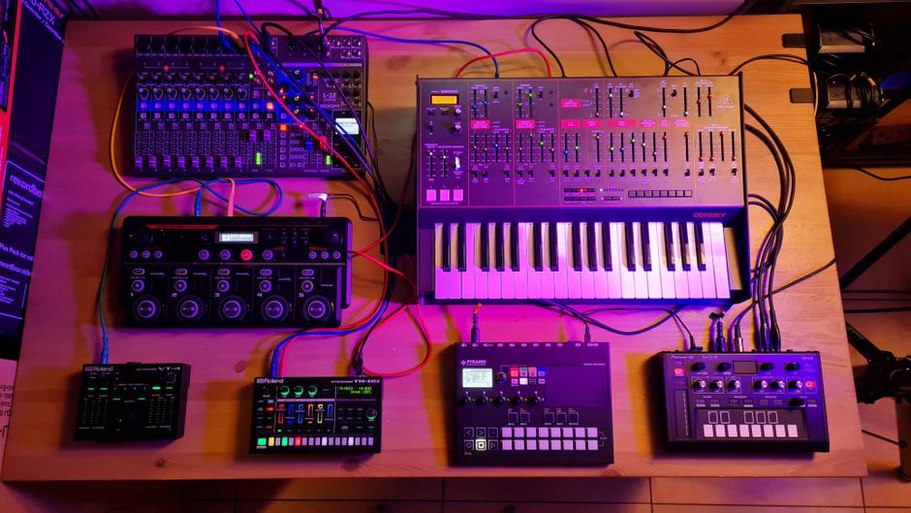
A contemporary musician can draw on such methods without claiming direct descent. A producer with a small synthesizer setup might leave long gaps between phrases so the room sound remains audible. A percussionist might record several passes of a struck instrument, preserving the overlap of its decays instead of quantizing every hit to a rigid grid. Such choices resemble earlier strategies, but resemblance alone does not establish influence. Interviews, credits and documented listening histories provide firmer evidence.
Nor does ambient music need to be cast as the opposite of Japan’s noise underground. Both can demand close attention to timbre, recording conditions and the listener’s physical relationship to sound, even as they produce sharply different experiences. For the louder end of that spectrum, [the account of Japanese noise music as sonic rebellion](/japanese-noise-protest/) addresses a distinct history; it should not be treated as ambient’s inverted twin.
A listening route through the records
Compare these recordings by one feature at a time rather than playing them as a continuous mood. This route moves through keyed notes, percussion, electronics and exposed acoustic phrasing:
- Start with Yoshimura’s Music for Nine Post Cards. Does a phrase end at its last note, or only when the decay fades?
- Move to Takada’s Through the Looking Glass. Follow the interval between a percussion strike and the next audible event. Resonance is part of the pattern.
- Try Inoyama Land’s Danzindan-Pojidon. Pick out a repeating electronic figure, then listen for the smaller sounds that alter its surroundings.
- Finish with Ashikawa’s Still Way. Keep the volume steady and notice what a single exposed note does to the quiet before the next one.
This is neither a ranking nor a complete map. It puts four uses of space next to one another without making them resolve into a single style. If you begin with a familiar reissue, check the original album and release date before moving to another artist. Neighboring tracks on a modern playlist may once have had different audiences, purposes and physical settings.
For a closer test, play a short passage from Music for Nine Post Cards twice at the same volume. First attend to the keyboard pitches. Then listen only to what follows each keystroke, up to the next phrase. A good deal of Yoshimura’s design sits in that stretch between the attack and the following note.