
Walk into any serious collector’s space and you’ll see it: the shelf of cassettes marked “MONO” in permanent marker. Not because the deck is broken, not because the source was a field recording from a single microphone, but because the artist chose to collapse the stereo image into a single channel. In Japanese experimental music — particularly in noise, drone, and electroacoustic work — the decision between mono and stereo is never a technical afterthought. It is a compositional statement.
Most listeners assume that stereo is inherently superior. Wider soundstage, more separation, more “hi-fi.” But the underground operates on a different logic. Mono forces the ear to confront density. When every sound occupies the same space, texture becomes the primary dimension. The Japanese noise scene understood this early. A Merzbow tape from 1982 is not wide; it is a wall. The lack of spatial differentiation is what makes it overwhelming.
The Mono Revival in DIY Culture
Over the past decade, a quiet reversal has taken place. After the 1990s and 2000s pushed ever-wider stereo mixes — sometimes artificially widening mono sources through phase tricks — a subset of musicians began returning to mono as a deliberate aesthetic. The reasons are not nostalgic. They are practical and conceptual.
First, mono solves the listening environment problem. Experimental music often plays in non-ideal spaces: basements, galleries, living rooms, cars. Stereo imaging collapses when the listener moves two feet to the left. Mono guarantees that every person in the room hears the same mix. For a genre that values intensity over clarity, this is crucial.
Second, mono forces compression. When you cannot spread sounds across left and right, they must stack vertically in the frequency spectrum. This creates intermodulation — the subtle beating and distortion that occurs when two tones occupy the same channel. Drone musicians exploit this constantly. A single oscillator in mono produces a pure tone. Two oscillators in mono produce interference patterns that change with room acoustics. The result is a living, breathing sound that stereo can only simulate through panning automation.
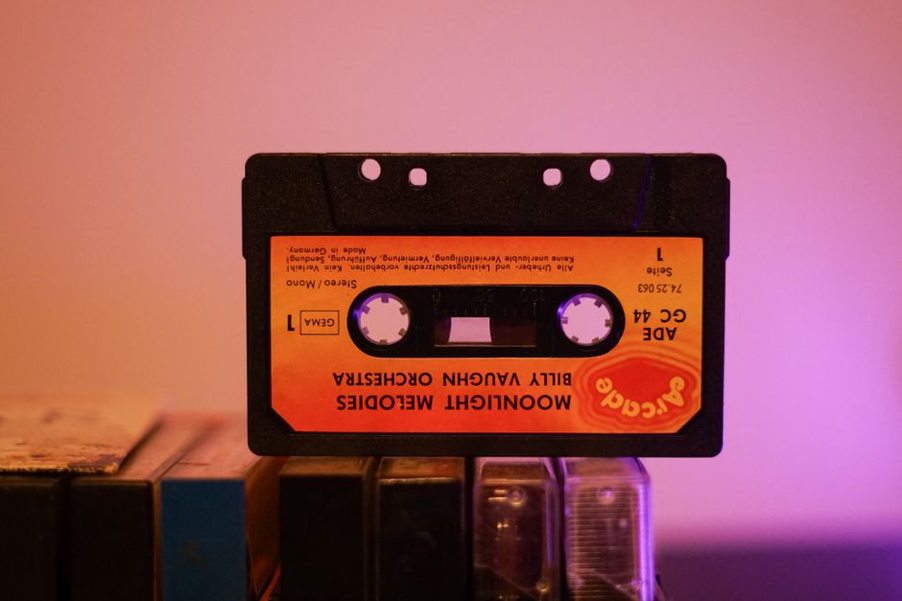
Third, mono is the native format of the cassette. The compact cassette’s stereo separation is, at best, a compromise. Cheap tape players from the 1980s often had a single speaker. Many DIY labels — including the elusive operations documented on this blog, such as 004tt: The Japanese Noise Label That Doesn’t Want to Be Found — release exclusively in mono because the format matches the medium. The hiss, the saturation, the limited frequency response: all of it becomes part of the texture when there is no pretense of spatial realism.
The Case for Stereo: Space as Instrument
Stereo is not dead. In field recording and electroacoustic composition, it remains essential. But the underground uses stereo differently than the mainstream. Commercial stereo aims for a “sweet spot” — a small area where the image is perfect. Experimental stereo aims for instability.
Consider the technique of binaural recording with dummy heads. A standard binaural recording played through headphones places the listener inside a specific acoustic space. But many Japanese field recordists deliberately break the illusion by swapping the left and right channels mid-recording, or by mixing binaural material with coincident-pair recordings that lack head-shadow cues. The result is a disorienting space that exists nowhere in nature. This is not a mistake. It is a critique of the idea that audio should represent reality.
Some artists use stereo to create impossible motion. A sound that appears to rotate around the listener at constant speed, but with irregular Doppler shifts that do not correspond to any physical object. Others use extreme panning — a single sound source jumping from far left to far right without any crossfade — to jolt the listener out of passive listening. These techniques require stereo. They cannot be collapsed into mono without losing the effect.

The Binary Decision: Practical Guidelines for Musicians
If you are producing experimental music and wondering whether to mix in mono or stereo, the answer depends on three factors: your source material, your intended playback medium, and your conceptual goal.
Source Material
Mono sources: Single-microphone field recordings, contact microphone captures, circuit-bent devices, voice, feedback loops, sine wave generators. If your raw material comes from a single transducer, there is no spatial information to preserve. Forcing it into stereo through artificial reverb or delay will add mud, not depth. Keep it mono and use equalization to carve space.
Stereo sources: AB-pair or XY-pair field recordings, stereo synthesizer patches with independent left and right oscillators, multi-microphone recordings of acoustic instruments. If the spatial information is part of the composition — for example, a recording of a moving train passing from left to right — collapsing to mono destroys the gesture. Keep it stereo, but consider a mono-compatible check. Many club and gallery sound systems sum to mono anyway.
Playback Medium
Cassette: Most cassette players have mediocre stereo separation. If your target is a cassette release, mix in mono or narrow stereo (keep the width under 50%). This avoids phase cancellation when the tape is played on mono devices, and it ensures that the hiss and saturation are evenly distributed. The labels covered in 008tt: The Invisible Label That Forces You to Listen Without a Map often specify mono on their J-cards because they know their audience listens on Walkmans and boomboxes.
Digital download / streaming: Listeners will use headphones, laptop speakers, and Bluetooth speakers. Headphone listeners benefit from stereo. Laptop and Bluetooth listeners often hear a collapsed mono signal anyway. A safe approach: mix in stereo but check the mix in mono at low volume. If the bass disappears or the vocals become quiet, you have a phase issue.
Live performance: Unless you control the PA system, assume mono. Most small venues run a single speaker stack or a mono subwoofer setup. If your piece relies on a sound moving from left to right, it will be lost. Design live sets to work in mono, and treat stereo as a bonus for the handful of listeners wearing headphones in the front row.
Five Mono Recording Techniques Worth Stealing
For musicians who want to explore mono as a creative constraint, here are techniques used by Japanese underground artists:
- Contact mic on a resonant surface: Attach a single piezo contact microphone to a metal sheet, a window pane, or a stretched membrane. Record the vibrations directly. No stereo needed — the object’s resonance is the spatial information.
- Mono feedback loop: Route a microphone into an effects processor, then into an amplifier, with the speaker facing the microphone. Record the loop in mono. The feedback will self-modulate as the room acoustics change. Stereo would dilute the intensity.
- Single microphone in a reverberant space: Place one omnidirectional microphone in a concrete stairwell, a metal water tank, or an empty hall. The room’s natural reverb provides all the depth you need. The lack of stereo imaging forces the listener to focus on decay time and frequency response.
- Mono cassette tape manipulation: Record a mono source onto a cassette, then play it back while manually slowing the reels with your finger. Re-record the result. The wow and flutter become rhythmic. Doing this in stereo would only double the artifacts without adding information.
- Summing a stereo source to mono through a mixer: Take a stereo field recording and route both channels to a single bus. The phase cancellation will create new sounds that did not exist in the original. Some artists treat this as a compositional tool: record a busy street in stereo, sum to mono, and the car horns and footsteps intermodulate into a third texture.
When to Break the Rules
The binary between mono and stereo is not a moral choice. Some of the most effective experimental releases use both within a single work. A drone piece might begin in mono, with a single tone, then slowly pan to reveal a second tone hidden in the left channel. The listener’s perception shifts from density to space. Or a field recording might start in stereo, then collapse to mono at the climax, forcing the ear to reinterpret the sounds it just heard.
One notable approach appears in releases from 012tt: The Japanese Cassette Label That Refuses to Be Found, where the A-side is mixed in mono and the B-side in stereo — but the listener is not told which is which. The experience becomes a test of perception. You have to decide whether the spatial cues you hear are real or imagined. That uncertainty is the point.
The underground does not need high fidelity. It needs high intention. Whether you choose mono or stereo, the question is not “which sounds better” but “which communicates the idea more directly.” A wall of noise in mono hits like a physical object. A field recording in stereo places you inside a specific moment in time. Both are valid. Both are tools. The mistake is reaching for one without understanding why.