
In the vast, often impenetrable ecosystem of Japanese underground music, certain labels and projects operate with a deliberate invisibility. 008tt is one of them. Not a label in the conventional sense—no catalog numbers, no manifestos, no social media presence to speak of—it exists as a skeletal framework for sound to pass through. What little is known comes from the physical objects themselves: CD-Rs, cassettes, and the occasional digital file, each carrying minimal information, often hand-stamped or scribbled. The aesthetic is not minimalism for its own sake; it is a functional refusal of the promotional apparatus that defines so much of the contemporary music world. To encounter a 008tt release is to encounter sound without context, without narrative, without the safety net of genre.
The name itself—read as "double-zero-eight-t-t" or simply "double-oh-eight" depending on who you ask—suggests a code or an index, but one that points nowhere. It is a coordinate without a map. This opacity is not accidental. In an era where artists are pressured to be constantly visible, 008tt offers a counter-model: the work is the work, and the identity behind it is secondary. The few musicians who have released on this imprint often use pseudonyms or no names at all. The focus shifts entirely to the sonic material.
The Sound of Process, Not Product
If one were to attempt a characterization of the 008tt catalog—and it is a small one, perhaps fifteen to twenty releases over eight years—it would orbit the territories of electroacoustic reductionism, drone, and field recording, but with a crucial difference. These are not meditative soundscapes designed for passive listening. The recordings carry an inherent friction. Tracks often begin mid-process, as if the microphone was switched on after the sound had already started, and end without resolution, cutting off at an arbitrary moment. This is not incompetence; it is a deliberate foregrounding of the act of recording itself.
A typical 008tt release might feature a thirty-minute piece built from the amplified resonance of a single metal sheet, struck irregularly, or the hum of an obsolete transformer recorded at close range. The field recordings here are not exotic travelogues of distant locations. They are intimate, claustrophobic documents of spaces that are unremarkable: a ventilation shaft, a bus shelter, the inside of a refrigerator. The listener is not transported; they are placed somewhere specific and forced to stay there.
Materials and Their Decay
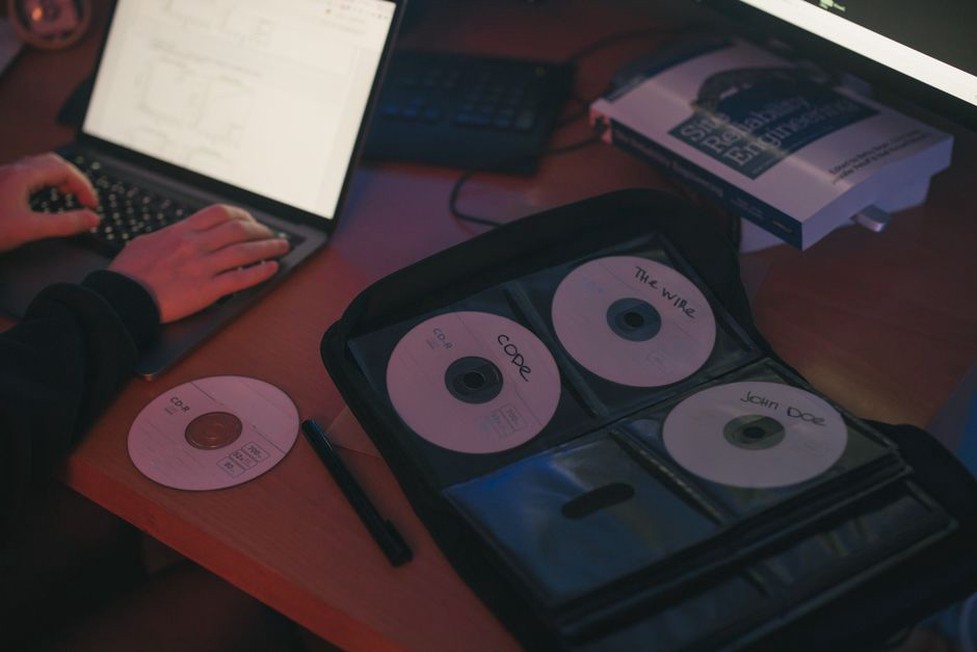
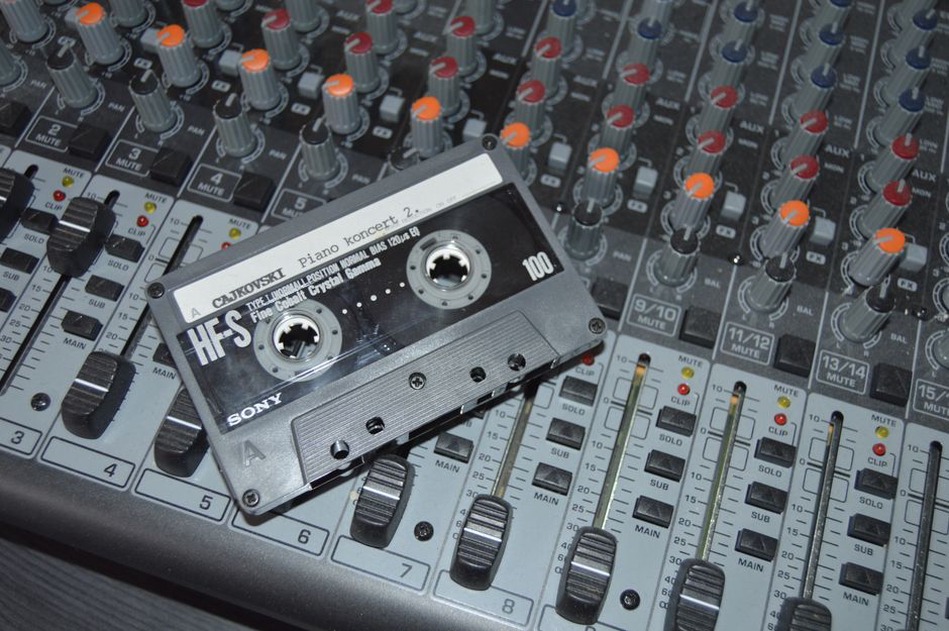
The physical format is integral. Most 008tt releases appear on CD-R, often in editions of thirty or fewer. The discs are burned one at a time, labeled with a rubber stamp or a marker. The cases are reused, sometimes showing visible wear. Cassettes appear infrequently, typically recycled from old stock—blank tapes from the 1980s with their original labels half-scraped off. This is not nostalgia for a bygone format; it is an economical and ethical choice. The materials are what is at hand, and the ephemerality of the medium mirrors the content.
Collectors who seek out these objects do so not for resale value—there is virtually no secondary market for 008tt—but for the experience of owning something that was never meant to be collected. The fragility of the CD-R, prone to disc rot over time, ensures that each copy has a limited lifespan. This temporality is part of the work. The sound is meant to be heard now, not archived indefinitely.
Listening Without a Map
Engaging with 008tt requires a shift in listening habits. Without track titles, liner notes, or artist names, the listener is deprived of the usual anchoring points. There is no way to "research" a release before hearing it. The context is solely the sound itself. This can be disorienting, especially for listeners accustomed to the data-rich environments of Bandcamp or Discogs. But that disorientation is precisely the point. It strips away the secondary pleasures of collecting—the hunt for information, the validation of a known name—and forces a direct encounter with the audio.
One specific release, a clear jewel case with no inlay and a hand-stamped disc reading simply "300824," contains a single forty-five-minute track. The recording is a dense, low-frequency hum that gradually shifts in phase and amplitude, overlaid with what sounds like distant metal scrape. There is no crescendo, no climax, no resolution. The sound simply occupies space. After twenty minutes, the hum becomes less a sound than a tactile presence—felt in the chest as much as heard. At forty-five minutes, the track ends abruptly, leaving the room suddenly quieter than it was before the disc was inserted.
How to Find It (or Not)
There is no website. There is no email address. There is no Instagram. The only way to encounter 008tt is through a network of distros and small shops that operate below the radar—often by chance. A few stores in Tokyo (such as the now-defunct 〇〇〇 in Shimokitazawa or the occasional shelf at Disk Union's experimental section) have carried these discs, usually priced at a few hundred yen. In Europe, certain distros specializing in minimal electroacoustic works might stock them, but stock is inconsistent and disappears quickly.
For those willing to explore this opaque distribution, the rewards are not about rarity or investment. They are about the experience of encountering a sound object that makes no concessions to the listener. 008tt offers no hand-holding, no entry points, no narrative. It is a pure proposition: here is a recording. Listen to it. Then it is gone.
Why It Matters
In a music landscape saturated with content, where every release is accompanied by a press campaign, a playlist placement strategy, and an algorithmic push, the existence of something like 008tt is a quiet corrective. It is a reminder that the foundational impulse of underground music—the urge to document sound without commercial mediation—is still active. It does not need an audience. It does not need validation. It simply exists.
For the listener willing to meet it on its own terms, 008tt offers something increasingly rare: the experience of not knowing what you are hearing, and realizing that not knowing is part of the pleasure. The coordinate points nowhere, but the sound points inward.