
Some files arrive without context, their meaning encoded entirely in a name. A user on an old forum uploads a folder labeled “wasted_series” containing a dozen FLAC files, each title composed of the prefix “wasted” followed by three digits. Among them: wasted 011. No artist, no date, no cover scan. Just a number and a waveform.
This kind of thing is common in the digital remains of the Japanese noise underground—cryptic filenames that surface on blogs, in torrents, or on Soulseek. They are the ghosts of cassette culture, stripped of their physical packaging and left as pure audio data. “wasted 011” is one such ghost. Its name alone cannot tell us who made it, when it was recorded, or on which label it originally appeared. But the name itself is not meaningless; it carries traces of a system, a logic, a history of distribution.
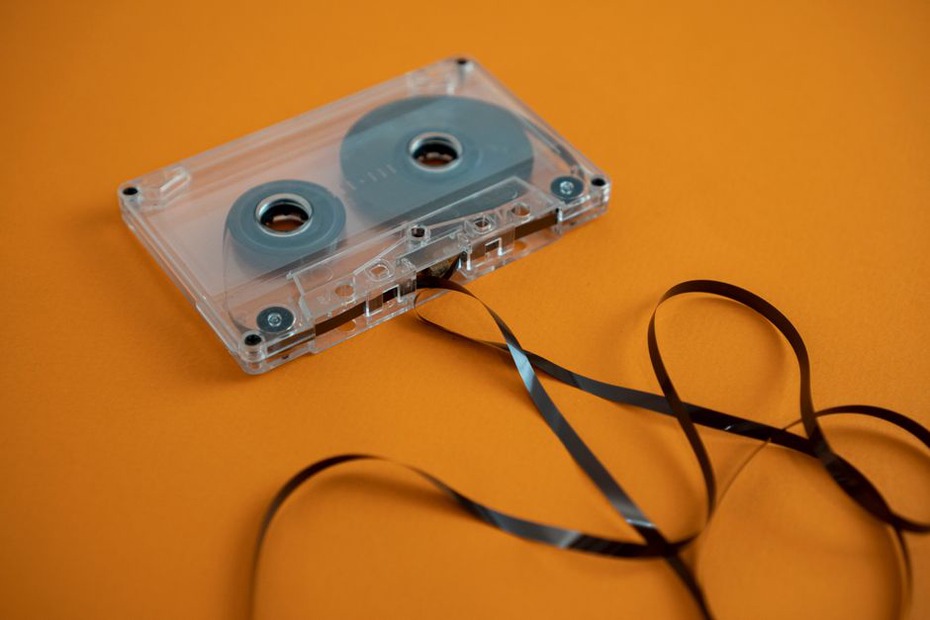
The Naming Convention
The prefix “wasted” appears across a small but consistent cluster of files in Japanese noise circles. Unlike labels that use the name of the label (Tesco, Sludge, Waste, etc.), “wasted” might be a descriptor—a wink at the lo-fi, degraded quality of the source material, or a reference to the artist’s state of mind. Some speculate it is a misspelling or an intentional corruption of “Waste,” a short-lived cassette label from the late 1990s that released works by obscure noise acts. The numbering suggests a series: 001, 002, up to at least 011. Yet no complete catalogue exists online, and most numbers remain unaccounted for. The series may have been abandoned before twelve releases were made, or the files themselves are incomplete rips from a larger collection.
The number 011 does not appear in any known discography of major Japanese noise labels. This absence is typical for the micro-labels that operated without any public presence—no website, no discogs entry, no flyer. The only evidence of their existence is the digital orphan left behind. When a collector rips a tape decades later, the original physical object may be lost, but the filename endures as a placeholder for memory.
The Archival Context
Filenames like “wasted 011” are often found in folders mixed with similarly cryptic entries: “sludge005”, “tesuco520”, “t3”. They become part of a larger ecosystem of orphaned audio. The The Mystery of sludge005: A Japanese Noise Archive Orphan describes a file with an analogous structure—a numeric suffix, a label prefix, and no metadata. In that case, the number pointed to a specific release that was later identified through collector memory. “wasted 011” may follow the same pattern, but no one has yet come forward to match it to a known tape.
The digital archive of Japanese noise is a patchwork of such fragments. Some are meticulously organized by dedicated fans; others are dumped in folders with generic names like “noise_rips” and left to rot. “wasted 011” resides in the latter category. Its bitrate is typical for a 2000s-era CD rip (320 kbps MP3), suggesting the original transfer was made nearly two decades ago, when storage space was limited and collectors prioritized content over metadata.
What the File Tells Us
Listening to “wasted 011” is an exercise in deduction. The audio itself—approximately 18 minutes of layered feedback, circuit-bent electronics, and a single recurring low-frequency pulse—bears the hallmarks of a live recording or a tape collage. The mix is asymmetrical, with the left channel slightly ahead of the right. This phasing issue is a characteristic of cassette transfers made with misaligned playback heads, common in low-budget transfers. The sound is harsh but not without dynamics; the noise feels purposeful, even melodic in its abrasion. It could be the work of an artist familiar with the conventions of Japanese harsh noise—Masonna, Incapacitants, Hijokaidan—but the technical quality is rougher, more amateur, suggesting a lesser-known figure or a one-off project. Without a title or artist, the listener must rely on sonic fingerprinting. Some online sleuths have attempted to match “wasted 011” to known recordings using spectral analysis, but the file’s short duration and lack of distinctive samples have thwarted identification. The recording does not loop or repeat any recognizable motif. It is a pure abstraction, resistant to categorization.

The Collector’s Dilemma
For collectors, a file like “wasted 011” is both a treasure and a frustration. It represents a lost release that someone might still hold in physical form, yet the digital copy is incomplete without context. Some choose to keep the file with its original name, preserving the mystery as part of the listening experience. Others rename it based on guesswork, overwriting the only identifier they have. The debate mirrors the larger tension in archiving noise: whether to impose order or to let the artifacts remain as they were found.
Numbering conventions in Japanese noise often follow a logic that is opaque to outsiders. The The Enigma of Tesco 6: Noise, Numbering, and the Refusal to Be Cataloged explores how the Tesco label used numbering that defied simple sequential logic—some numbers were skipped, reused, or assigned to multiple editions. “wasted 011” may be a similar anomaly. Perhaps the series began at 001 but the tape numbered 011 was actually the third release, because earlier numbers were reserved for projects that never materialized. The numbering becomes a code for insiders, not a public catalogue.
A Pattern of Omission
What makes “wasted 011” significant is not its content but its form. It exemplifies a pattern repeated across hundreds of files from the Japanese noise underground: omission of artist identity. This omission is deliberate. Many noise musicians operated under pseudonyms that changed with each release, or chose not to credit themselves at all. The cassette culture of the 1980s and 1990s was built on anonymity—the music mattered more than the name. A file named only “wasted 111” is therefore authentic to that ethos. To add an artist name would be to impose a layer of commerce and ego that the original creators rejected.
The file’s persistence in digital space is a form of resistance against gathering. “wasted 011” will likely never be identified. It will circulate quietly among a small group of listeners who value its existence not because of who made it, but because it simply is: a piece of sound, unlabeled, uncredited, unowned.
The file sits in a folder on a hard drive, its name unchanged. Every few years, someone downloads it, listens, and adds it to their own collection. No one has ever identified it. It remains a numbered ghost, carrying only the signal of its own degradation—and that is enough.