
The filename "waste f520" appears in a handful of old file listings, buried in the same kind of anonymous folders that populate the outer rings of the Japanese noise underground. No cover art, no liner notes, no indication of artist or label. Just two words and a number, separated by a space. For a collector or a researcher, this might be just another orphan—one of thousands of loose files that circulate on dead hard drives, forgotten blog comments, or the occasional DAT-transfer thread. But the structure of the name itself carries clues that are worth unpacking, even when the audio is missing.
Breaking Down the Label
The word "waste" in the filename could refer to several things in the context of Japanese experimental music. It might be the name of a label—micro-labels in the 1980s and 1990s often used single-word identities that avoided any obvious Japanese character ("Crime," "Fool," "Zero"). It could also be a descriptor, a musician's self-deprecating tag for a piece they considered unfinished or too raw to release. In the DIY cassette culture that thrived in Japan's noise scene, many tapes were never formally cataloged; they circulated under handwritten titles like "waste1" or "garbage3." The word carries no stigma there—it reflects an aesthetic of impermanence and rejection of commercial polish.
But "waste" might also refer to something more literal: a collection of outtakes, field recordings that didn't fit a proper release, or fragments from a live set that were dumped onto a Memorex cassette and later digitized with a minimal filename. The practice of labelling such material as "waste" is common among musicians who work with long-form drone or harsh noise, where the line between a keeper and a discard is fuzzy. In the absence of any other metadata, the word hints at a threshold—material that was saved but not elevated.
Decoding f520
The alphanumeric suffix "f520" is more specific. On the surface, it resembles a model number. The Fostex 520 is a well-known four-track cassette recorder used by many home-studio musicians in the 1990s, including some noise artists who used it for rough mixes and field recording conversions. The model was cheap, reliable, and common in Japan's secondhand shops. A file named "waste f520" could simply have come from a transfer session using that machine. Alternatively, "520" might be a date code—May 20 of some year—or a number that matches a tape's physical label. In underground archives, descriptive filenames often get truncated after the first session, leaving only a model nickname and a sequence.
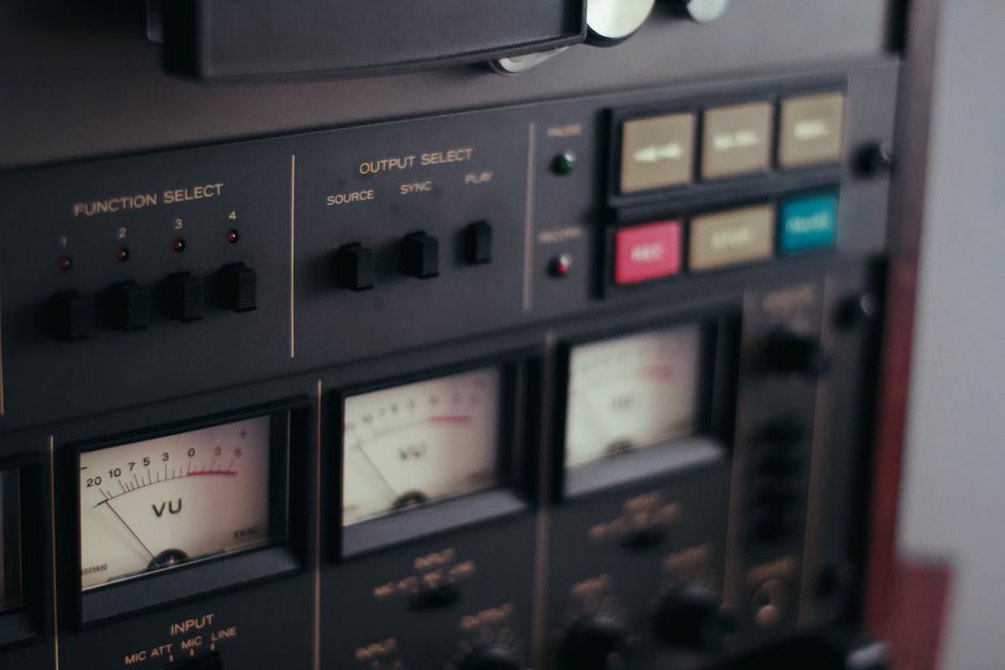
Another reading is that "f520" is a reference not to hardware but to a folder structure. In some larger archives, files are stored under naming conventions that mix a category letter with a number—"f" for field recordings, "n" for noise, "d" for drone. If that convention holds, "waste" could be a subcategory of field recordings: discarded or unusable ambient sounds. The number 520 might be a sequential ID, or perhaps the recording's duration in seconds (8 minutes 40 seconds, plausible for a short field recording). These are guesses, but they are informed guesses based on how even the most clandestine scenes leave traces in their file hierarchies.
The Information Vacuum
What makes "waste f520" frustrating—and valuable as an object of study—is precisely the lack of context. Unlike properly released tapes that carry at least a hand-stamped J-card or a cryptic note in the runout groove, this file floats without any anchor. It could be a piece by a known artist who never claimed it. It could be a student experiment from the 1990s that accidentally ended up on a public server. It could be a placeholder created by an archivist who never got around to filling it. The Japanese noise underground has consistently rejected easy cataloging, and files like this are the consequence of that refusal. They are archival events in themselves, not just recordings.
This is not a flaw. The aesthetics of the Japanese noise scene have always privileged obscurity: the tape that was never officially traded, the anonymous submission to a compilation that no longer exists, the file named by a machine's default export template. Those who search for "waste f520" hoping to find a buried gem may be disappointed—or they may discover that the name itself, in its stubborn emptiness, tells a more interesting story than any sound file could.
Practical Notes for Collectors
If you encounter a file named "waste f520" in a share or on an old blog dump, there are a few steps you can take before assuming it is a lost classic—or a piece of noise to be deleted:
- Check the file size and format. A 44.1 kHz 16-bit WAV lasting 30 seconds is unlikely to contain a full track; it might be a sample or a test. A larger file (say 200+ MB) could be a complete session.
- Scan the directory. Often files with similar names ("waste f521," "waste f522") appear in the same folder. If they form a sequence, the whole set may have once been part of a single batch transfer.
- Examine the timestamps. If the file was last modified on a date that aligns with a known tape generation (e.g., a DAT transfer in 2004), that can narrow the origin.
- Listen for equipment artifacts. If the audio is available, the noise floor, hiss pattern, or frequency response may reveal the recording device—especially if it matches the Fostex 520 or similar gear.
None of these steps will confirm an artist or a label. But they will tell you something about the file's context. In the absence of official history, that is the best any archive can hope for.
Waste as Process
The idea that a piece of music is called "waste" is not unique to Japan, but the way the Japanese noise underground used self-deprecatory titles often served a structural purpose: to signal that the work was a byproduct of a larger, more chaotic creative process. A title like "waste f520" is honest. It acknowledges that the file is a remnant, a leftover from a session that mattered more than the individual track. In a scene that values gesture over product, that honesty is more compelling than a polished, marketable title.
It also raises a question about the archivist's role. When you find such a file, do you preserve it as-is, or do you try to enrich it with metadata? The best practice in noise circles is to keep the original filename untouched, storing it in a folder that notes the source ("from /waste/ folder, 2016 dump"). Any attempt to rename or reconstruct context risks imposing a narrative that may not be true. The file's purpose is to be incomplete.
As of now, "waste f520" remains a placeholder for a piece of audio that may never be heard. The only way to verify if it is a genuine recording or a corrupted placeholder is to listen. But without a tape, a download link, or an active torrent, it stays exactly what its name says: waste. Not useless—just waiting for someone to decide whether it belongs in the archive or in the bin.