
Turn your head in a VR headset and a sound may seem to stay fixed behind you. For a sound installation, that small perceptual shift can matter more than the spectacle of a simulated room. It lets an artist change the listener’s relationship to a sound as they move. In Japanese experimental music, sustained tones, field recordings and dense noise can make such shifts especially audible. But one distinction matters throughout: sound delivered through headphones is not necessarily sound heard in the physical room.
What VR changes in an installation
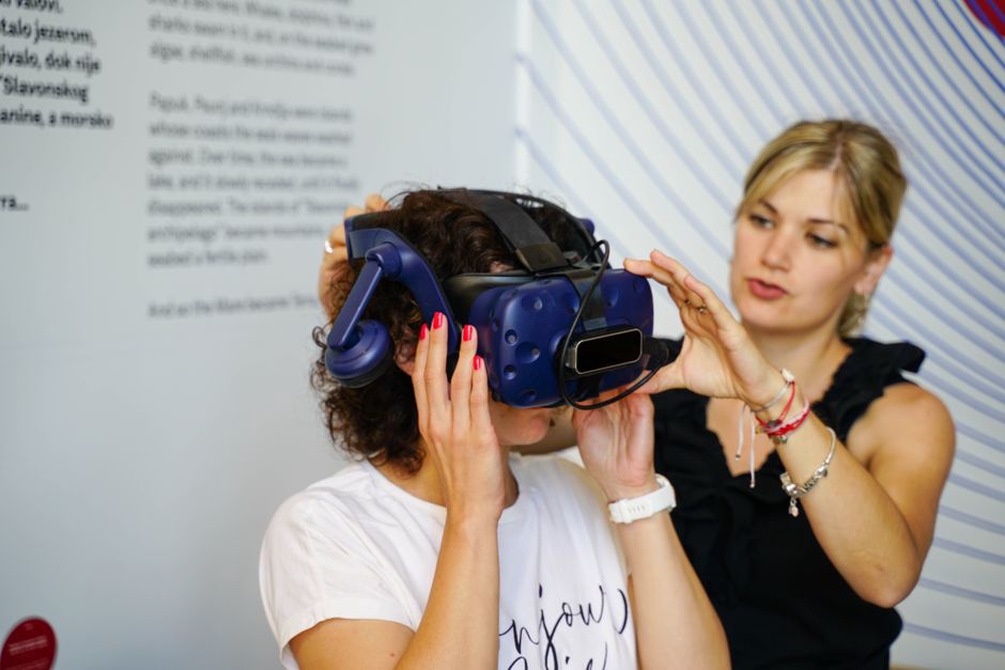
A conventional multichannel installation places loudspeakers around a shared space. Visitors walk between them; their bodies, the room’s reflections and other visitors affect what they hear. A VR work can instead track the orientation, and sometimes the position, of each headset. Its audio engine adjusts the apparent direction and distance of a sound as the participant moves. This is often called spatial audio. When a sound responds to a turn of the head, the tracking matters as much as the recording.
Through headphones, a virtual source can seem to sit beside a doorway with no physical counterpart. A field recording can become something to approach rather than a fixed stereo document. Noise may change timbre when the listener turns, even if its level stays constant. None of this requires photorealistic graphics; a nearly empty visual environment may give the ear more to do.
VR is not a catch-all term for immersive sound. A 360-degree video may let someone look around but not walk toward a sound. An interactive installation may use tracking and speakers without a headset. And within VR, some audio follows the listener’s head rather than staying put in virtual space. It is more useful to ask which relationship a work uses than to call it immersive and leave it there.
An emergence, not a single movement
VR came into sound installation through overlapping practices: computer music, media art, game-engine development, spatial recording and gallery exhibition. In Japan, institutions and festivals concerned with electronic and media art have offered places for sound artists and technical collaborators to test such work. Independent musicians may encounter the same tools through smaller exhibitions and cross-disciplinary projects. Those routes do not add up to a unified Japanese VR sound scene. A headset does not establish a musical genre, either.
The links to earlier experimental practice are more revealing. Electroacoustic composers have long worked with recorded sound detached from a visible source. Noise performers have tested how sustained intensity changes perception. Ambient and drone musicians have made duration and minute variation central to listening. VR can spread these concerns across a space the listener moves through. It does not replace the tape, loudspeaker or room; it changes which spatial cues an artist can specify, and which remain outside their control.
Where the composition happens
Sources, movement and attention
In a headphone-based VR installation, binaural techniques commonly approximate the directional cues produced by the listener’s head and ears. Head tracking keeps those cues aligned with a virtual scene as the listener turns. Where position tracking is available, taking a step can change distance or perspective. The effect is not guaranteed: ears and headphones differ, so a source meant to sound behind someone may instead seem vaguely inside their head. The gallery can intrude, too. A ventilation unit or another visitor remains audible unless the headphones isolate it.
The choices are practical as well as aesthetic:
- Anchored or head-locked sound: Does a tone occupy a virtual location, or follow the listener everywhere?
- Continuous or triggered change: Does movement gradually alter a recording, or switch between distinct layers?
- Represented or invented space: Does the work use a recorded environment, or build an acoustic setting that could not exist physically?
- Open or directed route: Can visitors find their own path, or does the piece require them to reach particular points?
For field recordings, these decisions affect what the material claims. Spatial cues do not turn a recording of a place into a faithful reconstruction: microphones select one perspective, and playback models another. A convincing simulated location may still leave out the social and environmental conditions under which its sounds were captured. When voices or identifiable places enter the work, credit, permission and context still matter.
The limits of a private sound field
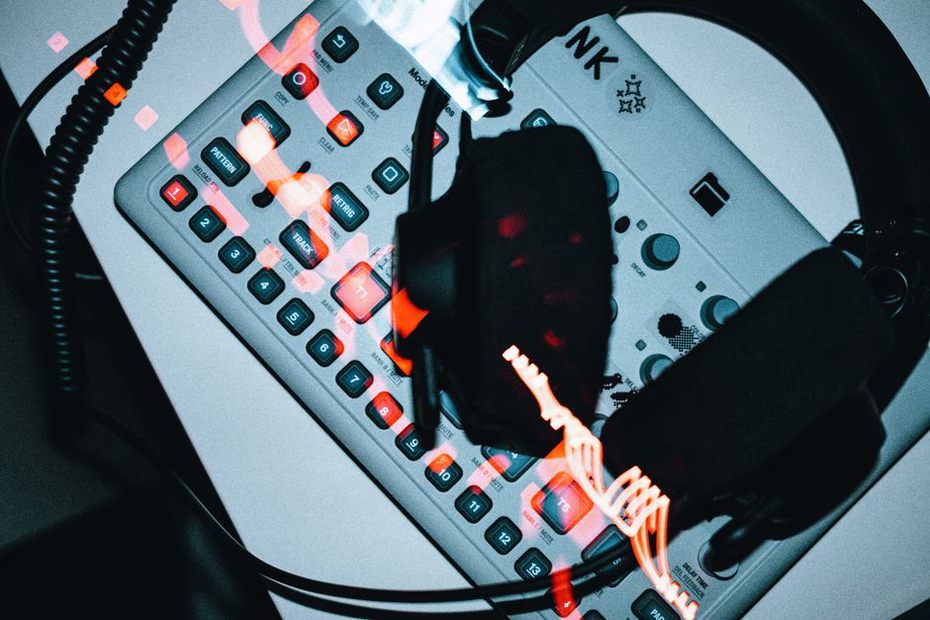
Headphones give each visitor a private acoustic scene. That can sharpen attention to fragile details, but it changes the installation’s social character. People waiting nearby may hear only silence or a faint equipment hum; they have little sense of where the participant is within the piece. Loudspeaker installations, by contrast, expose at least some sound to everyone present. A VR work can use external speakers or other shared elements, though these have to be coordinated with the individual headphone mix.
Access also shapes the composition. A visitor may not be able or willing to wear a headset, stand for the full duration or tolerate visual motion that conflicts with bodily sensation. Seated modes, clear boundaries in the physical room and ways to encounter the work without a headset can broaden access, even if they produce genuinely different versions of it. Tracking failures, headphone fit and instructions from exhibition staff all affect how reliably the piece is experienced.
How to listen critically
The stronger test of a VR sound installation is not whether it convinces you for a moment, but whether movement reveals a musical structure. A drone’s harmonics might emerge from one angle; a noisy layer might obscure a quieter recording only at certain distances. An apparent room might change its reverberation as its boundaries shift. If turning your head makes no audible difference, that could be a deliberate use of head-locked sound—or a sign that the visual environment is doing most of the work.
Documentation needs the same scrutiny. A stereo excerpt cannot preserve the choices a moving listener makes, and a screen recording may show a route other visitors never take. After an exhibition, a description of the tracking, audio placement and available paths may tell you more than a short video clip. At the installation itself, try standing still for a few seconds, then turn your head without walking. That separates one compositional choice from the effects of moving through the space.