
A railway crossing bell changes with where you stand. Across the street, passing vehicles may swallow every other strike; beside the barrier, the bell’s attack and decay come through clearly. It can register as a warning, a repeated pitch or a clue to distance, but those are different ways of hearing it. In Japanese experimental music, the city may enter a recording as a recognizable event or as pressure on everything else in the mix.
There is no single Japanese approach to urban sound. A station concourse, a residential street, an elevated road and an indoor shopping arcade differ in acoustics and in how people use them. Artists make different claims on these spaces, too. One may preserve a recognizable location; another may cut a recording until its source is uncertain, or reproduce a street rhythm without recording outdoors. The useful questions are where a sound came from, what happened to it and where the work places the listener.
What reaches the microphone
Traffic rarely behaves like a fixed backdrop. Tires on wet pavement make a broad, shifting hiss; an engine approaches, changes pitch and recedes. Those movements can organize time more strongly than a deliberately played note. A vending machine’s compressor or building ventilation may hold relatively steady, making nearby footsteps easier to notice. The microphone catches the relationships between sounds, not a tidy inventory of objects.
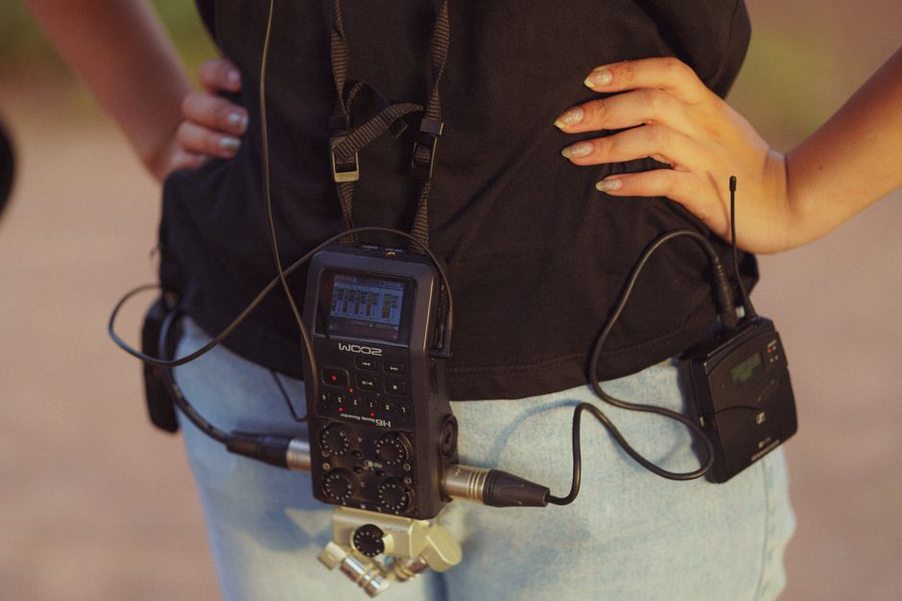
Placement matters as much as location. Near a wall, a recorder may pick up reflected voices and wheel noise; held at ear height in an open passage, it may emphasize movement across the stereo field. A contact microphone attached to an approved surface can reveal vibrations an ordinary microphone barely registers. None of these positions offers a definitive portrait of the city. Each selects something from an environment too dense to capture in full.
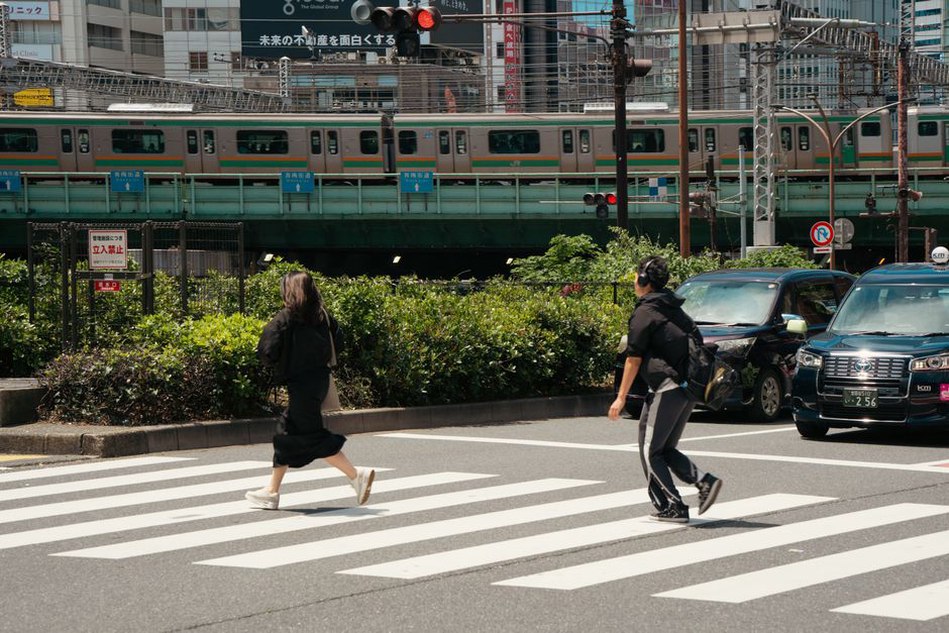
Japanese cities contain designed signals as well: crossing alerts, station announcements and shop sound systems. Repetition can make a place recognizable, but no one signal is a universal urban soundtrack. Sites differ, and the same site may sound unlike itself a few hours later. Weather, construction, crowd density and the recordist’s route all change what comes forward.
From street recording to composition
Keeping the source recognizable
Some work depends on listeners recognizing an event or knowing its circumstances. In Otomo Yoshihide’s Fukushima!-related activities, for instance, the social and geographical circumstances of performance matter; treating the sound as abstract texture alone loses part of its context. That does not make every environmental recording a documentary. A short excerpt from a station platform might retain announcements and footsteps while cutting the long waits that set the place’s pace.
A recognizable sample is still shaped by duration and by what surrounds it. A composer might keep a ventilation hum running beneath brief street events, then leave a gap after a vehicle passes so its absence becomes audible. Editing decides which sounds seem to coexist. On headphones, a distant announcement can feel as present as a close mechanical rattle.
Making the source unstable
Other work pulls an urban sound away from its usual meaning. Slow a motor recording and it may become a low drone; filter a warning tone and only a narrow band remains. Loop a few milliseconds of street audio and the result is a pulse with little trace of the scene it came from. These are common operations in electroacoustic music and noise, not techniques peculiar to Japan. In a given piece, the question is whether the source remains detectable—and what recognition does to the listening experience.
Noise performance calls for care with such comparisons. Merzbow’s work is often discussed in terms of overwhelming density, but it would be misleading to treat every burst of distortion as a literal rendering of Tokyo traffic. Feedback and amplification behave in ways of their own. A comparison with the city may describe a rhythm or a sensation of crowding; it cannot establish a sound’s origin. How Noise Creates Narrative in Japanese Experimental Music looks more closely at the difference between what a sound suggests and what it documents.
Urban rhythms without a field recording
A city can influence a piece even when no microphone goes outdoors. A repeated electronic tone may recall a pedestrian signal through its interval and regularity. A sudden cutoff may suggest a closing door or an interrupted public address system. The resemblance lies in timing, frequency and expectation, not necessarily in a sample.
That distinction matters with Japanese experimental and underground releases whose sources are undocumented. You may hear train brakes in a high squeal, but without notes from the artist, it remains your interpretation. Naming a source too confidently closes down ambiguity. It also feeds the assumption that every machine-like sound must come from a metropolis rather than an oscillator, an instrument or a malfunctioning cable.
Urban form can suggest larger compositional patterns. At a station, intermittent announcements cut through a continuous murmur; an artist might similarly set short, intelligible fragments against a sustained drone. The analogy describes the structure without making the piece a portrait of a station. “Announcement-like interruption” is often more precise than “announcement.”
The politics of a supposedly neutral soundscape
A city recording includes other people’s activity, whether or not they intended to perform. Speech may reveal private information, and a recognizable conversation raises different questions from an indistinct crowd murmur. Laws and venue rules vary. Permission matters especially in restricted spaces or when individual voices are prominent; an ethical edit may mean removing speech rather than making it clearer for dramatic effect.
The words used to describe urban noise carry assumptions, too. Calling a neighborhood “chaotic” may say more about an outsider’s expectations than about daily life there. An apparently quiet street might reflect the hour, traffic control or the recordist’s microphone position. Sound alone cannot explain those conditions. Notes on location, recording time and major edits give listeners firmer ground than a claim to have captured a city’s essence.
Noise levels also have material consequences. Transport, construction and mechanical systems can affect sleep, work and health. A composer’s interest in a harsh sound does not cancel those effects. A recording can be compelling even when its source is unwelcome to people who live with it every day.
How to hear the city in a release
Begin with what the recording supports, rather than guessing its address. Three passes can separate details that blur together on first hearing:
- Listen for distance. Does a sound approach and recede, or stay fixed while other events move around it? An abrupt change in level may signal an edit rather than movement.
- Track repetition. Compare regular signals and machine cycles with loops made in production. An identical transient at identical intervals suggests different treatment from a bell heard through changing traffic.
- Check the frame. Look for sleeve notes on location, recording method and processing. If none are available, describe what you can hear without presenting a perceived source as fact.
Playback changes the evidence. Small speakers can hide low road rumble; headphones may reveal quiet shifts in the stereo field. At excessive volume, a dense recording can seem uniformly loud even when its events are carefully spaced. Try the same short passage on headphones and speakers at moderate levels before turning it up.
For a closer test, choose thirty seconds with a recurring tone. Mark each appearance, then note what masks it: footsteps, broadband hiss, another tone or silence. If the surroundings change while the tone stays steady, it may act as an anchor. If the tone and its surroundings return identically, you may be hearing a loop. Either observation tells you more about the composition than calling it “the sound of Tokyo.”