
Walk east from Shinjuku Station at midnight on a weeknight and the city hums a different frequency. Fluorescent convenience stores leak 60-cycle buzz through plate glass. Pachinko parlors exhale a metallic cascade of ball bearings and compressed MIDI fanfares. Underground pedestrian tunnels compress the rumble of last trains into standing waves that vibrate in the sternum. None of this was composed, yet it forms a coherent sonic architecture — one that has shaped the vocabulary of Japanese noise music more profoundly than any single studio technique.
The relationship between Japan's urban acoustic environment and its noise scene is not metaphorical. It is material. When Merzbow's Masami Akita describes his early experiments with broken amplifiers and contact microphones in the late 1970s, the context was not a quiet conservatory but a Tokyo apartment where the neighbor's television bled through thin walls and construction pile drivers provided an involuntary rhythm section. The city was already making noise music; artists simply learned to shape it.
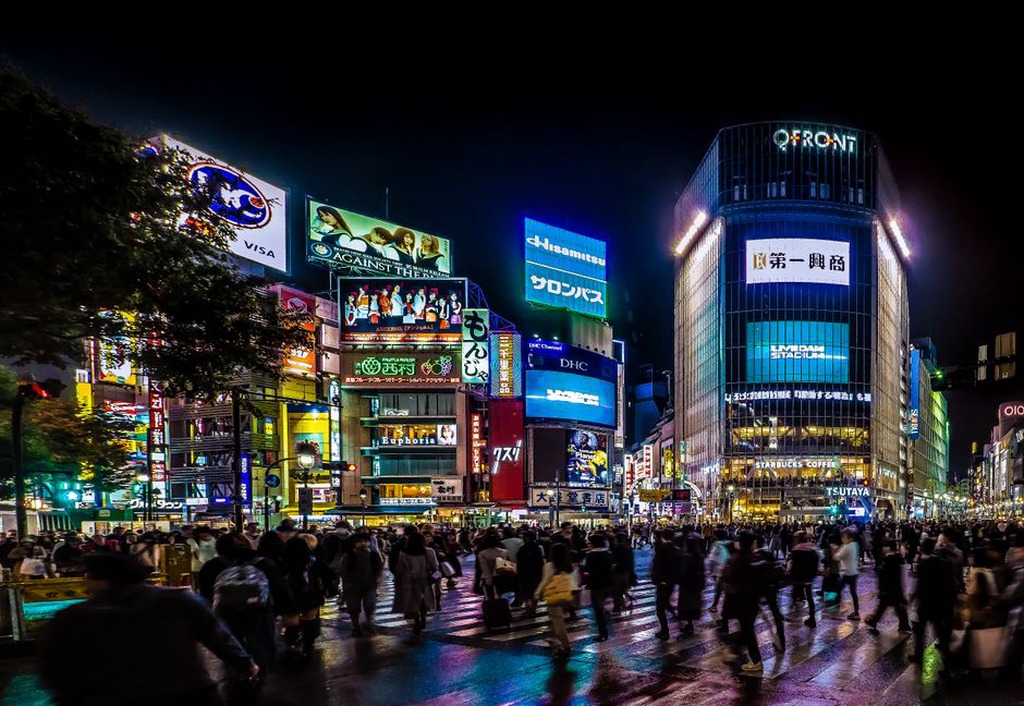
The Frequency Profile of the Japanese City
Japanese urban soundscapes differ from their Western counterparts in specific, measurable ways. The density of vending machines — Japan operates roughly one per 23 citizens — creates a continuous low-level electrical drone across residential and commercial zones alike. Level crossings on urban rail lines generate predictable rhythmic patterns: warning bells at 1.5 kHz, followed by the broadband rumble of passing trains. The widespread use of overhead power lines rather than buried cables means that even quiet residential streets carry a faint 50 or 60 Hz electromagnetic hum, depending on the regional grid frequency split between eastern and western Japan.
These are not exotic curiosities. They are the raw material that field recording artists and noise musicians have been harvesting for four decades. The Kansai region's 60 Hz hum versus Kanto's 50 Hz creates genuinely different baseline drones — a fact that Osaka-based noise artists have occasionally cited as contributing to regional timbral differences in early power electronics work, though such claims should be understood as artistic perspective rather than acoustically rigorous analysis.
Construction as Constant Composition
Tokyo's building cycle operates on roughly 30-year replacement rhythms for commercial structures. The result is a city in perpetual construction, where the sound of pile driving, concrete cutting, and heavy machinery forms a near-constant backdrop. During the economic bubble period of the mid-to-late 1980s — coinciding with the explosive growth of the Japanese noise cassette underground — construction noise in central Tokyo reached intensities that would be considered unacceptable in most European capitals. Noise artists of the period did not need to imagine industrial soundscapes; they could open a window.
This constant construction presence influenced the development of what came to be called "environmental noise" within the Japanese underground — work that blurred the line between field recording and live performance. Artists would record construction sites with portable cassette decks, then play back the results through overdriven PAs in small venues, creating a feedback loop between the city's actual acoustic output and its deliberate artistic amplification.
Infrastructure as Instrument
The Tokyo subway system carries over six million passengers daily through tunnels that function as unintended acoustic chambers. The pressure differential created by trains entering stations compresses air into distinctive low-frequency pulses. Platform melodies — the short musical phrases that signal train departures — create a citywide network of pitched signals that overlap and interfere in transfer stations. For musicians working with found sound and tape manipulation, these elements provided a ready-made compositional vocabulary.
The late 1990s and early 2000s saw a wave of Japanese experimental releases built entirely from transit infrastructure recordings. These were not ambient relaxation pieces but confrontational works that emphasized the physical pressure of underground sound: the way certain tunnel frequencies create genuine discomfort in the chest cavity, the disorienting effect of competing platform melodies heard simultaneously at major transfer points like Shinjuku or Ikebukuro.
This tradition of treating infrastructure as instrument connects directly to the broader Japanese noise aesthetic, which has long rejected the distinction between musical sound and unwanted sound. If a train entering a tunnel produces a more physically overwhelming low-end than any synthesizer patch, why privilege the synthesizer?
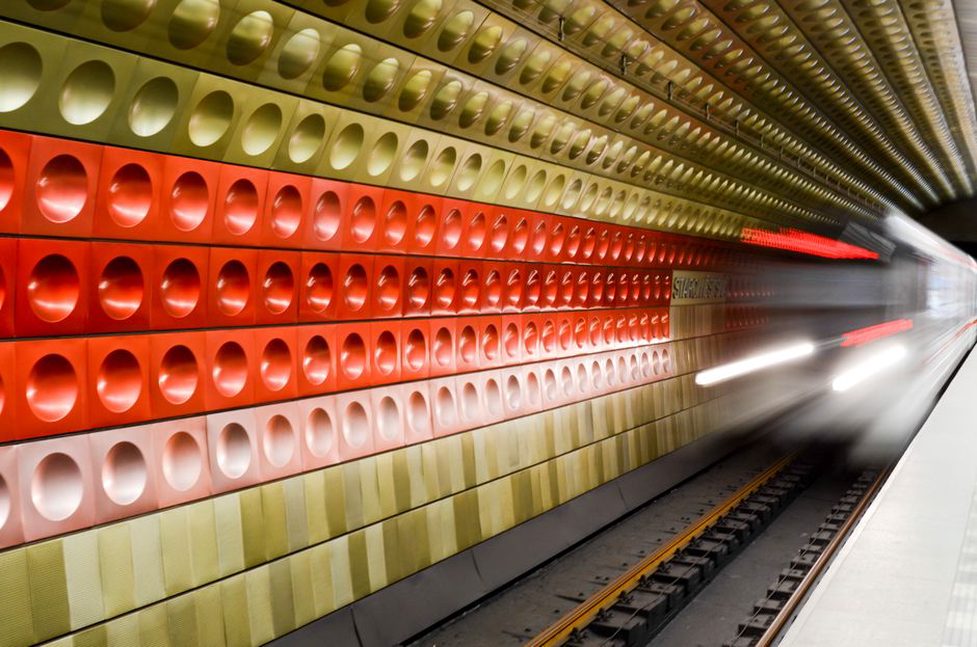
The Pachinko Parlor Problem
No discussion of Japanese urban sound and noise music can ignore the pachinko parlor. These establishments, which number in the thousands nationwide, produce a specific acoustic signature: the continuous clatter of steel balls against glass and metal, layered over cranked pop music and digitized victory fanfares, all at sound pressure levels frequently exceeding 90 decibels. Stepping from a quiet street into a pachinko parlor is a genuine acoustic shock — one that noise musicians have cited as formative.
The pachinko parlor represents a uniquely Japanese approach to sonic overload: not the singular catastrophic event but the sustained, multitasking assault. Multiple sound sources compete at equal volume with no attempt at mixing or hierarchy. This is, in essence, the structural principle behind much harsh noise wall music — a subgenre in which static, dense noise textures are sustained for extended durations without development or narrative arc. The connection is not causal in any simple sense, but the shared aesthetic logic of overwhelming, undifferentiated sonic mass is difficult to dismiss.
Field Recording as Urban Documentation
Japanese field recording practice developed in close dialogue with the noise scene from the 1980s onward. Unlike the nature-oriented field recording traditions more common in North America and Europe, Japanese urban field recordists gravitated toward the built environment: vending machine arrays, electrical substations, pedestrian underpasses, and the peculiar acoustic properties of concrete riverbank channels that run through urban neighborhoods.
These recordings served dual purposes. They functioned as documentary preservation of soundscapes that were constantly changing — a single Tokyo block might lose three buildings and gain two new ones within a year, each shift altering the local acoustic reflection pattern. They also provided raw material for tape manipulation, with recordings of air conditioning units, elevator machinery, and traffic tunnel resonance being processed into unrecognizable textures through looping, speed variation, and heavy equalization.
The cassette format proved essential to this practice. Portable cassette recorders were affordable, available in Japanese electronics shops throughout the 1980s, and produced a characteristic compression and high-frequency rolloff that became an aesthetic signature in itself. The limitations of the medium — tape hiss, wow and flutter, the particular saturation curve of ferric tape pushed past its nominal levels — became compositional tools rather than obstacles. The network of cassette labels that documented Japanese noise and experimental music through the 1980s and 1990s was built on this technological foundation, a history explored in depth in our examination of the ghost file phenomenon in noise music's digital graveyard.
Architectural Acoustics and Performance Spaces
The physical spaces where Japanese noise music developed shaped its sonic character as much as the urban environment outside. Early noise performances in Tokyo often took place in tiny basement venues with concrete walls and minimal acoustic treatment — spaces where sound pressure levels built up rapidly and high frequencies reflected with punishing intensity. These were not designed as performance spaces but adapted from storage rooms, former bars, and underground parking areas.
The acoustic properties of these spaces encouraged a specific performance approach: extreme volume used not for its own sake but as a way to excite the room's resonant frequencies, turning the architecture itself into part of the signal chain. A contact microphone on a concrete wall in one of these basement spaces would pick up not just the direct sound from the PA but the entire accumulated resonance of the structure. This technique — treating the performance space as a resonant body — became a hallmark of Japanese noise practice and distinguishes it from noise traditions that focus primarily on electronic signal processing.
The Legacy of Temporary Spaces
The temporary, improvised nature of many early noise venues also meant that documentation was sporadic and often accidental. Recordings were made on whatever equipment was available, frequently from audience positions rather than direct board feeds, capturing the full room sound including audience movement, glass bottle clinks, and the creaking of inadequate ventilation systems. These "flawed" recordings now constitute the primary historical record of a crucial period, and their particular sonic character — distant, room-heavy, saturated — has influenced subsequent generations who encountered the music through these documents rather than through live experience.
The relationship between these informal recording practices and the broader archiving challenges facing Japanese experimental music extends into the digital realm as well. The transition from physical media to digital files created its own set of documentation problems, including orphaned recordings with cryptic filenames that resist easy cataloging — a phenomenon we have previously examined through the lens of specific orphaned fragments from the Japanese noise underground.
Contemporary Resonances
The urban sonic landscape that shaped Japanese noise music continues to evolve. The shift from overhead power lines to underground cabling in some districts is gradually removing the electromagnetic hum that colored countless field recordings. Platform doors installed on many Tokyo subway lines have altered the acoustic signature of stations, eliminating the distinctive sound of trains entering open platforms. The replacement of older vending machine models with newer, quieter units has reduced the constant electrical drone in residential areas.
These changes do not represent a loss so much as a transformation. Younger artists working with field recordings and noise techniques are documenting a different city — one where the dominant sounds include smartphone notification chimes, the particular whine of electric vehicle motors, and the layered Bluetooth speaker leakage from countless portable devices. The sonic material has changed, but the fundamental approach — treating the urban environment as an involuntary composition, available for documentation, manipulation, and amplification — remains continuous with the practices established in the 1980s.
The physical pressure of certain Shinjuku underpass frequencies at midnight has not disappeared. It has simply been joined by new layers of signal, new opportunities for transduction, new ways of understanding the city as an instrument that never stops playing.