
A sustained shakuhachi tone can sound uncannily like an electronic drone. That resemblance does not, on its own, establish influence. The bamboo flute’s pitch moves with breath, fingering and the angle of the player’s mouth; a synthesizer can hold a steadier signal while imitating its airy edge. In Japanese ambient music, tradition may enter through an instrument, but it may also be heard in how a sound decays, where it sits in a room or how long the next sound takes to arrive.
“Japanese ambient” covers music made for different purposes: foreground listening, designed interiors and quieter passages in experimental careers. “Tradition” is no single source, either. Court music, theater, religious practice, folk performance and ways of attending to the natural world have separate histories. Folding them into one inherited taste for calm makes the music harder to understand.
What counts as an influence?
A connection can be heard or documented in different ways. A recording might contain an identifiable traditional instrument or melody. The artist might name a specific practice in notes, interviews or a commission. Or a listener might hear a structural resemblance: slowly unfolding tones, long gaps between events, attention to a fading edge. The first two provide evidence of a relationship. The third is a comparison to test, not a claim about ancestry.
Spaciousness is not automatically Zen, and a bell is not automatically a temple bell. Japan has histories of ritual sound and aesthetic thought, as well as recording studios, public-address systems, consumer electronics and changing urban environments. Ambient musicians may work with several of these histories at once. For a closer look at one persistent shortcut, the discussion of Zen, silence and Japanese ambient listening separates attentive hearing from assumptions about spiritual intent.
Instruments change when their context changes
Breath, string and resonance
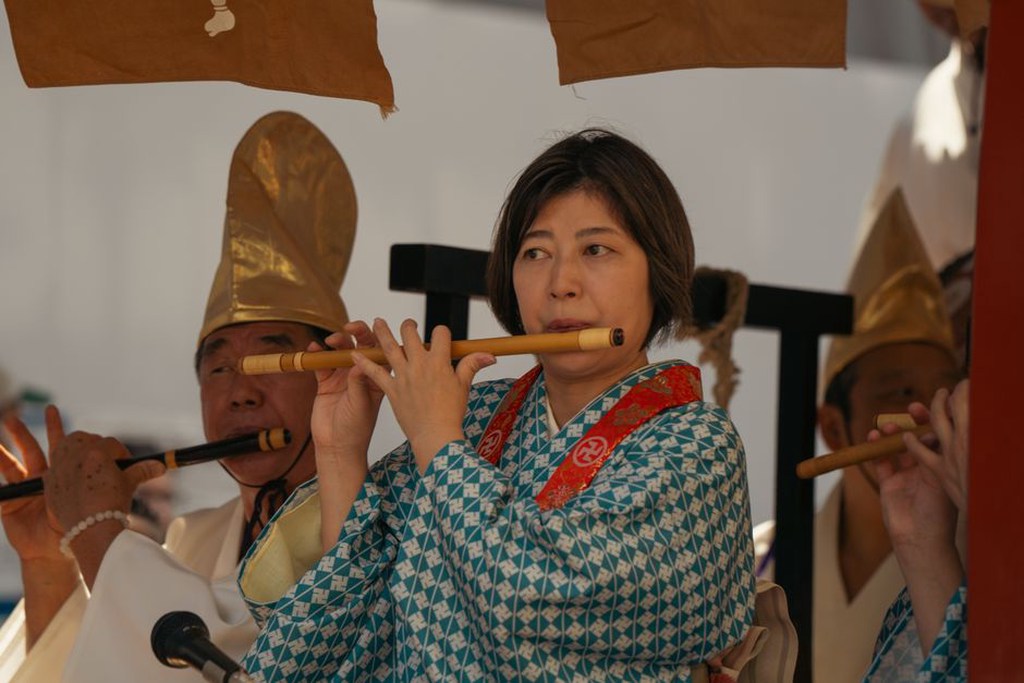
The shakuhachi makes both continuity and change audible. In solo traditions associated with the flute, breath is part of the sound, not something concealed behind a perfectly even note. A player can bend pitch and let a tone fray. An ambient recording might expose those details, layer them or process them until the source is hard to place. Calling the result “traditional” simply because a flute is present ignores the microphone, edit and mix.
With the koto, a note name tells only part of the story. A plucked string has an attack, a bending pitch and a decay. Electronics can lengthen that tail, repeat the strike or blur separate plucks into a continuous texture. Those techniques may bring out qualities already present in the instrument, but they alter its scale: a brief gesture can fill minutes. Does the arrangement retain the articulation of each pluck, or use the instrument mainly as acoustic material?
The shō, a mouth organ used in gagaku, sustains clusters of pitches that invite comparison with organs or electronic tones. But gagaku is an ensemble practice with its own repertoire and performance conventions, not an early form of drone music. Timbre gives us a place to start listening, not a reason to collapse the contexts.
Borrowing a sound is not borrowing a practice
A drum, gong or flute sample can move easily into a studio track. The relationships that gave it meaning in performance do not move with it so easily. An instrument might signal a change in a theatrical scene, mark an occasion or take part in an ensemble’s exchange. Isolating one strike for its decay can make a compelling ambient piece, but it redirects attention from social function to recorded texture. The shift is neither automatically respectful nor automatically careless; sourcing, credit and musical treatment matter.
Intervals and endings
Ma, a term often invoked for intervals or the relational space between events, is a tempting point of comparison between Japanese arts and ambient music. Used narrowly, it can describe how timing around a sound affects what we hear. As an explanation for every sparse passage, it tells us little. Widely spaced notes could come from a compositional decision, an improviser responding to a room, an edit or a technical limit.
Listen instead to what happens during a pause. The note ends, but reverberation continues. A low hum persists beneath apparent quiet. The next entry may feel late because the previous sound has not quite gone. Headphones can bring a faint breath forward; speakers in a room may all but swallow it. These relationships are audible whether or not the artist cites ma.
With a plucked string, the ending can hold more activity than the beginning: the attack gives way to unstable overtones, then near-silence. A bell’s partials fade at different rates. Processing can enlarge those changes. To compare an acoustic source with an ambient treatment, follow one note beyond the point where you expect the next. Its disappearance may tell you more than the initial resemblance.
From environmental music to designed listening
Japanese ambient music has a modern design history too. In the 1980s, work discussed as kankyō ongaku, often translated as “environmental music,” could be conceived for an interior, a public setting or an everyday activity. The term does not identify one sound; it asks what music does in its surroundings. An album heard today as a self-contained work may once have had a different relationship to a space or commission.
Hiroshi Yoshimura’s work is often heard for its restrained tones and repetition, though its relationship to designed environments matters just as much. Music for Nine Post Cards, released in 1982, rewards close attention without requiring it at every moment. That balance is a modern problem of composition and production, not proof of an ancient ideal. Satoshi Ashikawa’s Still Way (Wave Notation 2), also released in 1982, invites us to hear sound alongside its surroundings rather than apart from them.
Some artists make more explicit connections between acoustic tradition and contemporary presentation. Midori Takada’s Through the Looking Glass, released in 1983, uses percussion and carefully layered repetitions. To describe it only in terms of traditional influence would miss the work of multitracking and arrangement. Nor can an artist’s background be read straight off a record’s surface: performance technique, recording choices and the listening situation all shape what reaches us.
The natural world is not a ready-made soundtrack
Rain, insects and flowing water may suggest a connection to Japanese practices attentive to seasonal change. A field recording, though, is no unmediated piece of nature. Microphone position, duration, filtering and playback level determine what we hear. Put an outdoor recording beside a sustained electronic pitch and the two may compete rather than blend. That friction can say more than a claim that the track evokes a garden.
Place matters as well. Wind caught by a rooftop microphone is not wind moving through trees; neither carries a fixed cultural meaning. If a release documents the location of an environmental recording, that information helps. If it does not, the sound alone cannot provide an address. Even the hiss could be weather, tape noise or a layer added later.
Tradition across media, not outside history
The recording medium affects these comparisons. Analog tape can soften an attack or add hiss; digital editing can isolate a fragile fragment and repeat it exactly. On an aging cassette deck, a flute’s breath may be hard to separate from the medium’s noise. These effects are not ancient inheritances. They shape how a performance is heard once it has left its original setting.
Japanese ambient artists have no obligation to cite inherited forms. The country’s experimental music includes sustained tones, field recordings and quiet electronics made in conversation with international practices as well as local ones. Assuming every Japanese artist is working through tradition turns geography into an explanation before the recording has been heard. Ask something narrower: which sound, technique or stated reference connects this work to which practice?
A listening test for a claimed echo
- Identify the source. Is an acoustic instrument audible, credited or merely suggested by an electronic timbre?
- Track the treatment. Listen for layering, looping, reverberation and edits. What happens after the source first appears?
- Check the context. Does the release name a repertoire, performer, place or commission? Separate documented connections from associations you have made yourself.
- Listen to the interval. Follow the decay and background sound before calling a passage “silent.”
With a track built around one plucked note, play its first ten seconds twice: once for the attack, then for what remains after it. Perhaps the tail changes color, or a background tone comes forward. That is a compositional event you can describe without assigning the space between notes to a timeless tradition.