
The Tesco Organisation does not deal in certainties. Its catalog, a sprawling sequence of numbers that begins at Tesco and runs through Tesco 2, Tesco 3, and beyond, looks orderly on the surface but dissolves into ambiguity the moment you try to pin down what Tesco 6 actually is. No official discography exists. No central database lists every entry. The numbering itself is the only consistent thread—a deliberate, almost bureaucratic gesture that masks the chaos of the material it documents.
For collectors, Tesco 6 is not a fixed point but a placeholder. The label, run by Toshiji Mikawa (one half of Incapacitants), has released hundreds of editions over decades, many of them anonymous, untitled, and packaged in plain black or white sleeves with nothing more than a stamped number. The number 6 could refer to a specific cassette, a CD-R, a lathe-cut 7-inch, or even a compilation whose contents are lost to time. The label never standardized the format. The number was simply applied to the next release in the queue, regardless of medium or artist.
This lack of transparency is not a bug; it is the feature. The Tesco catalog functions as a deliberate obscurantist archive, one that privileges the act of release over the identity of the creator. When you hold a copy of Tesco 6, you are not holding a work by a known artist. You are holding a piece of a system that refuses to explain itself. The number is the only guarantee: this object came from the Tesco pipeline, and that pipeline is the sole authority.
The Numbering System: A Skeleton Without Flesh
Compared to the mystery of sludge004 cc, where a single cryptic filename hints at a lost cassette, the Tesco numbering is almost generous. It gives you a sequence. But the sequence tells you nothing about content, genre, or quality. Tesco 1 might be a harsh noise wall; Tesco 2 could be a field recording of a pachinko parlor. The number does not categorize. It merely records that the label processed a certain number of releases before moving on to the next.
This approach has led to significant confusion among collectors. A common mistake is to assume that Tesco 6 refers to the sixth release chronologically. In reality, the numbering is not always sequential. Some numbers were skipped or reused for different editions (e.g., a Tesco 6 cassette from 1995 and a Tesco 6 CD-R from 2002 may exist, both genuine but different). The only way to verify is to examine the physical object: runout grooves, label stamps, the quality of the paper insert. Even then, contradictions arise.
The Aesthetic of Anonymity
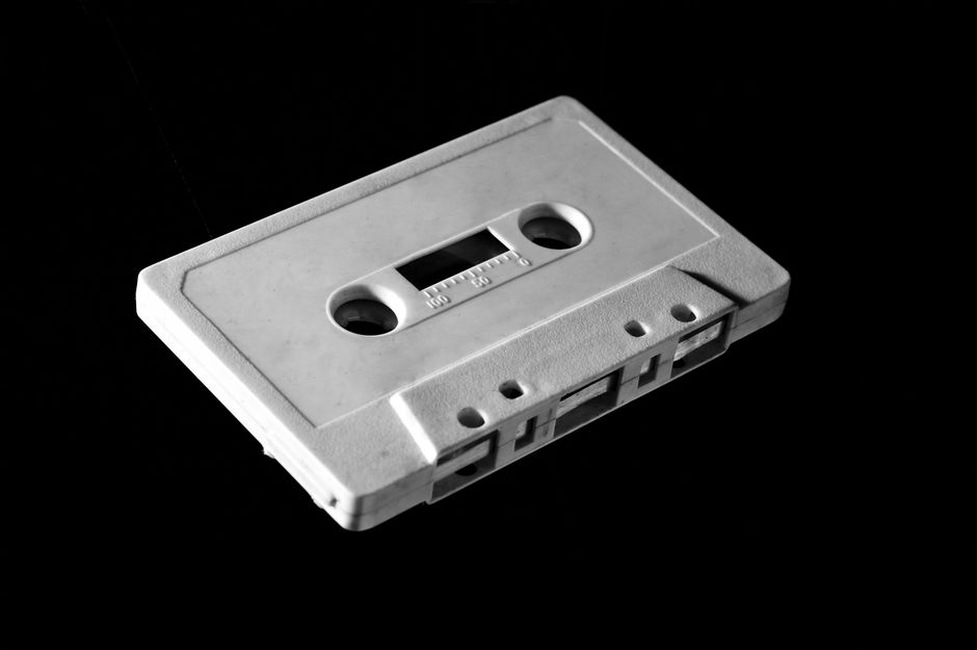
The packaging of a Tesco release is a study in minimalism. The standard format is a plain black or white cassette case with a number stamped in silver or black ink on the spine. No tracklist. No artist name. No date. The insert, if included, is a single sheet of A4 folded twice, often blank except for a repeating pattern or a single line of text. This is not poverty; it is a conscious rejection of the information overload that defines most commercial music packaging.
For the listener, this means that the experience of Tesco 6 is entirely unmediated. You cannot read reviews or look up a biography before pressing play. You are forced to confront the sound directly, without preconceptions. This is a radical act in a music culture saturated with metadata. The Tesco label asks you to trust the number, not the artist.
Yet the anonymity is not absolute. Over time, collectors have assembled partial discographies by cross-referencing physical copies, label announcements from old fanzines, and testimony from participants. These efforts are painstaking and often inconclusive. A number like Tesco 6 may appear in a list of releases from 1996, but the entry might read only: “TESCO 6 — ??? — ??? — limited edition of 50 copies.” The question marks are not a placeholder for missing information; they are the definitive record.
Cataloging Challenges and the Collector’s Burden
Archiving Tesco releases is a task that few have attempted and none have completed. The label itself has never issued a master list, and Mikawa has stated in interviews that he does not keep records. The only way to build a catalog is to physically inspect copies and share findings across a network of collectors, often through private forums or tape trading circles.
A typical Tesco 6 cassette might be housed in a standard Philips-style case with a yellowed J-card that contains no information beyond the number. The tape itself could be of any length—C30, C60, C90, or a custom length. The recording speed might be 1 7/8 ips or 4.76 cm/s, depending on the duplicator used. The sound quality can range from pristine to almost inaudible, depending on the master tape and the condition of the cassette.
One of the most persistent rumors about Tesco 6 is that it is a split release between two anonymous projects, each side recorded in a single take with no overdubs. Another rumor claims it is a live recording of Incapacitants from a show in 1994, but the label has never confirmed this. The rumors are themselves part of the release’s identity. Every collector has a theory, and no theory can be disproven because the source material is sealed.
In this environment, the act of cataloging becomes a form of creative interpretation. The database that a collector builds is not a definitive record but a personal map of the unknown. The what sludge002 cass reveals about Japanese noise blog archives is a parallel example: a filename that encodes a release but leaves the content to speculation. The Tesco system is the same, only more systematic.
Tesco 6 in Context: The Number as Object
To understand Tesco 6, you must stop looking for the music and start looking at the number. The number is not a reference to a sound; it is a reference to the label’s process. Each new Tesco release is a step in an ongoing series that has no terminus. The label does not retire numbers. It does not reissue. It simply moves forward, adding one more digit to the sequence.
This makes Tesco 6 a particularly interesting node because it sits early in the catalog, before the label became known for its more extreme noise releases. The early Tesco numbers are often quieter, more experimental, and less aggressive than later entries. If you can find a copy, you may hear drones, tape loops, and field recordings—elements that would later be commercialized by ambient artists but which, in the context of early Tesco, feel raw and unpolished.
But again, this is speculation. The only way to know is to listen to a specific copy, and no two copies are identical. The label allowed for variations in packaging, tape formula, and even track ordering. The Tesco 6 you hold is not the same Tesco 6 that someone else holds. The number is a marker of origin, not of content.
Three Common Misconceptions About Tesco 6
- Misconception 1: Tesco 6 is a single, well-defined release. In reality, multiple versions of Tesco 6 exist, and the label has never clarified which is the “official” one. The number is a catalog ID, not a unique identifier.
- Misconception 2: The number indicates the chronological order of release. While the sequence generally follows the order of production, gaps and overlaps occur. Tesco 6 may have been released after Tesco 7 if the numbering was applied at the time of packaging rather than production.
- Misconception 3: The artist is always anonymous. Some Tesco releases do credit the performer, but the label does not require it. For Tesco 6, no artist name has ever been verified, and the number alone is what appears on the spine.
These misconceptions persist because collectors and listeners want Tesco to be an orderly system. It is not. The disorder is the point. The label’s refusal to be cataloged is a political statement about the nature of music as a commodity. By stripping away all identifying information except the number, Tesco forces the listener to engage with the sound without the crutch of context.
The next time you see a worn cassette with a faded number 6 stamped on the spine, do not ask who made it. Ask what it means to own a piece of a system that was never meant to be understood. That is the real content of Tesco 6. It is not a recording. It is a refusal to be recorded.