
Among collectors who dig through the deep ends of Japanese noise discographies, the phrase "Tesco 5" surfaces with the weight of a half-remembered rumor. It is not a release you can buy on Discogs. It does not appear on any label catalog from the 1990s or 2000s. It has no confirmed tracklist, no artwork scan, no edition size. Yet the name persists in forum threads, private want lists, and the metadata of shared digital files. The reality is a tangle of misattribution, bootleg confusion, and the peculiar way Japanese noise culture treats its own ephemera.
The number "5" suggests a series, and indeed, the Tesco name is associated with a handful of real cassette releases from the late 1980s and early 1990s, mostly on the short-lived label Tesco Organisation. That label, run by a figure known only by the alias Toshiji, released perhaps a dozen editions — brutalist noise walls, cut-up tape collages, and live recordings from Osaka’s underground. But no official Tesco Organisation catalog lists a fifth release. The known titles — Tesco 1 through Tesco 4 — are documented in a few collector databases and physical copies have surfaced at auction. Tesco 5 remains a phantom.
The Bootleg Hypothesis
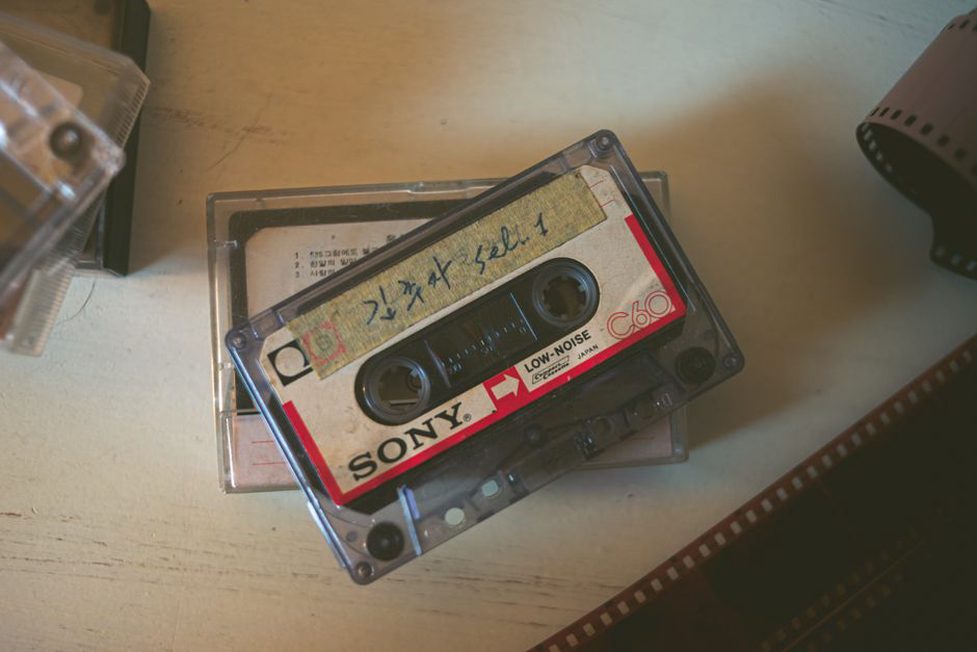
The most plausible explanation is that Tesco 5 never existed as an authorized edition. Instead, the name likely originated from a bootleg CD-R or digital transfer made by a fan or a trader in the early 2000s, who compiled unreleased material or a live set and labeled it as the missing fifth volume. This practice is common in the Japanese noise underground, where scarcity and demand create a black market of homemade reproductions. A trader in Tokyo or Osaka might have burned a disc, written "Tesco 5" on it with a marker, and passed it along at a show or via mail. From there, the file spread through early peer-to-peer networks and file-sharing forums, acquiring a life of its own.
Evidence for this hypothesis lies in the audio files themselves. Copies circulating under the name Tesco 5 vary wildly in length, sound quality, and content. One version runs 38 minutes of dense analog hiss with occasional bursts of distorted feedback; another is a 74-minute CD-R rip of what sounds like a poorly recorded live performance with audience noise bleeding into the mix. The lack of consistency points to multiple sources, each claiming the same title but containing different material. No serious collector treats these files as canonical.
How the Myth Spread
The persistence of Tesco 5 as a search term owes much to the way Japanese noise fans catalog their collections. In the early 2000s, private blogs and FTP sites became the primary means of sharing rare recordings. File names often followed a cryptic logic — abbreviations, numbers, and truncated titles that made sense only to the uploader. A file named "tesco5.mp3" could have been a simple mislabeling of an unrelated recording. Over time, the repetition of that filename across multiple sources created the illusion of a real release.
This phenomenon is not unique to Tesco. The same pattern appears with other phantom titles in the sludge series, where filenames like sludge004 2 or sludge004 min refer to fragments that may never have been part of an official release. The Japanese noise underground has always operated with a deliberate vagueness about its own output. Labels fold without notice. Tapes are dubbed in runs of ten or twenty. Catalog numbers are skipped or reused. In such an environment, a ghost title like Tesco 5 is almost inevitable.
What the Files Actually Contain
If you obtain a file labeled Tesco 5 today, what are you likely to hear? Based on the circulating copies that have been analyzed by collectors, the material can be grouped into three categories:
- Misattributed live recordings: Low-fidelity audience tapes from shows at small Osaka venues, possibly featuring musicians who performed under the Tesco umbrella but never released a studio recording. The sound is dominated by room reverb, clattering feedback, and the hum of tube amplifiers.
- Outtakes and rehearsal tapes: Rough mixes of material that may have been intended for a compilation or a split release that never materialized. These often have abrupt starts and ends, suggesting they were pulled from a DAT or a cassette master without editing.
- Complete fabrications: Some files are clearly modern noise compositions by anonymous producers, uploaded to file-sharing sites under the Tesco name to attract attention. The production quality — clean digital clipping, synthetic textures — contradicts the analog methods of the original Tesco Organisation era.
None of these versions can be verified against a known source. The original label owner, Toshiji, has not commented publicly on the matter, and attempts to contact him through remaining email addresses from the 1990s have gone unanswered. The Tesco Organisation itself dissolved around 1994, leaving no official discography.
Why It Matters
At first glance, Tesco 5 seems like a trivial footnote — a mistake, a hoax, a collector’s inside joke. But its persistence reveals something important about how Japanese noise history is constructed. Without formal archives, the record of what was released, when, and by whom depends on the testimony of participants and the integrity of physical objects. When those objects are lost or destroyed, the digital copies that replace them carry no guarantee of authenticity. A file named Tesco 5 may be the only trace of a live set that was never meant to be preserved. Or it may be a complete fabrication. There is no way to tell without the original artifact.
This ambiguity is not a flaw in the culture — it is a feature. Japanese noise has always resisted easy documentation. Labels like Tesco Organisation operated outside the commercial recording industry, often without barcodes, ISBNs, or any formal cataloging. The scarcity of information is part of the music’s texture. A collector who spends years tracking down a phantom release learns more about the scene than someone who simply downloads a discography PDF.
Practical Advice for the Curious
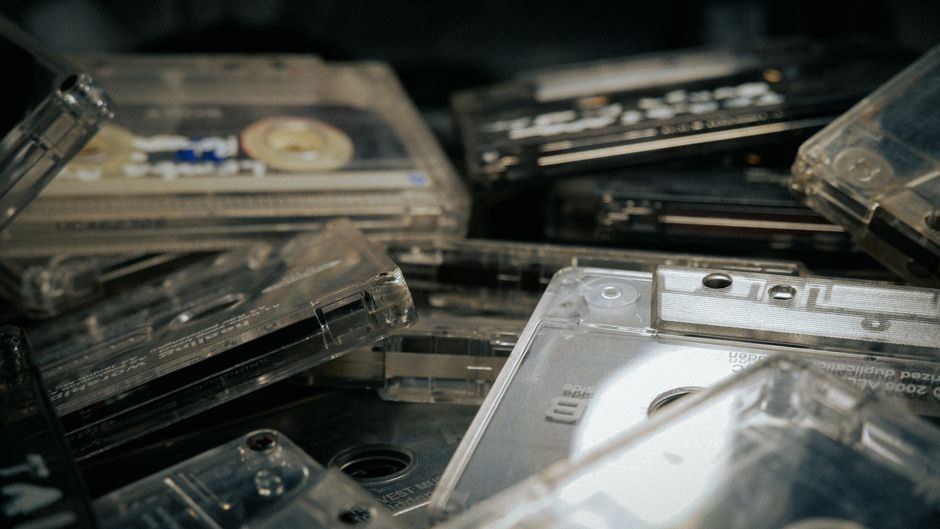
If you encounter a file labeled Tesco 5 in a trade or download, approach it with the same skepticism you would apply to any unverified artifact. Check the file’s spectral frequency range — if it contains content above 20 kHz, it was likely mastered digitally and is almost certainly a modern creation. Compare the runtime against known Tesco Organisation releases; the original four volumes run between 20 and 40 minutes, so a 74-minute file is suspicious. Listen for the characteristic tape hiss and analog distortion of late-80s cassette dubbing; if the noise floor is flat and uniform, the recording was probably made on a digital recorder.
One circulating copy, for instance, shows a flat noise floor above 16 kHz — a clear sign of digital mastering. Another has abrupt cuts that suggest it was ripped from a DAT tape, not a cassette. Neither matches the analog hiss of the original Tesco cassettes. The file might be a genuine live recording from an unknown show, or it might be a modern forgery. Without the original tape, you'll never know — and that uncertainty is exactly what makes the hunt worthwhile.