
A sustained tone can seem almost motionless until a delay repeats its edges at uneven intervals. The source might be a keyboard note, a struck object, or a short recording. What matters is how long each trace remains audible, and whether the traces gather into a haze or stay apart. In Japanese ambient music, technology often works at this scale: it shapes decay, repetition, distance, and the amount of detail a listener can follow.
There is no single technological history behind this music. Studio commissions, home recording, computer composition, and sound installations offered different tools and imposed different limits. Nor does Japanese ambient name one unified style: records associated with it range from quiet instrumental pieces to electronically processed environmental sound. The useful question is what a particular device or production method makes possible—and how much of its operation remains audible.
Recording equipment changed the unit of composition
A microphone and tape recorder let a composer work with a sound after its source has stopped. A phrase can be replayed, reversed, slowed, or set against another recording. Familiar as that seems now, it changes where composition can begin: with a recorded event and a decision about which portion to keep, rather than notes intended for a performer.
Analog tape makes those decisions physical. Repeated copies can accumulate hiss and soften transients; a splice leaves an abrupt boundary; a loop establishes a duration that need not fit a conventional bar. These are not defining traits of Japanese ambient, but possibilities open to anyone using tape. Their significance depends on whether an artist exposes the loop, hides it, or lets imperfections in the recording become part of the piece.
Akira Ito’s 1986 album Marine Flowers, for example, is often discussed alongside the broader history of Japanese environmental and ambient music. A list of instruments would say little about what makes it interesting. Layered timbres and gently changing patterns give sounds a setting without making every layer compete for attention. Other records put a recognisable instrument nearer the foreground. Technology can build an acoustic environment, shape an instrument’s decay, or fix a performance for repeated listening.
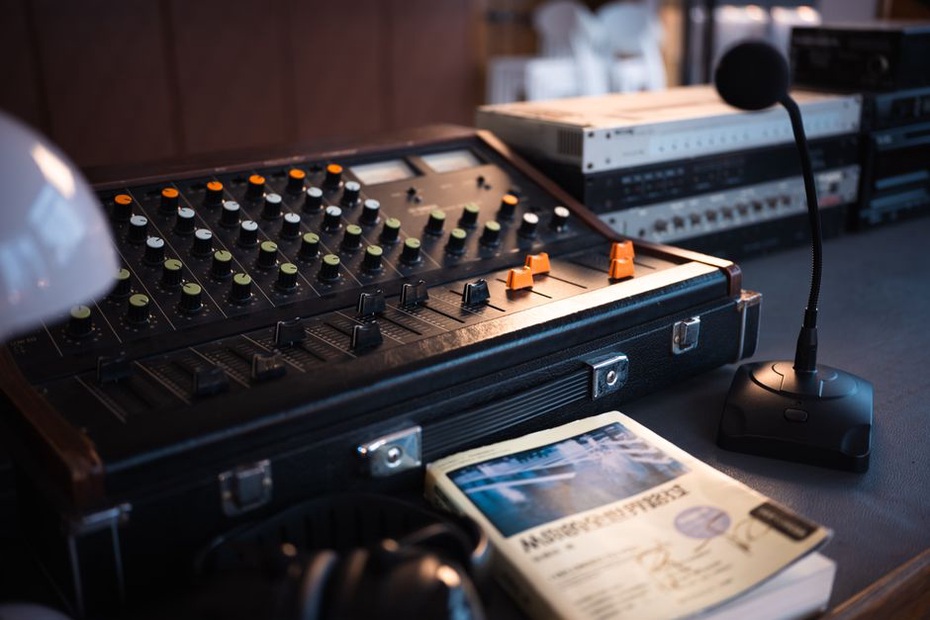
Multitrack recording gives a musician another set of choices. With sounds on separate tracks, their levels and positions can be adjusted after the performance. In a sparse piece, a slight change in one layer’s level can shift it from foreground event to barely noticed background. The mix may matter as much as the notes.
Synthesizers offered control, not a single sound
Synthesizers are often shorthand for ambient music’s technological side, but the word conceals a great deal. A sustained patch can hold a stable pitch longer than a struck instrument; a filter can gradually remove upper frequencies; an envelope can make a tone fade almost as soon as it appears. None of this has to sound soft or placid. The same controls can produce brittle attacks, conspicuous pulses, or low-frequency pressure.
Hiroshi Yoshimura’s Music for Nine Post Cards, released in 1982, is a useful counterweight to any account centred entirely on synthesis. Its spare keyboard writing and attention to duration show how an ambient effect can arise from the placement and decay of modest sounds, without a dense electronic texture. Yoshimura’s Green, released in 1986, uses a more layered palette. Heard side by side, the records show how instruments and production methods affect what reaches the ear without dictating a fixed degree of complexity.
A synthesizer also lets a musician reconsider a sound while composing. If a tone masks another part, changing its frequency content may help more than lowering its volume. If a sequence feels too insistent, adjusting its attack or decay can change its apparent pace without moving a single note. In ambient music, there may be little else to draw attention away from such decisions.
Effects units make time adjustable
Reverb and delay can both leave sound audible after the initial event, but they set up different relationships. Reverb combines many reflections into a sense of acoustic persistence; delay returns more distinguishable repetitions. The boundary blurs when repetitions are close together or heavily processed. Still, it is worth asking: does a recognisable copy follow the sound, or does its edge dissolve into a surrounding field?
Neither effect has to imitate a real room. Long artificial reverb can give a quiet instrument an impossible scale; a short delay can make one gesture seem to come from several points. Feedback—the repeated return of processed sound into the effect—may slowly alter a texture without any new notes. At that point, the effect is part of the composition’s timing, not a finish added afterward.
Designed environments and the limits of the background
The relationship between music and setting comes into focus in Japanese kankyō ongaku, often translated as environmental music. The term covers work connected with spaces and situations as well as records made for home listening. Sound intended for a building, an exhibition, or another shared setting faces a different problem from music heard through headphones with full attention. It has to coexist with movement, conversation, and other noise.
Yoshimura’s Surround and Satoshi Ashikawa’s Still Way (Wave Notation), both released in 1982, are associated with this history. They offer no single recipe for unobtrusive music. Ashikawa’s work, in particular, rewards attention to small events even as its restrained pacing leaves room for other activity. Calling it “background” can obscure the precision involved in keeping a sound perceptible without making it constantly assertive.
Playback affects that balance. Speaker placement changes which frequencies carry across a room; walls and furnishings alter reflections; distance makes quiet details more or less apparent. A recording designed or selected for a site does not sound precisely the same through laptop speakers. The file or disc remains unchanged, but the audible result depends on the playback system and its surroundings.
That is one reason to resist treating historical environmental recordings as interchangeable mood playlists. Their contexts varied, and not every work had a documented site-specific function. Even when a piece was conceived in relation to an environment, a modern reissue may be heard under conditions its maker did not anticipate. Home listening is no less valid; it brings different parts of the work forward.
Digital tools altered repetition and revision
Digital recording makes it comparatively easy to keep several versions of a piece and return to an earlier edit. A short sound can be duplicated without the generational loss associated with copying analog tape. Software can shift a fragment by a tiny amount, stretch it, or automate a slow change in level. None of these operations guarantees subtle music. They make precise repetition and revision easier to use deliberately.
Ryoji Ikeda’s work shows why “ambient” needs careful boundaries here. His digital sound can involve sustained frequencies and close attention to listening space, but its sharp signals and extreme contrasts resist the usual idea of ambient as undemanding background. Digital precision can sustain near-stasis or make a brief interruption feel unusually severe. The tool alone tells us little about the listening experience.
Software changes the scale of work, too. One project may involve arranging long recordings; another, editing individual clicks. An audio editor’s waveform can make quiet events visible before they are audible, drawing attention to material that might otherwise be discarded. But the image is no verdict on the sound. Playback level, speakers, and hearing conditions still determine whether those details register.
For listeners and collectors, “digital” is therefore too broad a description. A cleanly recorded acoustic instrument, a deliberately distorted file, and a densely layered computer composition can all be digital productions. More useful, when the information is available, is how a recording was assembled, processed, and presented.
Small formats shape what survives
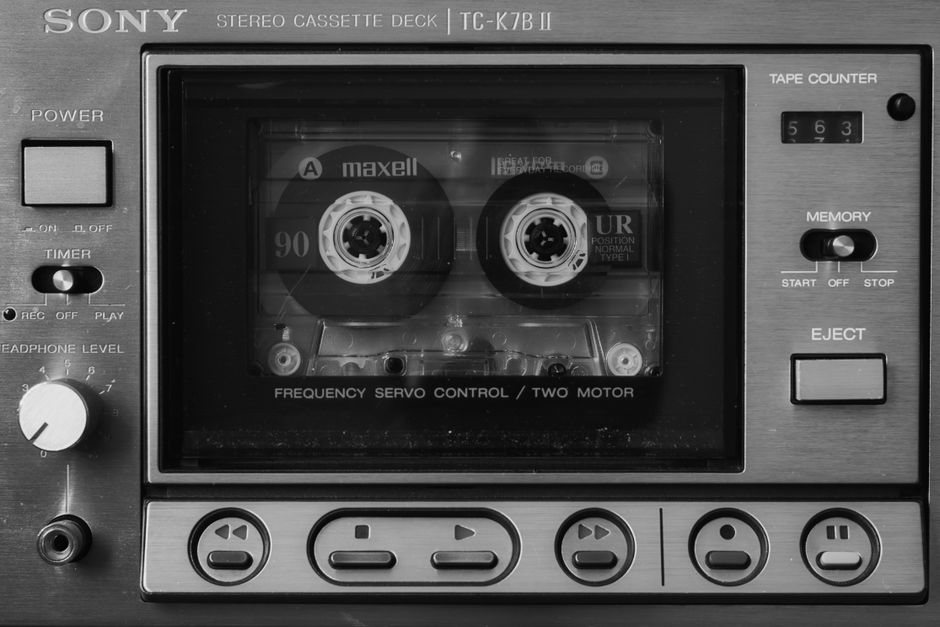
Technology also governs circulation. Cassette duplication and home recording have let experimental musicians distribute work without large-scale manufacturing. For a slowly developing piece, a cassette’s side length can impose a boundary. Its noise floor may remain audible under quiet passages, especially after repeated copying or on a poorly maintained deck.
That noise should not automatically be praised as warmth or dismissed as damage. Low-level hiss across a release may come from recording or duplication; a sudden drop in one channel may be a fault in an individual copy. Condition matters for archival transfers as well. Noise reduction can make a recording easier to hear while removing faint upper-frequency detail. Without access to the source, a listener may be unable to tell an artistic decision from a preservation decision.
Digital files solve some access problems and create others. They can be copied without further loss, but sparse release information can detach a track from its original sequence, medium, or credited collaborators. An upload labelled only with an artist and title reveals little about whether its audio came from a master, a commercial copy, or a later transfer. In music where quiet texture matters, the difference may be audible.
Format does not settle artistic value. A cassette may contain carefully mixed work; a high-resolution file may preserve a rough performance. What differs is the set of constraints around duration, noise, reproduction, and documentation. Those constraints belong to the recording’s technological history, not merely to the space between a listener and an ideal version.
How to hear the technology without guessing the equipment
A useful listening note begins with an audible relationship, not an assumed device. Repeated sounds do not prove a tape loop was used; a spacious tone does not prove the recording was made in a large room. Different effects and edits can produce similar results. Credits, liner notes, and artist accounts may clarify the process, but sound alone often cannot establish an equipment list.
- Track the decay: after a note stops, does it fade smoothly, return in distinct copies, or change pitch and texture?
- Listen for seams: does a pattern restart with an identical small sound, or does each return vary slightly?
- Notice the noise floor: does hiss remain constant, rise with particular layers, or disappear between events?
- Compare playback levels: at a moderate volume, which details remain part of the piece and which vanish?
- Check the credits: distinguish a documented instrument or process from one merely suggested by the recording.
Each observation can have several explanations. An identical recurrence might be a loop, a programmed event, or a repeated sample within a longer sequence. Wavering pitch could come from an instrument, modulation, or a transfer made at unstable speed. Keeping those possibilities open makes the description more exact.
To hear how much playback contributes, choose a quiet passage with a sustained tone and one recurring high sound. Play it through speakers at a comfortable level, then through headphones at the same perceived loudness. Does the high sound seem attached to the sustained layer or separate from it? Does the tone’s tail remain audible after each recurrence? Those observations describe the recording and playback system working together, without requiring a guess about the instrument’s brand.