
The name Steven Porter does not appear on any cassette J-card, no discogs entry lists him as a musician, and you will not find his face in the liner notes of a C60 from Osaka. Yet anyone who has spent time digging through the deep folders of Japanese noise archives—particularly the sprawling, cryptically named sludge series—will recognize his watermark. Porter is not a creator but a conduit: a collector, a digitizer, a metadata ghost who shaped how a generation of listeners outside Japan encounters the country's most opaque underground sounds.
His name surfaces in file metadata, in the 'recorded by' tags of field recordings, and in the provenance notes of torrents that circulate anonymous noise material from the 1990s and early 2000s. Unlike Western archivists who often impose order on chaos, Porter seems to have worked with a near-archaeological passivity: he captured what crossed his path, labeled it minimally, and let the material speak. The result is a body of digital artifacts that feel less like a collection and more like a seismic reading of a particular time and place.
Who Is Steven Porter?
Public information is thin. Porter appears to have been an American expatriate living in Japan during the late 1990s and early 2000s, when the Japanese noise scene was simultaneously fragmenting and globalizing. He wasn’t a Jojo Hiroshige or a Toshimaru Nakamura—no stage presence, no record label. Instead, Porter seems to have been an active listener embedded in the live houses of Tokyo and Osaka, recording sets with portable gear and trading tapes with musicians and collectors.
His name is most consistently attached to field recordings—ambient captures of urban soundscapes, train stations, temple bells, construction sites—made with a Sony PCM-M1 or similar DAT recorder. But his footprint is equally present in the digital transfer of older noise material from cassettes to hard drives. Many files circulating under the sludge umbrella show Porter's naming conventions: short, all-lowercase filenames, often with date stamps or cryptic abbreviations. The sludge003 min file, for example, carries a metadata tag that reads simply 'SP transfer 2002'.
The Transfer Aesthetic
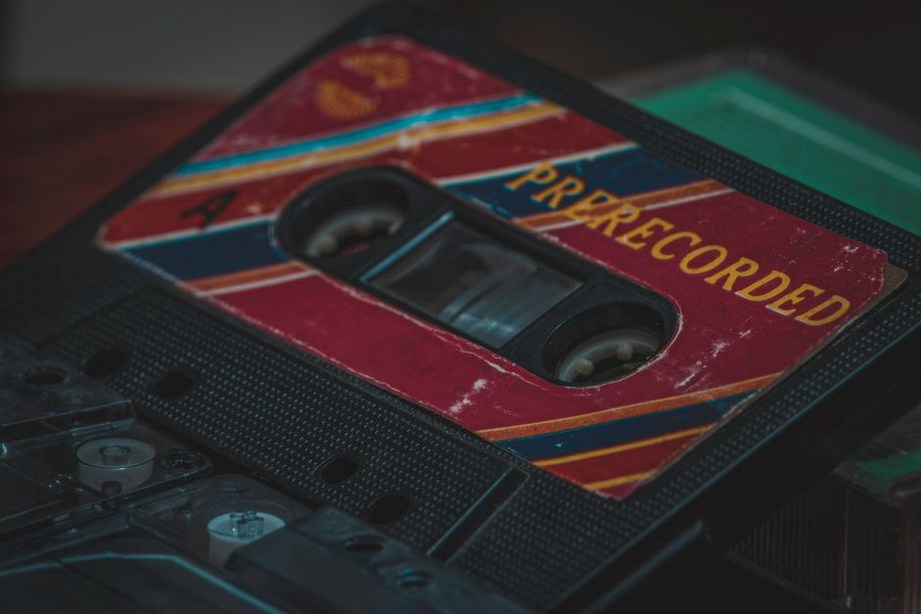
Porter's digitization work is notable for what it lacks: noise reduction, equalization, or any attempt to 'clean up' the source material. The hiss of the original cassette remains. The dropouts from degraded tape are preserved. In some cases, the recordings include the sound of the cassette mechanism itself—the clunk of the play button, the whir of the motor—as if Porter considered these part of the document. This approach stands in stark contrast to the remastered reissues that dominate the official noise market, where labels sand away surface noise to meet audiophile expectations.
For collectors, this fidelity to the original medium matters. A Porter transfer of a 1995 live set by a now-defunct Tokyo noise unit communicates not only the performance but the conditions of its preservation: the humidity of the room where the tape sat for years, the quality of the blank cassette used, the generational loss from previous dubs. You can hear the materiality of the object. This is not 'high fidelity' in the conventional sense; it is high fidelity to the artifact itself.
The Field Recording Corpus
Beyond the noise transfers, Porter's own field recordings form a distinct body of work—though he never released them commercially. They circulate in small circles as torrents or direct downloads, often labeled simply by location and date: 'shinjuku_1999_08_14' or 'ueno_park_morning_2001'. The recordings are long-form, minimal, and unedited. A typical track might be forty-five minutes of a single microphone position: the drone of a pachinko parlor from across the street, the layered announcements of a train platform, the distant chanting of a festival.
These recordings share an aesthetic with the Japanese environmental music tradition—think Hiroshi Yoshimura or Satoshi Ashikawa—but without the compositional framing. Porter does not impose a narrative. He does not fade in or out. He simply starts the recorder and stops it later. The result is a raw document of acoustic ecology that feels closer to surveillance than to music. Yet for listeners attuned to the drone and hum of everyday Japan, these files are invaluable. They capture a soundscape that has since been transformed by redevelopment, noise ordinances, and the digitization of public address systems.
Porter and the Sludge Series
The sludge series remains the most mysterious node in Porter's orbit. It is unclear whether he originated the series or simply contributed to it. The files bear no label name, no catalog number, no artist credits. They are simply sequential: sludge001, sludge002, and so on. Some appear to be compilations of different performers; others are single long tracks. The music ranges from harsh noise walls to sparse electroacoustic improvisation. Porter's name appears in the metadata of several early entries, often as the digitizer or, in a few cases, as the performer of an unnamed field recording included as a filler track.
The anonymity of the series has led to speculation that Porter himself assembled these files from his collection, sequencing them without attribution to preserve the privacy of musicians who may not have wanted their work circulating. This would align with the DIY ethos of the Japanese underground, where many performers operated under pseudonyms or no names at all. Porter's role, then, was not to curate but to copy—to ensure the material survived beyond the physical lifespan of the cassettes.
The Ethics of Circulation
Porter's activities raise questions the noise community continues to debate. Is it ethical to distribute recordings without the performer's explicit consent? Porter appears to have operated in a gray area: he shared material within private circles, and only later did it leak into broader archives. He never monetized the files. He never claimed authorship. His name functions less as a credit and more as a trace—evidence that someone was there, listening, preserving.
For musicians who later discovered their early work circulating under Porter's transfers, reactions have been mixed. Some expressed discomfort at having their unpolished, ephemeral performances frozen in digital permanence. Others saw it as a form of documentation that the official labels would never undertake. The sludge series, in particular, contains material from artists who have since disavowed their noise past, making Porter's archive a contested record of a scene that some would prefer to forget.
Practical Research: Finding Porter's Work
For collectors and researchers, locating Porter's transfers requires using the same decentralized networks that hosted them originally. Soulseek remains the most reliable source, with several users maintaining folders explicitly labeled 'SP transfers' or 'Porter archives'. The files are often nested within larger collections of Japanese noise, so searching for 'steven porter' alone yields inconsistent results. More effective is to search for specific location-date combinations—'osaka_2000_03' or 'nakano_1998'—and cross-reference the metadata.
Some of Porter's field recordings have been bundled into compilation torrents that circulate on private trackers dedicated to experimental music. These bundles often include a text file with minimal notes: equipment used, recording location, and occasionally a brief observation about the acoustic environment. The notes are terse, almost clinical. Porter does not editorialize. He does not explain why he chose a particular spot or what the listener should hear. The recording is the explanation.
For those interested in the digitization methodology, Porter's transfers offer a case study in preservation without intervention. Compare a Porter transfer to a commercial reissue of the same era, and the differences are stark. The commercial version will have been mastered, equalized, and often re-recorded from a different source. Porter's version is the tape as it was, with all its limitations. For the collector who values the object's history over its sonic polish, Porter's approach is the gold standard.
The Legacy of an Accidental Archivist
Steven Porter never sought recognition. His name appears nowhere in the official histories of Japanese noise. He is not listed in the acknowledgments of any book or documentary. Yet his transfers have become primary source material for a generation of listeners who were not present at the live houses of 1990s Tokyo. Through his files, you can hear the room tone of a cramped basement venue in Shimokitazawa, the feedback from a PA system pushed too hard, the cough of an audience member between tracks.
Porter's work reminds us that the history of experimental music is not written only by its performers. It is also written by the people who held the microphones, who pressed play on the tape decks, who traded cassettes in the back of smoky clubs. The documentation of cassettes with the Olympus C-7 follows a similar logic: the physical object photographed, cataloged, and shared without commentary. Porter's recordings are photographs in audio form—snapshots of a scene that has since dissolved into myth. They are not the scene itself, but they are the closest we have.
Whether Porter is still active, still in Japan, or even still alive is unknown. His last known transfers date from the early 2000s. The files continue to circulate, detached from their originator, absorbed into the anonymous flow of data that constitutes the contemporary noise archive. A file like shinjuku_1999_08_14 still sits on a hard drive somewhere, its metadata untouched—'SP transfer 2002'—a quiet signature from a man who wanted the music, not himself, to be heard.