
A sine tone can seem almost blank until another sound enters beside it. On Sachiko M’s Sine Wave Solo, small shifts in pitch and duration expose the relationship between tone, speaker and room. Set that beside a Merzbow recording dense enough to obscure individual sources. Both work with frequencies, but one leaves space around them while the other crowds the same moment. “Sonic palette” means more than a list of instruments here: it includes the choices that make a sound distinct, crowded, unstable or hard to place.
Start with the edges of a sound
Pitch is only part of what a musician controls. A sound has an attack—the way it begins—a period of sustain and an ending. It may have a clear center or scatter into hiss, rattling and distortion. It may stand alone or mask quieter sounds beneath it. Those details tell us more about a performance than calling it simply “harsh” or “minimal.”
Japanese experimental musicians have used acoustic instruments, electronics, tape, amplified objects and environmental sound to work on these edges. The categories overlap. An instrument can generate feedback; a recording can retain an accidental room noise. A quiet performance may demand as much control over amplification as a loud one. What happens after sound leaves the performer’s hands is part of the palette too.
When an instrument stops sounding like itself
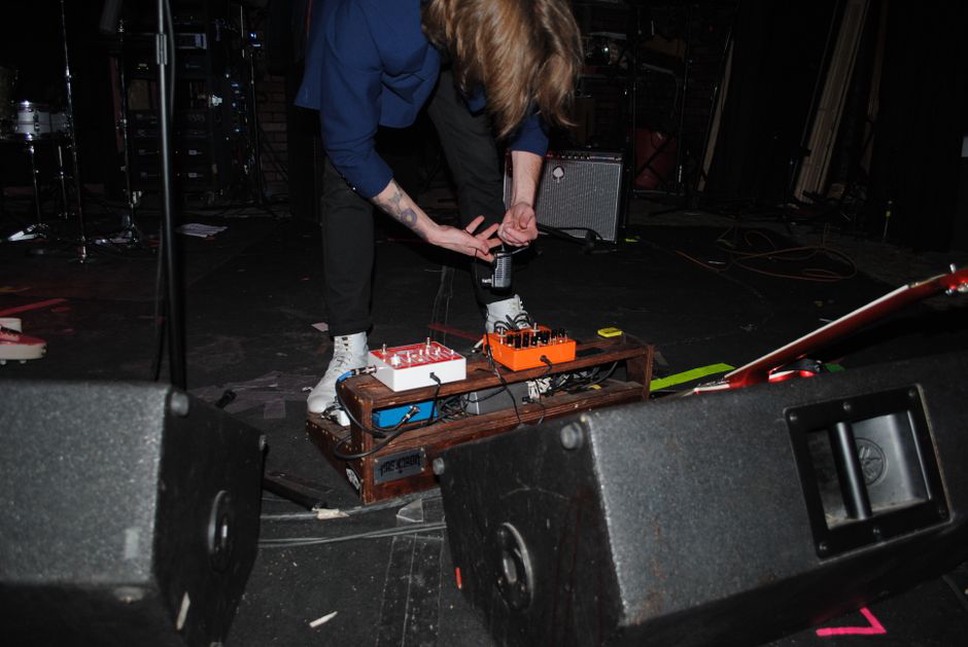
Improvisers such as Otomo Yoshihide have treated the turntable as a source of friction, rotation and electrical output, rather than only a way to play records. In performances associated with onkyo, Toshimaru Nakamura uses a no-input mixing board: its outputs feed back into its inputs, producing sound from the mixer’s circuitry. Neither approach makes the equipment incidental. Both depend on knowing how a particular setup responds to movement and adjustment.
For an acoustic counterpart, listen to how Keiji Haino can move between identifiable guitar notes and a far less stable mass of amplified sound. Feedback and sustained resonance blur the point where a played gesture ends and the equipment’s response continues. The useful question is not whether it is still “really” a guitar, but which parts the performer sets in motion and which then develop on their own.
Density is not the same as volume
Noise is often discussed in terms of loudness, but Merzbow’s recordings reward attention to density. Distorted layers can fill broad frequency ranges at once, making them difficult to separate. You might notice a sharper edge, a swelling low band or a brief rhythmic fragment before you can identify its source. Playback level affects the experience, but turning it up cannot replace close listening. Sustained exposure at excessive levels also risks hearing damage.
In sparse electronic work, by contrast, a faint click or a slight pitch change can become conspicuous. Foreground depends on what surrounds it. To compare dense and sparse pieces without assuming one is more intense, listen for three things:
- Occupancy: how much of the audible frequency range seems continuously filled?
- Separation: can you follow individual events, or do they merge into a composite sound?
- Duration: does a sound stop cleanly, decay gradually or persist as a background condition?
These questions help with drone as well. A sustained tone need not be static: close pitches can beat against each other, overtones can shift, and a resonant object can decay slowly. Ambient work may use similar changes without demanding the same level of concentration throughout. Genre names suggest a listening context, not a fixed set of acoustic properties.
What recording adds to the palette
A microphone brings its own choices. Placed close, it can emphasize contact, breath or mechanical vibration. Farther away, it admits reflections and surrounding activity. Field recording does not deliver an untouched place: the recordist decides where to stand, when to start and stop, and which sounds the equipment can capture. Electroacoustic work may take that material further through editing, layering or playback in a space unlike the one recorded.
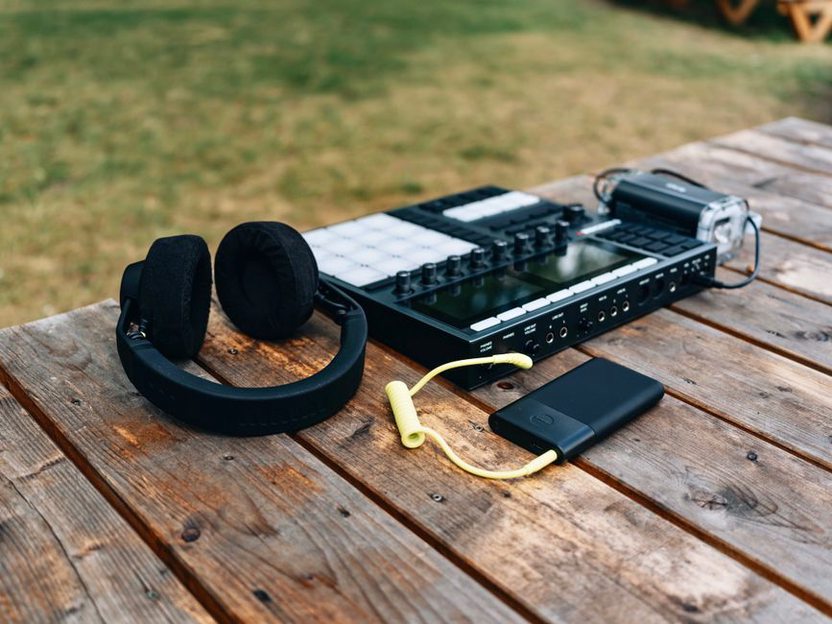
Ryoji Ikeda’s work makes an instructive comparison with environmental recording. His precisely organized electronic tones and pulses can draw attention to frequency limits and the behavior of playback equipment. An outdoor recording involves different uncertainties, yet reproduction matters to both. A low tone may vanish on small speakers; a quiet background may become intrusive through headphones. The listening system helps determine what reaches us.
The copy is part of the listening conditions
Format does not dictate an aesthetic. A cassette might carry dense noise, a restrained drone or a documentary recording. But tape hiss, duplication quality, wear and the balance of a particular playback deck can all affect what is audible. A digital transfer preserves some features of a cassette copy while changing others. When comparing editions, collectors need to distinguish deliberate noise from damage, a poor transfer or a fault in their own equipment.
DIY circulation matters for another reason. Self-released recordings and small-label editions can preserve performances never intended as definitive studio statements. Packaging may name sources or collaborators while leaving the recording circumstances unclear. If documentation is thin, describe what you can hear rather than guessing at a location or technical method. The same caution applies to unidentified files passed between listeners.
A practical way to hear the range
Rather than arranging recordings from “quiet” to “loud,” choose three contrasting pieces and follow one parameter across them. Compare how a sine tone, a feedback-based improvisation and a layered noise recording begin and end events. On a second pass, listen for what remains after the main gesture stops: room reverberation, electronic hum or the tail of distortion. It is a way into unfamiliar work without forcing every piece into the same genre story.
Keep playback at a moderate, unchanged level for the first pass. If a quiet passage seems empty, note what you can distinguish before turning it up. If a dense one seems uniform, listen for a shift in its upper or lower frequencies. Mark the time of one change and replay the seconds around it. That small boundary may tell you more about a musician’s palette than an equipment list.