
A pause is not the same as silence. In an improvised set, a performer may stop playing while amplifier hum, air-conditioning, footsteps, room resonance, and the audience’s movements remain plainly audible. In Japanese experimental music, that distinction often matters: silence is less a blank interval than a choice to expose what is already there.
That choice can alter the scale of a performance. A brief break after a burst of feedback lets the ear catch lingering frequencies. In a tape work, an almost empty passage may make mechanical flutter the main event. In electroacoustic composition, a gap can separate recorded materials without pretending the listening space has vanished. Its effect depends on context, duration, playback level, and the listener’s willingness to hear what had been masked.
Silence as a frame, not an absence
Experimental music uses silence in practical ways. It can divide sections, sharpen contrast, postpone a response, or bring the room into the piece. None of these uses is uniquely Japanese, and treating them as proof of a national temperament would flatten a field shaped by different artists, methods, venues, and histories. The more useful question is how particular musicians and audiences work with reduced activity under specific conditions.
Listeners who expect experimental music to sustain maximum density may hear silence as a loss of momentum. But withholding can be active. When a drone stops abruptly, spectral afterimages remain in the ear. When a noise performer waits before reconnecting a cable, anticipation becomes part of the sound. A sparse field recording set against near-silence can bring distant traffic, insects, ventilation, or digital noise forward as unstable layers rather than neutral background.
There is a technical side to this as well. Every medium has a floor: tape hiss, preamp noise, room tone, converter artifacts, vinyl surface noise, or the faint electrical presence of an amplifier. Some experimental practices leave these traces in place instead of removing them. Quiet sections then reveal the material support of the recording rather than offering “pure silence.”
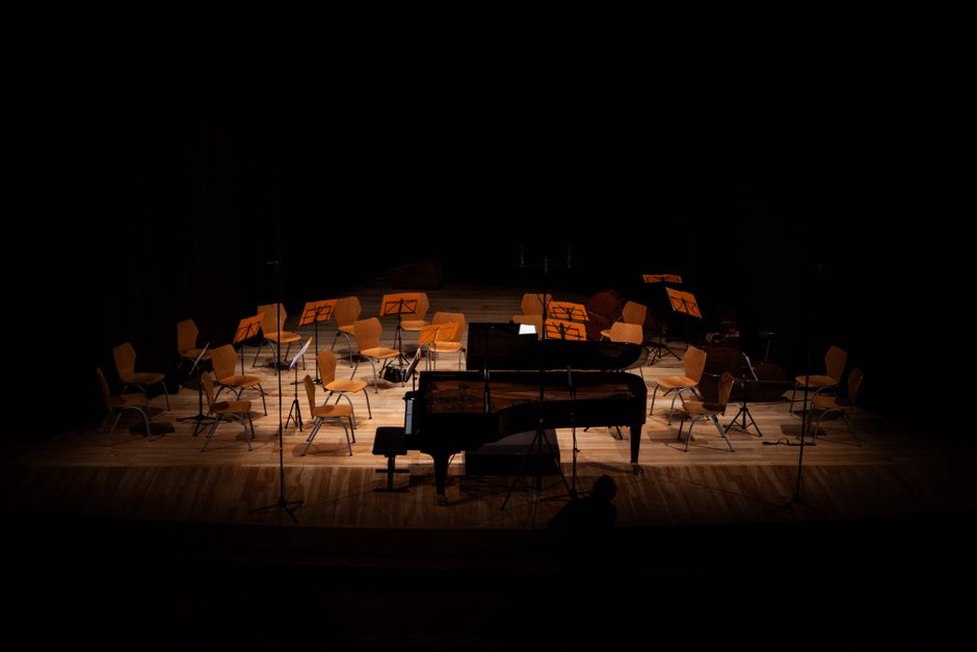
Historical reference points without a single lineage
John Cage’s 4′33″, first performed in 1952, remains the most frequently cited international reference point. Its importance is not that “nothing happens,” but that it directs attention toward sounds occurring during a performance. Cage’s work circulated widely and has informed discussions of listening around the world, including Japan. Still, Japanese experimental music is not a local extension of Cage’s idea. Postwar histories include electronic studios, intermedia activity, free improvisation, theatre, visual art, independent recording, and club-based noise, each with its own relationship to restraint and duration.
In the 1960s, Group Ongaku explored improvisation with instruments, objects, tape, and everyday sound. The collective is often discussed in accounts of early Japanese experimentalism because its work challenged conventional boundaries between making sound and listening. The point is not that Group Ongaku “invented silence,” but that its practices made contingency and sonic attention central. An object, gesture, or unplanned sound could redirect a piece.
Later developments resist any tidy account. In free improvisation, pauses can become negotiations among players. Sound art may treat architectural acoustics and environmental sound as compositional material. Harsh noise can use abrupt cuts, low-level passages, and waiting as forcefully as sustained overload. Minimal electronic and tape-based work may rely on repetitions so faint that they emerge only through patience or close monitoring. Silence works differently in each case because format and social setting shape what a pause can do.
What quiet does inside loud music
Silence becomes especially clear against noise. A long wall of sound can be physically and psychologically immersive, yet contrast gives it form. Interruptions reset attention, expose a room’s acoustics, and change the perceived force of the next entrance. This is more than stage drama: it alters the listener’s sense of time and the performer’s relation to their equipment.
In feedback-based performance, a mute switch, volume pedal, unplugged connector, or interrupted signal path can create a break that is partly planned and partly contingent. Residual ringing may continue after the main sound has been cut. A performer may wait for a high frequency to decay before returning with a different gain structure. These moments show feedback as a system involving instrument, amplification, speaker placement, room reflections, and bodily movement, rather than an abstract genre signifier. For a related examination of this material process, The Art of Feedback in Japanese Noise Music focuses on feedback techniques and their unstable, playable behavior.
Silence can make noise more specific
- It exposes aftermath. Ear ringing, room reverberation, and residual electronic hum become part of the audible event.
- It clarifies form. Breaks can distinguish gestures in a set that might otherwise register as one mass.
- It redistributes attention. Listeners may notice the audience, ventilation, traffic outside, or a performer handling equipment.
- It creates risk. A pause can feel tense because there is no guarantee that another sound will arrive, or that it will be controlled.
- It resists constant consumption. Reduced activity asks for attention without providing an uninterrupted stream of obvious events.
These effects are never guaranteed. In a poorly recorded live document, a meaningful pause may collapse into dead air because the room’s detail has been lost. A quiet passage can also become overdetermined when heavy mastering raises every low-level artifact to roughly the same apparent volume. Silence cannot be separated from recording and playback decisions.
Listening environments shape the meaning of quiet
A silent moment in a small venue is unlike one heard through headphones, on a cassette deck, or in a compressed digital file. Live performance brings accidental sounds and shared etiquette: coughing, chairs shifting, late arrivals, the brief uncertainty over whether applause is appropriate. These sounds are not always welcome, but they belong to the actual conditions of the event. A recording may retain them, erase them, or replace them with a more controlled image of quiet.
| Listening context | What silence can reveal | Common limitation |
|---|---|---|
| Small live room | Architecture, audience behavior, amplifier residue | Unpredictable distractions and uneven audibility |
| Headphones | Low-level hiss, edits, stereo placement, breath-like textures | Isolation can conceal the original room’s scale |
| Home speakers | Dynamic contrast and physical low-frequency decay | Domestic noise may cover delicate material |
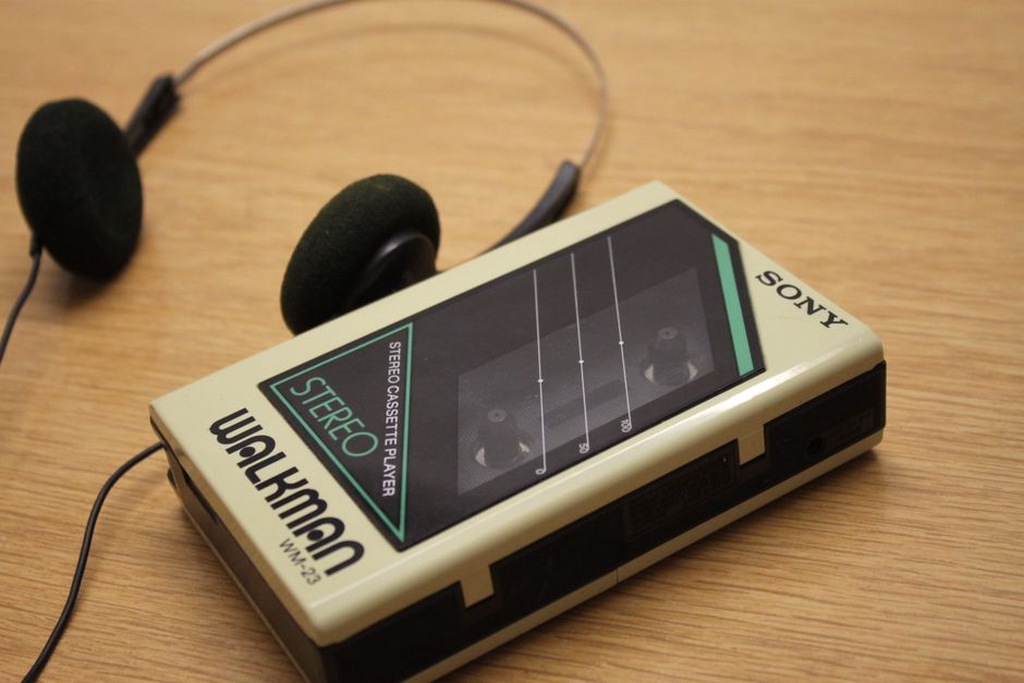
| Cassette playback | Mechanical presence, tape hiss, unstable repetition | Deck condition strongly affects what is heard |
| Streaming or compressed files | Convenient access to broad dynamic work | Normalization and noisy environments can flatten contrasts |
For that reason, silence should not be mistaken for low volume. A piece can be quiet on average while remaining densely active, full of microscopic changes. Another can be loud yet structurally sparse. Dynamic range—the distance between soft and loud passages—often matters more than a simple volume label. When an album is mastered for continuous loudness, listeners may lose the threshold at which faint sounds appear and disappear.
Silence, duration, and the ethics of attention
Quiet passages often attract romantic language: contemplation, purity, emptiness, transcendence. Such terms can hide labor and circumstance. A performer’s restraint may be a compositional choice, an adaptation to fragile equipment, a response to collaborators, or a practical accommodation of a venue. A field recording that seems still may contain distant industrial activity, human presence, and environmental processes. Close listening should not turn these materials into a timeless cultural essence.
There is also an ethical question in what gets described as silence. Environmental recordings can make a place seem empty while excluding the people who live or work there. A listener may hear “nature” where local infrastructure, tourism, extraction, or unequal access to quiet are also present. The same caution applies to urban recordings: a street with little activity is not neutral simply because it feels calm through headphones. Context belongs to attentive listening, even when a work deliberately withholds explanatory narration.
In collaborative improvisation, silence can be a form of care. Choosing not to play leaves room for another musician’s gesture to develop and can keep the collective texture from becoming territory everyone must fill. It can also operate as power: an established performer’s pause may set a pace others feel obliged to follow. The social dimension of quiet is audible in who enters, who waits, who interrupts, and whose small sounds are allowed to carry.
A practical method for hearing quiet passages
Silence is easy to miss when listening habits are organised around immediate highlights. A repeatable approach can help distinguish deliberate reduction from an unnoticed gap or technical defect.
- Set a stable volume. Begin at a level where the loudest passages are comfortable rather than aggressively loud. Avoid repeatedly turning up quiet sections, which can erase the intended contrast.
- Identify the floor. During the first quiet interval, listen for room tone, tape hiss, circuitry, distant ambience, or digital artifacts. These may be integral to the piece.
- Track changes rather than events. Ask whether the texture shifts in density, stereo position, frequency range, or perceived distance. A nearly static passage may still be changing.
- Notice the transition back. When sound returns, observe what the pause has altered: perceived loudness, emotional pressure, spatial scale, or the meaning of the next gesture.
- Compare playback conditions. If possible, revisit the passage on speakers and headphones. The difference may show how much the work depends on low-level detail.
The same method applies to dense recordings. After a harsh sequence, leave the device running for several seconds before deciding that the track has ended. Residual hum, a tape splice, room decay, or a performer’s movement may be the final compositional detail rather than an accidental tail.
Silence as a material problem for artists and documenters
For musicians working with sparse sound, quiet presents practical problems. Venue systems often have audible noise floors. Microphones may pick up ventilation and crowd movement more strongly than intended. Laptop interfaces, pedals, mixers, and amplifiers all add electrical character. Rather than treating these conditions as failures, artists can decide which traces belong in the work and which require control through placement, gain staging, editing, or timing.
Documentation has its own stakes. A live recording that removes every pause for convenience can distort a performance’s pacing. Yet preserving long gaps without enough sonic detail can demand more patience than the original event did. Good documentation does not mean keeping every second indiscriminately. It means making editorial decisions through careful listening to the source, the medium, and the intended scale of the work.
Collectors face a similar task when digitising tapes or evaluating archival files. Do not apply aggressive noise reduction by default. First make a flat transfer, keep an unprocessed preservation copy, and note the deck, speed, and any audible faults. A listening copy can be adjusted later; hiss that has been erased, or silence clipped away, cannot be recovered from a processed file.