
In the early 2010s, when Japanese noise musicians began tearing apart their gear not just for destruction but for subtle redesign, one particular pedal became the centerpiece of many workbenches. The Boss SD-1 Super OverDrive, a mass-produced guitar effect from 1981, was never designed for harsh noise. Yet its low cost, durable casing, and a circuit that invited replacement of nearly every active component made it the perfect subject for a specific kind of DIY intervention—one that valued character over perfection and unpredictability over consistency.
The SD-1's core topology is straightforward: a soft-clipping overdrive built around a single JRC4558D dual operational amplifier. The clipping is asymmetrical, favoring the positive rail, which in its stock form gives a slight compression and a mild, mid‑forward push. In a guitar signal chain that matters, but in noise—where the source might be a contact microphone on a metal sheet or the feedback loop of a cheap mixer—that asymmetry becomes a palette. The pedal’s frequency response cuts below 100 Hz and above about 5 kHz even when fully open, acting as a natural low‑pass/high‑pass filter that tames ear‑splitting highs and mud‑inducing lows. For live noise sets where sudden loudness changes can destroy PA systems, this built‑in limiter proved useful long before anyone considered the SD‑1 an instrument in its own right.
Yet the stock pedal is rarely the final destination. In Tokyo’s cassette distro scene, modded SD‑1s pass between musicians like hand‑copied field recordings. The most common modification replaces the asymmetrical clipping diodes (1S1588, a silicon diode that leans positive) with symmetrical pairs—two germanium 1N270s or two red LEDs. Symmetrical clipping softens the waveform further and removes the directional bias, giving a more open, less compressed distortion. Some modders swap the JRC4558D for a TL072 or a LM358 to lower noise floor or increase bandwidth, though the latter can make the pedal oscillate at ultrasonic frequencies—a sound some players capture as a sub‑bass drone in their mix.
The mod culture surrounding the SD‑1 is inseparable from its affordability. Second‑hand units in Japan sell for ¥2,000 to ¥4,000—the price of a meal in Shinjuku. That low entry point means musicians treat them as disposable test beds. A single evening can produce three or four variants: one with socketed ICs, one with a toggle switch for clipping selection, another with an external feedback loop jack that turns the pedal into a noise generator. The result is a fragmented archive of one‑off pedals, their serial numbers handwritten on the battery compartment door, their circuit boards stained with flux and solder.
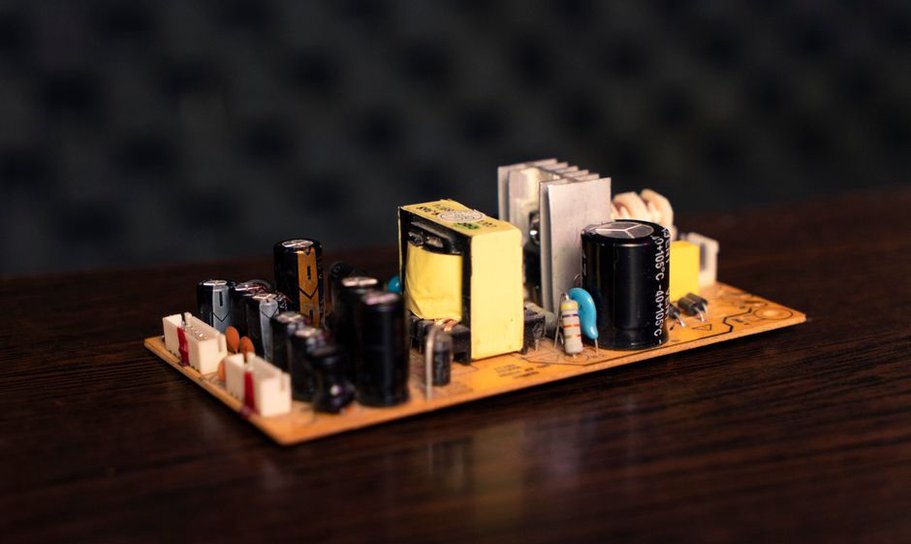
Compared to the boutique overdrives that flood the market, the SD‑1’s PCB layout is sparse and uncluttered. The component placement leaves room for point‑to‑point additions: a switch to lift the tone control, a capacitor parallel to the gain pot for low‑end rumble, or a simple voltage starve knob (a pot between the pedal’s 9 V input and the circuit) that lets the op‑amp sag into fuzzy, gated tones. These modifications are often documented in blog posts or image uploads with filenames like sd1_mod_tokyo_2013 or sd1_voltagestarve_01—fragments that mimic the cryptic naming conventions found across noise archive posts. The culture of sharing mod schematics mirrors the exchange of tape dubs; both rely on trust, replication, and the willingness to fail.
Why a Guitar Pedal for Noise?
The typical noise setup in Tokyo’s underground—amplified feedback, contact mics, cracked mixers, and no‑input mixing boards—does not need a distortion pedal. The signal is already saturated at every stage. Yet the SD‑1 persists because it introduces shaping rather than more gain. In a wall of noise built from multiple layers, a single SD‑1 across one channel can carve out a midrange pocket that lets a specific frequency speak above the bed. Musicians adjust the drive to minimum and the level to maximum, using the pedal as a clean boost with a slight high‑mid bump. Others run it at 18 V (two batteries in series) to increase headroom, making the clipping less immediate and the transient more pronounced—a trick borrowed from guitarists but applied to contact‑mic feedback loops.
The pedal’s bypass system—a Boss tradition using a FET switch that leaves the output buffer active even in bypass—also plays a role. In a daisy‑chained pedalboard of multiple modded SD‑1s, the buffer compensates for cable capacitance and keeps high frequencies from rolling off. Some noise artists chain three or four SD‑1s set at different clipping modes, creating a multi‑stage saturation that no single pedal can replicate. The result resembles the layered distortion of a blown PA, but with the ability to dial back any stage mid‑set.
The Japanese Second‑Hand Market and Bootleg Culture
Walk into any Hard Off or Book Off in Tokyo and you will find a row of used SD‑1s. They sit between the DigiTech and Ibanez pedals, their labels faded, the rubber feet missing. Because the production run spans decades (the first version with the black screw, then the silver screw, then the current model with the surface‑mount components), musicians hunt for specific eras. The black‑screw models, made in the 1980s, are prized for their carbon‑film resistors and the original JRC4558D. Later models with metal‑film resistors are considered too clean. The price difference between a 1983 black‑screw and a 2010 silver‑screw can be less than ¥500, making the older units the obvious choice for those who know the difference.
Beyond the official Boss product, a cottage industry of bootleg SD‑1 clones exists in the Japanese noise scene. Small‑batch PCB runs from unknown hobbyists, housed in unpainted aluminum enclosures, circulate via Twitter and direct message. These clones often include modifications as the baseline: switchable clipping diodes, a three‑way tone toggle, and an internal trimpot for bias adjustment. The build quality varies—some are immaculate, others miswire the power polarity and blow instantly. Yet the demand remains because a clone at ¥1,500 lets the musician own a second unit without hunting for a used Boss. The clones also feed the culture of anonymity; they are rarely sold with documentation, and their filenames in distro spreadsheets often appear as sd1clone_japan_03 or simply sd1mod.
Recording and Archiving the SD‑1 Sound
Documenting the exact sound of a modded SD‑1 in a noise context is unreliable. The pedal’s behavior changes with battery voltage, temperature, and the impedance of the device feeding it. As a result, musicians rarely write down the settings they used for a particular piece. The archive of SD‑1 sounds exists on homemade cassettes and raw digital files, where the pedal’s presence can be inferred only from the spectral signature—a notch around 3 kHz where the stock tone control resonates, or a slight asymmetry in the waveform visible in a DAW. Those who share their recordings often label them with the pedal’s serial number and a brief mod note, creating a cross‑reference system similar to the way other gear, like the Olympus cameras that captured noise show documentation, became identifiable through their model numbers. Much like the Olympus point‑and‑shoot cameras that found a second life as lo‑fi video tools in Tokyo’s noise scene, the Boss SD‑1 evolved from a mass‑produced commodity into a personalized instrument, each unit carrying the fingerprints of its modifier.
Critical Limitations
It would be disingenuous to frame the SD‑1 as some hidden gem that reveals the secrets of Japanese noise. Many musicians avoid it. The pedal’s noise floor is mediocre; its power input lacks protection; the plastic shaft of the gain pot snaps if torqued. For those who demand reliability above all, a modern distortion with a warranty is a better choice. The SD‑1’s appeal lies precisely in its fragility and the modder’s ability to transform that fragility into a signature. When a pedal fails mid‑set—a capacitor shorting, a diode lead breaking—it becomes part of the composition. Noise, after all, thrives on the accident.
That said, the SD‑1’s role in the Japanese underground is more about community than sound. The shared knowledge of how to swap an op‑amp or where to source 1S1588 diodes forms a thread between musicians who otherwise operate in isolation. Online forums and small distros treat the SD‑1 as a common denominator; a tape release might include a note that the artist used “SD‑1 into a PA into a cassette,” but the exact circuit details remain private, passed along only through direct conversation. This intentional opacity preserves the mystique while still allowing the pedal to function as a badge of participation—a piece of gear that, once modded, becomes part of the network.
The current production model, the SD‑1 (made in Taiwan since the early 2000s), uses surface‑mount resistors and a different PCB that makes through‑hole modifications more difficult. As a result, the older black‑screw and silver‑screw models have become a finite resource. Their value is not monetary—they remain cheap—but cultural: owning one is a connection to a time when DIY was the only option. For the musician who wants to engage with that history, the simple step is to buy a used SD‑1, open it, and change one component. Not to make it better, but to make it theirs.