
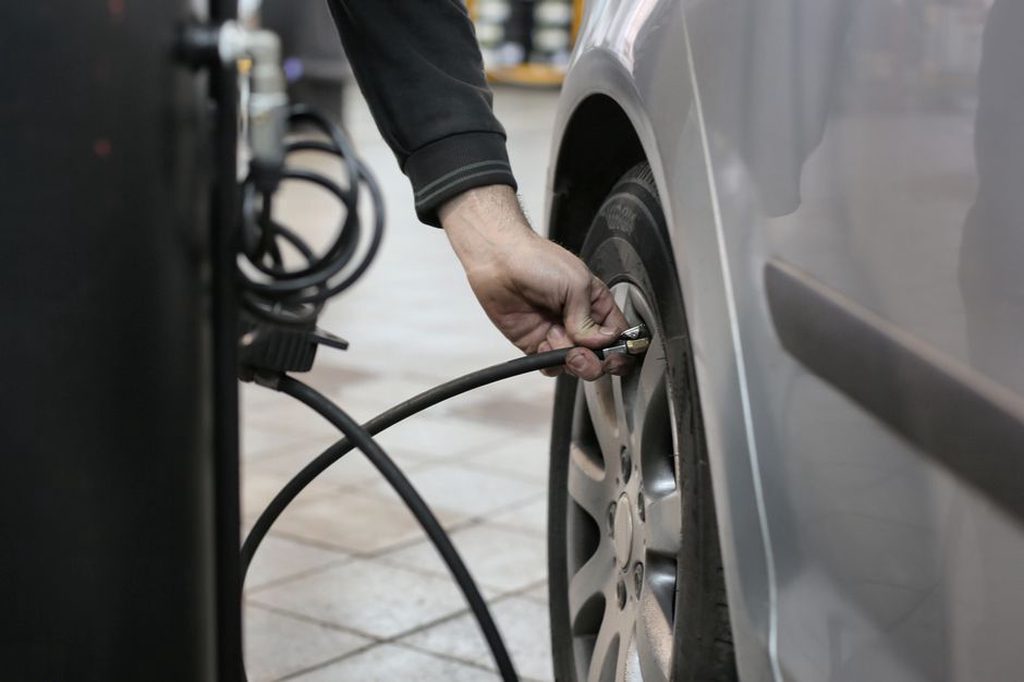
Check tire pressure before loading the car or driving it for the day, while the tires are cold. Use the recommended pressure on the driver’s door-jamb label, not the number on the tire sidewall. That sidewall number is a maximum rating, not the setting for your car. A gauge may also reveal a slow leak before you find yourself dealing with it on a remote road.
You do not need to overhaul the car before a long drive, but give yourself time to deal with what an inspection turns up. This matters particularly if the car has spent most of its time on short local trips. Start several days ahead if you can, so a worn tire or needed repair does not become a departure-morning scramble.
Start with the tires, including the spare
Measure pressure in all four tires and adjust it to the manufacturer’s recommendation for the load you expect to carry. Some vehicles specify a different setting when heavily loaded. If you have already driven the car, let the tires cool or follow the owner’s manual; do not release air from warm tires just to reach a cold-pressure figure.
Examine the tread and sidewalls. Uneven wear may point to an alignment or suspension problem. Cuts, bulges, exposed cords, or a tire that keeps losing air need professional attention before you leave. A coin test gives only a rough idea of tread depth; a gauge is clearer. Wet-road grip can deteriorate well before the tread reaches the legal minimum, and tread-depth or winter-tire rules may vary along your route.
If the car has a spare, find it and check its pressure. Compact spares often need much higher pressure than the road tires and have speed and distance limits. Make sure the jack, lug wrench, and any wheel-lock key are present and easy to reach. If your car has an inflator kit instead, check the sealant’s expiration date and find out what kinds of damage it cannot handle. Neither option makes every damaged tire safe to drive on.
Check fluids without guessing at a fault
Park on level ground and use the owner’s manual to check the oil correctly. Some engines call for a warm engine followed by a short wait; others give an electronic reading. If the level is below the indicated range, add small amounts of the specified oil and recheck. Frequent top-ups, visible leaks, or an oil warning that stays on after starting call for diagnosis, not just a spare bottle in the trunk.
Check coolant at the reservoir only when the engine is cool. Never remove a hot cooling-system cap: pressurized coolant can cause serious burns. Have a falling level, sweet smell, or signs of overheating investigated before the drive. Check brake fluid against the reservoir markings too, but do not simply top up a low level and forget it. Worn brake pads or a leak may be the cause.
Use windshield-washer fluid suited to the temperatures on your route. Follow the manual for power-steering and transmission fluid; many newer cars have no simple owner-level dipstick check. If service will come due during the trip, arrange it beforehand when practical, and leave enough time after the work to confirm the car drives normally.
Know which warnings change the plan
A red oil-pressure warning, overheating, an active brake warning, or a sudden, serious change in braking or steering means stopping safely and seeking help. Familiarity does not make a dashboard warning harmless. Have unresolved warnings diagnosed before departure, especially those involving systems that could leave the car unsafe or stranded. Your owner’s manual explains what each symbol means on your vehicle.
Make sure you can see and be seen
Test the low and high beams, turn signals, brake lights, hazard lights, and license-plate light. Ask someone to watch from outside, or use a reflection in a window or garage door to check rear lights on your own. Clean the headlight lenses and windows. Dirt, film inside the glass, and windshield glare are harder to ignore after dark or in rain.
Run the wipers with washer fluid rather than scraping them across dry glass. Replace blades that streak, chatter, or miss part of your line of sight. Test the front and rear defoggers and the cabin fan as well. Poor demisting can quickly become a visibility problem, even on a day with a clear forecast.
Take a short local drive and listen. A thump that follows road speed, grinding when you brake, or a new vibration at highway speed warrants a check before you set off. If you cannot tell how serious a noise is, tell a qualified mechanic when it happens—while braking, turning, accelerating, or at a particular speed. That is more useful than saying the car sounds strange.
Check the battery and the equipment you rely on
A reluctant start at home may become a no-start after an overnight stop. Check that the battery terminals are secure and free of heavy corrosion, but do not touch or disturb damaged connections. If the battery is aging or starting has changed, a battery and charging-system test may identify the problem. Jump leads or a charged jump starter help only if you know your vehicle’s procedure; some cars specify particular connection points.
Test the charging ports you intend to use and bring cables that work with your phone and navigation device. Set your destination while parked, and download maps for places with unreliable reception. Offline maps cannot tell you about every closure, but they can help you avoid making a rushed choice at an unfamiliar junction. Follow road signs and closure notices.
Load the car so it stays predictable
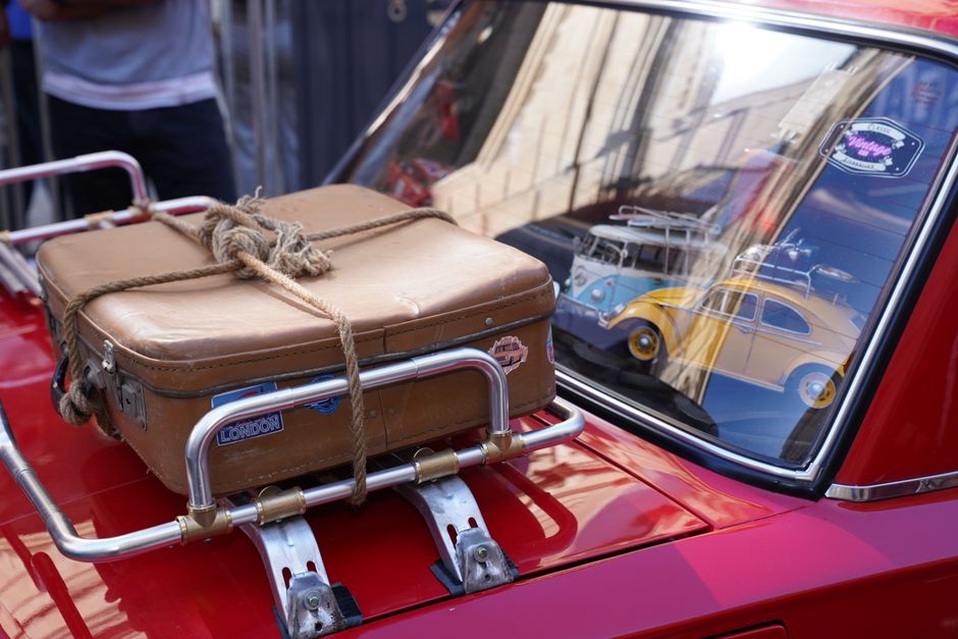
Put heavy luggage low and as far forward in the cargo area as practical, within the vehicle’s weight limits. Secure loose items: a tool case or water bottle can fly through the cabin under hard braking. Keep the driver’s footwell clear so nothing can slide beneath a pedal, and do not stack bags high enough to block the rear window or mirrors.
With several passengers, heavy equipment, or a roof box, check payload limits in the owner’s manual and on the vehicle label. Payload includes people as well as cargo. The vehicle and roof rack have separate roof-load limits; loads up high can change handling and fuel consumption. Once packed, check whether the manufacturer specifies different tire pressures or headlight adjustment for a heavy load.
Keep roadside supplies where you can reach them without emptying the trunk. A small kit might include a flashlight, reflective warning equipment where permitted or required, a first-aid kit, water, and clothes suited to the weather. Add supplies for remote or cold-weather conditions as needed. If the car breaks down beside traffic, get people to a safer place before trying to retrieve equipment from an exposed lane.
Plan the drive as well as the departure
Check your license, registration, insurance information, and any documents required where you will drive. If you have roadside assistance, confirm whom to call and whether coverage applies across borders. Keep essential details accessible without depending entirely on a phone that might lose power or signal.
Review fuel or charging stops, weather, road closures, and long stretches without services. In an electric car, consider charger availability and connector compatibility, along with the effects of speed, temperature, and elevation on range. Whatever you drive, leave enough fuel or charge for a diversion instead of planning to arrive at the next stop nearly empty.
Plan breaks for the driver, not just fuel stops. Fatigue can set in long before the tank runs low. If you would be leaving after a full workday, consider a different departure time rather than counting on caffeine to get you through the night. Share the driving only with someone who is licensed, insured for the vehicle, and rested.
The departure-morning check
Walk around the loaded car before pulling away. Look for a newly low tire, a fluid patch underneath, an open fuel door, an unsecured roof load, or a hatch that has not latched. From the driver’s seat, set the mirrors, place the phone where it will stay put, and enter the first stop while parked. If the car pulls to one side, vibrates unusually, or shows a new warning in the first few miles, turn back or stop somewhere safe to investigate. Do not wait for the first planned break.