
Play Merzbow’s Pulse Demon immediately after Hiroshi Yoshimura’s Music for Nine Post Cards, and the difference in level may be the first thing you hear. Turn the volume down before switching. Once your ears adjust, listen for something less obvious: both recordings ask you to follow sustained sound as it changes. One crowds the space with distortion; the other leaves room for small electronic figures to decay. Neither stays still.
Noise and ambient are often cast as opposites: abrasive versus soothing, disorder versus calm. The contrast has its uses, but it can hide the ways artists working in Japan have used density, duration and playback conditions to complicate both categories. “Harmony” need not mean consonant chords; it can describe a relationship among sounds, or between a sound and the place where it is heard. Noise, meanwhile, need not be random.
Two labels with different histories
Japanese noise, often called Japanoise in English-language writing, names a cluster of practices rather than a uniform sound. Its most internationally visible recordings are associated with the 1980s and 1990s, particularly Masami Akita’s prolific work as Merzbow. Harsh Noise Wall, free improvisation, feedback, cut-up electronics and performance-based work are not interchangeable simply because they can be loud. Some pieces change rapidly; others hold a dense mass in place until its internal detail comes forward.
Ambient is no tidier a category. Brian Eno’s influential formulation described music that could accommodate different degrees of attention, but recordings made in Japan did not all grow out of that definition. Hiroshi Yoshimura’s environmental music, for instance, was tied to particular spaces and everyday uses, not just private headphone listening. Elsewhere, artists work with drones, acoustic resonance, processed instruments or barely altered recordings of an environment. “Ambient” often says more about how a piece might be heard than how it was made.
The music also reached listeners by different routes. Noise circulated through small releases, mail exchange, specialist shops and live performances; some environmental music was conceived for architectural or commercial settings as well as records. Those routes shaped expectations before a note was heard. A sleeve that promises confrontation and a space designed for unobtrusive sound can frame similar sustained tones quite differently. The contexts are not the same, but they matter to the comparison.
Density is not the same as activity
A noise recording can be dense yet relatively still. Once distortion saturates a signal, fine changes in pitch or pressure may matter more than an obvious new event. An ambient piece can be sparse but busy: a short tone repeats, its timing shifts, and one note’s reverberation meets the next. Loud versus quiet, or chaotic versus orderly, tells us little about what moves inside either sound.
It helps to listen for three things separately:
- Level: How loud does the recording seem at a comfortable playback setting?
- Density: How much of the audible range feels occupied at once?
- Rate of change: Do you hear abrupt cuts, gradual shifts, repeated events or apparent stasis?
A piece can rank high on one of these and low on another. The distinction makes comparison more precise without pretending a meter reading could account for the whole experience.
Where the apparent opposites meet
Fumio Kosakai and other improvisers working across Japanese experimental scenes remind us that personnel and techniques do not stay neatly inside genre borders. But there is no need to claim that noise gradually “turns into” ambient. Listening across separate recordings by artists who handle sustained tone differently offers a clearer comparison. What changes is the decision about what to foreground and what to leave unresolved, not a progression from rough beginnings to refinement.
On Pulse Demon, Merzbow makes distortion a continually shifting surface. High-frequency energy and sudden changes can make close listening physically demanding, so keep the level safe and moderate rather than treating loudness as proof of authenticity. Repeated gestures and variations in grain are easier to follow that way. Harshness is material here, not a substitute for structure.
Yoshimura’s Music for Nine Post Cards works at another scale. Short electronic tones and restrained patterns leave audible gaps; repetition makes small differences in spacing and decay count. Calling the music calming may describe a response, but it does not explain its construction. Listen for where one tone ends, and whether the next arrives before the room seems empty.
Some recordings make the dividing line especially uncertain. Ryoji Ikeda’s +/- uses sharply defined pulses, high frequencies and stretches of reduced material. A passage can feel piercing, then almost weightless. Its precision challenges the idea that abrasive sound must be messy. Nor does a near-empty passage necessarily offer comfort: thin, exposed tones can demand as much attention as an overloaded mix.
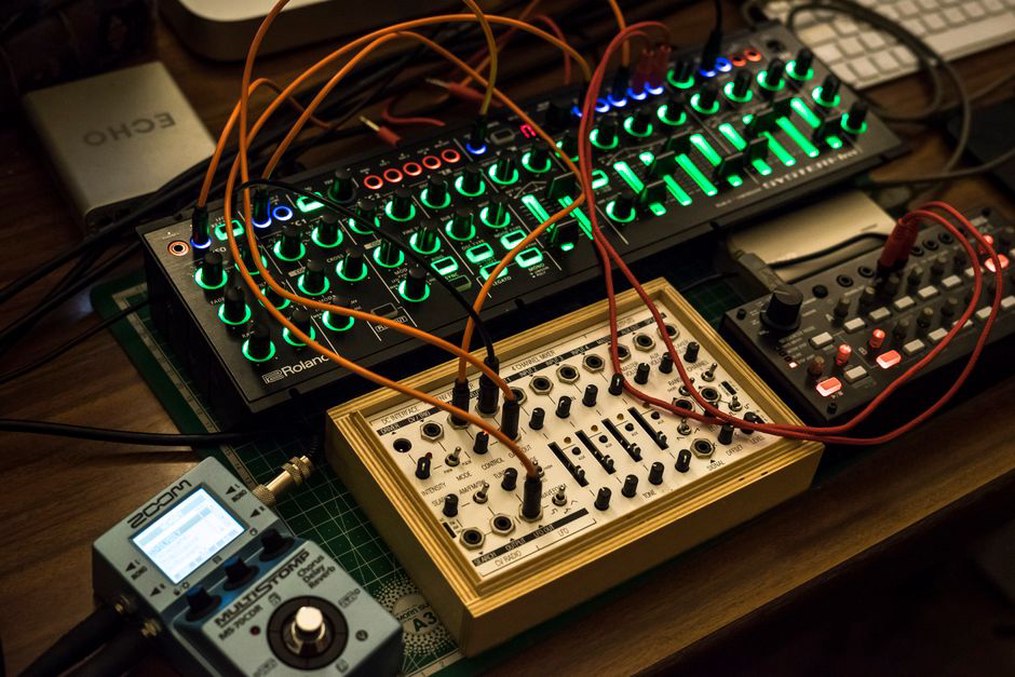
Toshimaru Nakamura’s no-input mixing board practice offers another case. His mixer is connected so that its outputs feed back into its inputs; routing and control settings shape the sound, rather than an external microphone or conventional instrument. Performances can move between low electrical hums, sharp feedback and silence. Calling every moment “noise” misses the care with which those levels are negotiated.
Duration changes what counts as a detail
A brief burst of feedback registers as an event. Hold a related sound for several minutes and the ear may begin to pick out beats, fluctuations and layered frequencies initially masked by its force. That does not mean every listener will find harsh sound pleasant. It means attention can shift from waiting for it to stop to hearing what persists and what varies.
A long ambient passage can work the other way. Against a seemingly stable soft drone, a click, a new overtone or a room noise may loom large. The space around the event is doing compositional work. In both cases, time allows small details to register, even if sustained high-level noise feels very different in the body from a low-level drone.
The room and the format are not neutral
Playback conditions can change both noise and ambient markedly. In a live room, feedback interacts with the venue’s resonances; moving your head may bring different frequencies forward. A quiet environmental piece may compete with ventilation, footsteps or street noise. Such sounds are not necessarily mistakes to edit out, but neither should they automatically be credited to the artist’s intention. The recording, performance instructions and setting help determine how much surrounding sound has been invited in.
Headphones can reveal faint layers and stereo placement, though harsh upper frequencies may become fatiguing. Speakers let the music mix with the room and with ordinary movement. Neither is definitive. If a recording seems featureless, a different playback setup may show whether the apparent uniformity comes from the work or the equipment. Start at a low level, especially with releases known for abrupt peaks; this is no reason to test the limits of your speakers or ears.
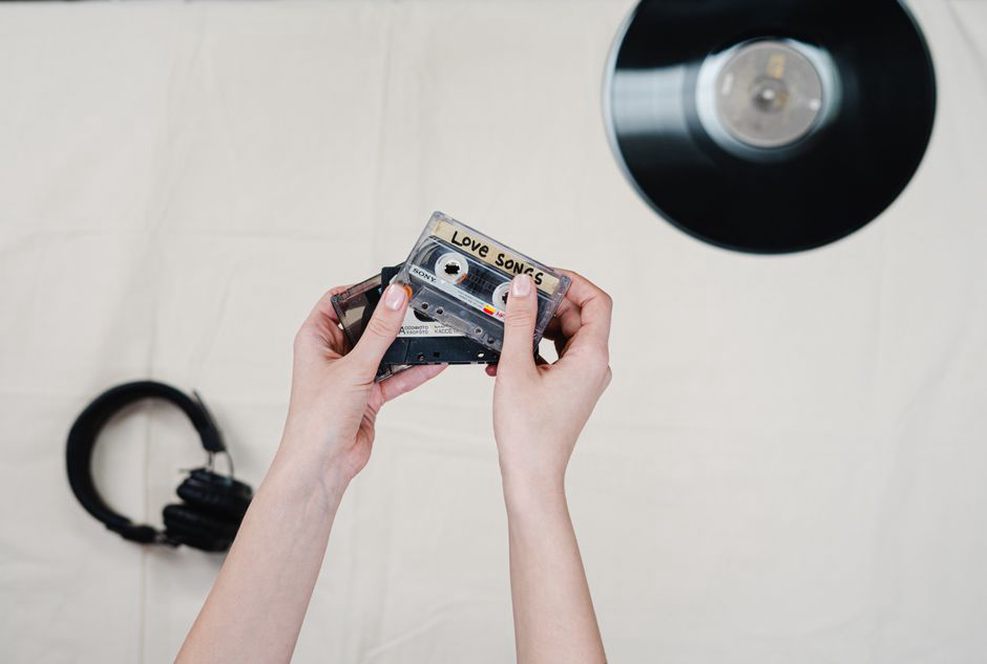
Physical media add another layer without any automatic claim to authenticity. Tape hiss can soften the edge of a tone, while worn or poorly aligned playback can alter it further. A digital file may lay cuts and silences bare. For a collector, the useful question is not which format is inherently truer, but which details survive a particular transfer. Our post on why cassettes still matter in Japan’s experimental underground looks more closely at the culture around the format; that social history is no reason to assume every cassette sounds alike.
Listening without forcing a bridge
The phrase “from chaos to harmony” implies a destination these recordings seldom provide. A harsh passage can settle into a stable pattern, while a gentle one can introduce uncertainty. There is little to gain from hunting for a hidden ambient section in every noise record. Ask instead what each piece repeats, what it allows to accumulate, and when it changes your sense of scale.
A short comparison session can bring those decisions into focus:
- Choose one abrasive recording and one quiet recording; check their titles and versions rather than relying on a genre-tagged playlist.
- Set a comfortable level separately for each. Do not turn the harsher work up to the point of discomfort just to match the two.
- Listen to the first two minutes of each, noting changes in density, repetition and audible decay.
- Replay one passage on speakers if you first heard it on headphones, or the reverse. Note which details change with the room or playback device.
This is not a test for shared national character. “Japanese noise” and “Japanese ambient” are convenient labels for work made under varied circumstances by distinct people. Neither explains an artist’s technique on its own. Titles, release contexts and the sound itself are firmer starting points than assumptions about how music from Japan ought to feel.
For a first pairing, take a moderate-volume excerpt from Pulse Demon and the opening of Music for Nine Post Cards. Mark where each changes without a complete break: a shift in Merzbow’s distorted texture, then a Yoshimura tone whose decay overlaps the next phrase. Those moments may be far apart, but each gives you a measure of movement suited to the recording.