
A cassette copied at home retains things a digital file often wipes away: a slightly uneven level, a handwritten date, the hiss of an inexpensive deck, and the hard limit of thirty or sixty minutes of magnetic tape. In Japan’s experimental music circles, those constraints remain useful rather than merely nostalgic. The K7 cassette is still a practical format for small editions, private exchange, field-recording documents, improvised sound, and music that does not need the economic or aesthetic scale of vinyl.
“K7” is used in several European languages for the compact audio cassette, deriving from the French cassette. It is not the usual Japanese term. Japanese listeners generally say kasetto tēpu (cassette tape), or simply tēpu when the context is clear. Still, K7 can be useful in international writing as a concise way to distinguish the object itself from “cassette culture” as a broad retro style. That distinction matters: Japan’s continuing relationship with tape is not a single revival, and it cannot be reduced to a taste for obsolete hardware.
Why the cassette remained practical
The compact cassette was never entirely absent from daily life in Japan. Blank tapes, playback decks, portable recorders, and dubbing equipment remained in circulation long after CDs and files became dominant, sustained by second-hand shops, repair-minded hobbyists, and a large supply of older consumer electronics. This is different from a simple “return” story. For some people, tape never stopped being an ordinary recording medium; for others, it became appealing precisely because the wider audio economy had moved on.
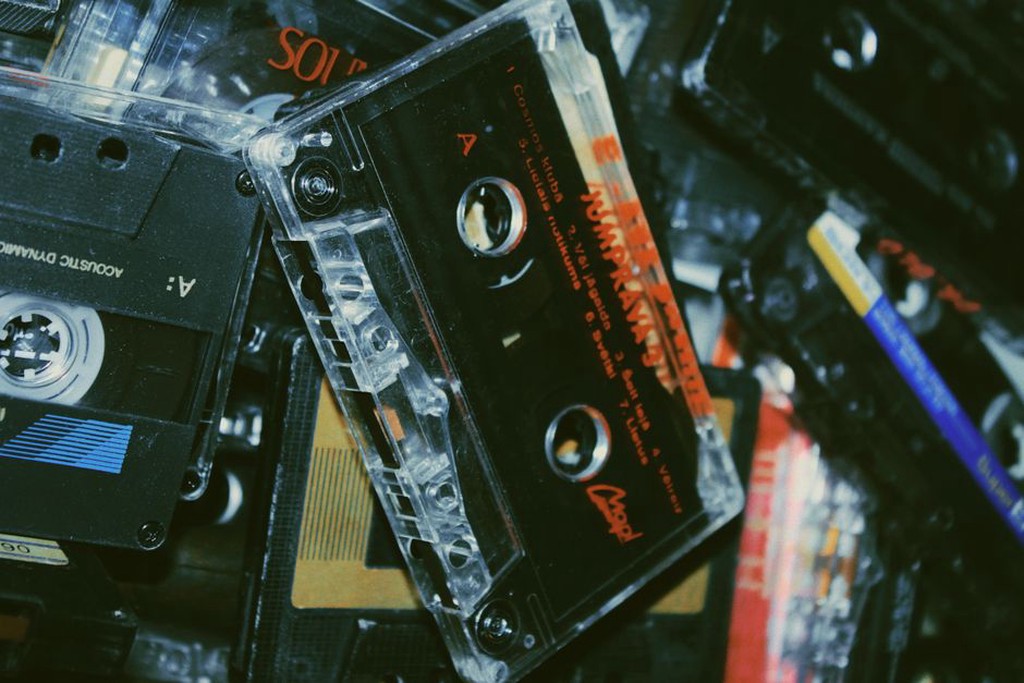
For independent musicians, the format addresses several material concerns at once. A short release can be duplicated in modest quantities without the production thresholds or expense of vinyl. A cassette has a front and back, printable surfaces, a case, and space for an insert. It can function as both recording and artifact without elaborate packaging. A small label can choose shell colours, J-card design, handwritten numbering, or extra printed material while keeping production local and manageable.
The limitation matters just as much. Tape duration forces decisions about sequence, side breaks, and total length. A twenty-minute piece on one side is encountered differently from a file that can be paused, shuffled, or skipped with little friction. The listener has to turn the object over, and the artist can use that interruption as part of the pacing. Drone, electroacoustic montage, and field recordings can benefit from this bounded attention, though the format is not inherently suited to any one genre. Its value lies in making duration and order visible.
Tape as a small-scale publishing system
Cassette culture is often described as a medium, but it is better understood as a set of publishing practices. The tape is only one part of the process. A release may involve recording, mastering, real-time duplication, artwork preparation, cutting and folding J-cards, assembly, mailing, documentation, and direct contact with listeners. One person may handle all of this, or the work may be shared among a loose group of artists, designers, promoters, and shops.
That scale suits recordings that are difficult to place in conventional distribution channels. Room tone, contact-mic experiments, shortwave interference, or unedited nighttime field recordings may have a committed but narrow audience. Such work does not need to justify a large pressing to matter. Tape allows it to circulate without pretending every project should become a mass product.
What a cassette edition communicates
A physical edition makes editorial choices legible. Even spare packaging can preserve details that disappear when a track is reposted without context: artist name, title, recording location or method, date, side sequence, label identity, and contact information. For listeners concerned with archives, this metadata is not decoration. It may be the only stable record of how an obscure work circulated.
Small editions create their own tension. Scarcity can sharpen attention and encourage direct exchange, but it can also make music inaccessible, costly on the second-hand market, or poorly documented once the original run disappears. A healthy cassette practice does not mistake limited availability for artistic merit. A label can issue a small physical edition while keeping clear credits, maintaining a catalogue page, or making a digital version available later. Those are separate choices, not betrayals of the format.
This is especially visible in Japanese underground archives, where files and scans can outlive the objects they describe while losing their provenance. Our examination of the ghost file that haunts Japanese noise archives shows how an orphaned digital fragment can become difficult to identify once its original context is gone. A cassette insert is not a permanent answer, but careful cataloguing gives future listeners something concrete to work with.
Sound is part of the object, but not a fixed aesthetic
Magnetic tape is often romanticized as automatically warm, degraded, or intimate. Those words obscure the variables involved. Tape sound depends on the recorder, heads, tape formulation, recording level, duplication method, playback alignment, storage conditions, and the cassette’s age. A clean source played on a well-maintained deck can sound stable and detailed. High recording levels can saturate, compress transients, or distort. Repeated copying raises noise and softens high frequencies. None of these effects is desirable in every case.
For noise and harsh electronics, cassette distortion may be deliberately folded into the work. For quiet field recordings, excessive hiss can obscure low-level environmental detail. In ambient or drone music, a mild layer of tape noise may become part of the perceived space, while unstable speed can weaken sustained pitches. Musicians need to decide whether tape is the final listening format, a compositional tool, a documentation medium, or simply the release container for a carefully prepared master.
| Production choice | What it affects | Useful caution |
|---|---|---|
| Real-time duplication | Potentially closer control over each copy | Consistency still depends on deck condition and monitoring |
| High-speed duplication | Efficiency for larger small runs | Test for loss of detail, level changes, and mechanical artifacts |
| Long tape lengths | More running time per object | Thin tape can be more vulnerable to stretching or tangling |
| Handwritten labels | Direct, low-cost identification | Use legible ink and include essential catalogue information elsewhere |
| Reused cases or tapes | Lower material waste and distinct character | Inspect shells, pads, and leaders before duplication |
Japan’s cassette ecology is not isolated
Japan’s current tape activity connects local scenes with international mail-based and online networks. Artists may release through labels in other countries, exchange copies directly, or circulate recordings through shops and event tables. Digital platforms make discovery easier; physical tape makes the transaction slower and more deliberate. This hybrid condition is central: cassette culture now relies as much on scans, catalogues, messages, and digital audio as on postal delivery.
The physical object has not become redundant. It gives digital circulation a point of attachment. A listener who first encounters a recording as a file may seek out its original tape edition for the sequence, notes, artwork, or material presence. Someone who buys a cassette, meanwhile, may use a digital download for repeated listening when no working deck is nearby. The two formats serve different purposes.
Japanese cassette activity should not be treated as synonymous with noise. Tape has been used for independent rock, electronic music, spoken-word work, sound art, improvisation, ambient practice, and private recordings. Within experimental circles, it can hold dense feedback as readily as nearly inaudible material. What connects these uses is not a shared sound, but a modest and adaptable way of circulating work.
Listening and collecting without turning tape into décor
Collectors can maintain a useful cassette archive by treating each release as a document rather than a display piece. Keep the J-card and inserts with the tape. Photograph both sides before labels fade. Record the catalogue number, artist, title, label, acquisition date, and condition notes. If a release includes a download code or digital file, store that information with the physical catalogue entry instead of relying on an email account or a temporary platform page.
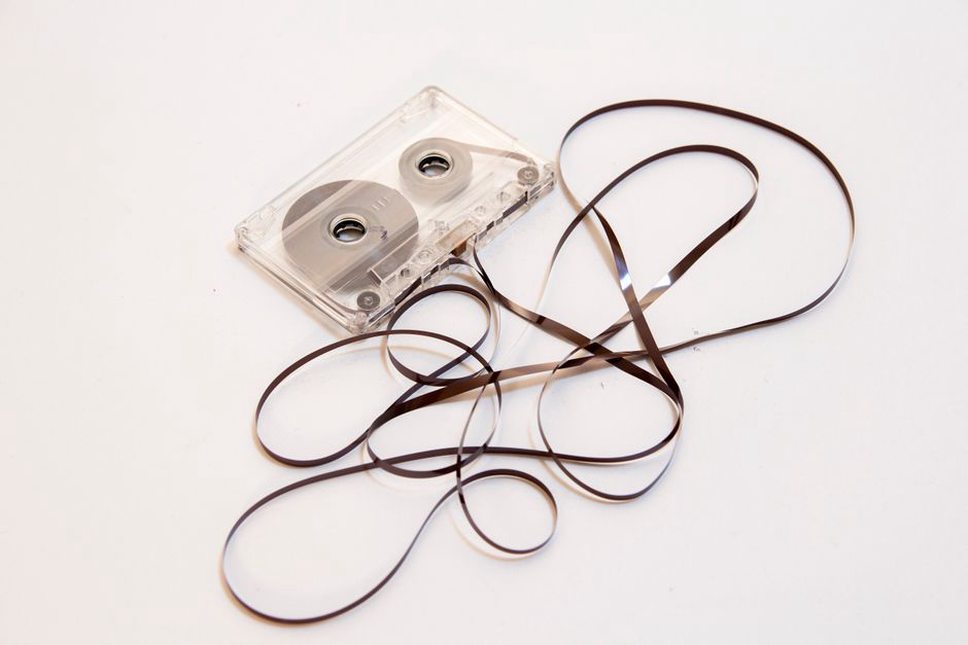
Storage is straightforward, but it matters. Keep tapes upright in their cases, away from direct sunlight, heat, moisture, and magnetic sources. Do not leave a cassette in a car or beside speakers with substantial magnets. Rewind and fast-forward only with a reliable machine; a damaged transport can crease or pull the tape. If a cassette sounds muffled, uneven, or intermittently silent, the playback deck may be the problem rather than the recording. Clean heads and capstan surfaces carefully, and do not assume every imperfection was intentional.
For artists preparing a first tape release
A cassette release benefits from a short technical check before duplication:
- Choose the running time before finalizing the sequence; do not fill a tape merely because space is available.
- Test a completed master on more than one deck, including an ordinary consumer player if possible.
- Leave sensible margins around exceptionally loud or low-frequency material to reduce unwanted overload.
- Proofread the J-card at its final printed size; tiny text quickly becomes unusable.
- State the edition’s basic credits and contact information, even when the presentation is intentionally sparse.
- Listen to several duplicated copies from beginning to end rather than checking only the first minute.
Check Side B as well. A tape can look finished once its label is applied, yet a weak pad, damaged leader, or transport fault may only emerge near the end of the reel. Play one randomly selected copy all the way through, then another from the opposite end of the batch. It is a small quality-control step, but it respects both the recording and the person who will eventually turn it over.