
A Merzbow recording and an Otomo Yoshihide performance might share a “Japanese noise” tag in a record shop, but the tag tells you little about what you will hear. Merzbow is closely associated with densely layered, high-volume sound. Otomo has worked with turntables, guitar feedback, improvisation and large ensembles. Their music reaches listeners in different settings and asks for different kinds of attention. It makes more sense to start with those differences than to look for a single national sound.
“Underground” describes how music circulates as much as how it sounds: small venues, self-organized shows, independent releases and listeners passing recordings along. Those conditions shift. A record once known to a specialist audience may become easy to find, while a recent performance may leave almost no public documentation. Sound, place and medium intersect here, but they do not form one tidy scene.
Start with the room, not the genre
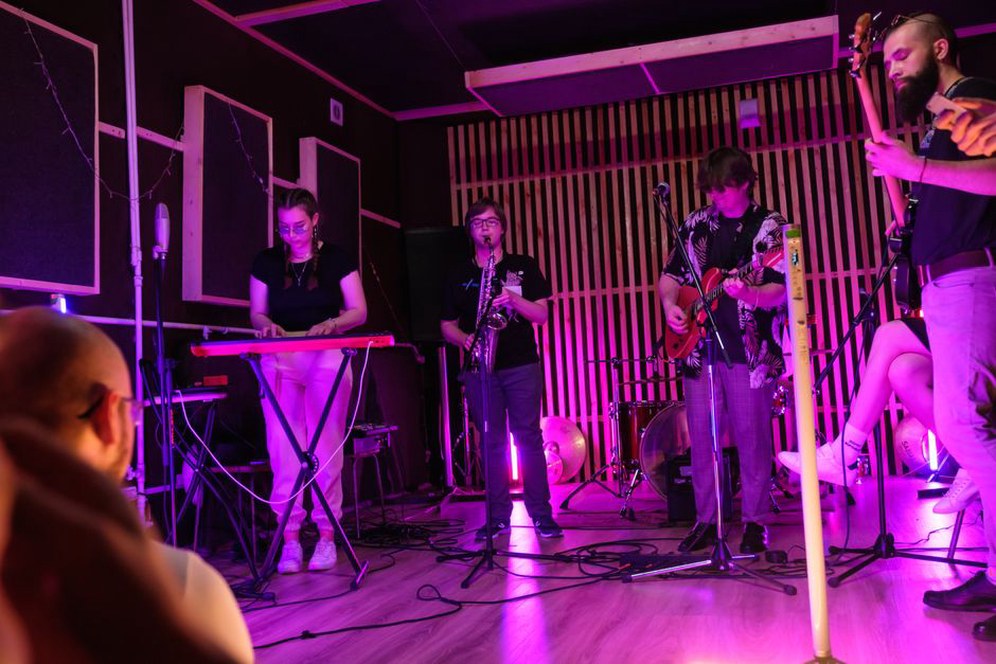
On a recording, a harsh passage can seem continuous and self-contained. In the room, you also hear entrances, exits, equipment adjustments and the space itself. During free improvisation, leaving a gap may matter as much as making a burst of sound. At a loud set, speaker placement and ear protection change which details reach you. Keep that in mind when comparing a concert recording with a studio release.
Japan’s experimental music has grown through overlapping communities, not one fixed circuit. Jazz improvisers, electronic musicians, rock players and sound-installation artists have shared stages and collaborators without settling on a common method. The word ongaku simply means “music” in Japanese. Lowercase onkyo, meanwhile, has been used internationally for a current of quiet, attentive improvisation associated with Tokyo around the turn of the millennium. Neither term covers every soft or exploratory performance.
The Tokyo venue Off Site became associated with that quiet current, though its performers did not all sound alike. In a small space, faint electrical signals and contact noises could mingle with audience movement. It is a useful corrective to the idea that underground music must be loud. Silence need not feel calm; it can leave every incidental sound exposed.
Follow the materials across loud and quiet music
Noise, drone, ambient and electroacoustic music are useful browsing terms, but they can describe different aspects of the same piece. “Noise” might refer to distortion, unpredictable texture or a refusal of conventional pitch hierarchy. “Drone” identifies sustained sound, whether stable or slowly changing. “Ambient” concerns how music occupies attention and space; it does not promise relaxation. Electroacoustic work brings electronic processes into contact with recorded or performed sounds.
Take a sustained tone made with a guitar amplifier. You could call it drone because it lasts, noise because it distorts, or electroacoustic music if microphone placement and signal processing are central to the work. None of those labels tells you exactly how the piece was made. Liner notes, performance footage and close listening can each clarify part of the process, though documentation is often incomplete. For more on the expectations attached to these labels, the blog’s discussion of Japanese ambient-noise beyond calm and harshness considers them in tension rather than as opposing camps.
Three distinctions that help on first listen
- Source versus result: A recognizable field recording may be heavily processed; a strange texture may come from an ordinary object played without effects.
- Duration versus stasis: A long-held sound can shift through beating frequencies, gradual filtering or changes in the surrounding noise floor.
- Intensity versus loudness: A near-silent performance can demand concentrated attention, while a loud recording may contain clear, spacious intervals.
These distinctions also push back against the easy division between an “extreme” and a “meditative” Japan. Merzbow’s catalog cannot represent every noise practice, any more than Hiroshi Yoshimura’s environmental music can represent every quiet one. Their aims and contexts differ. Hearing them side by side may sharpen a question about how sound occupies space, but it should not flatten their histories into a national spectrum.
Listen for what a recording carries—and what it loses
A field recording can seem to offer direct access to a place. Yet microphone position, weather, editing and playback level all shape what reaches us. Traffic, insects, ventilation and voices do not explain themselves; without context, you cannot reliably infer where they were recorded or why they were kept. Notes, when available, may distinguish a site-specific work from a portable collection of textures. When they are absent, that uncertainty matters.
Live documents pose similar problems. A room recording catches audience sounds and reverberation that a close microphone may minimize. Cassette hiss and limited frequency range can be audible, but they do not automatically make a tape more faithful to the performance. Compare versions when you can. A brief sound missing from a cleaned-up edition might have been an artifact—or an interaction the earlier recording happened to catch.
Notice how music travels
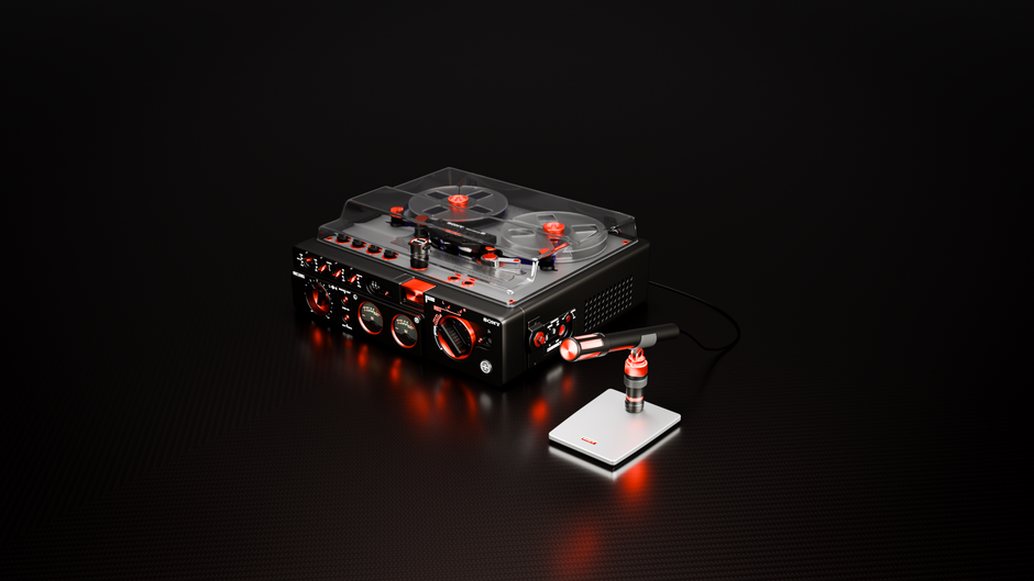
Physical releases have long helped experimental music circulate, but format alone does not make a release underground. An artist might use cassette because small batches are affordable to duplicate, because handling the tape suits the presentation, or because the label works in that format. Copies can move through sales at performances, trades between artists and independent stores. That route affects what can later be traced: a tape with sparse credits leaves a different record from a thoroughly documented CD.
Collectors know how quickly a shaky detail can harden into fact. Cover scans, online listings and secondhand descriptions pass along errors as readily as music. An uncertain year should stay uncertain; an unlabeled side should not gain a confident title through repetition. For a closer look at exchange and documentation in this format, see cassette culture in Japanese experimental music.
Digital access changes the picture without filling every gap. Streams and uploaded archives can make once-hard-to-find work audible far beyond its original audience. They can also separate a track from its sequence, artwork or performance context, and availability may change. When comparing a reissue with an earlier release, note the edition or source you heard—not just the artist and track title.
Make room for histories that do not line up neatly
Japan’s sonic underground did not begin with noise, nor did noise arrive in a single moment. Postwar avant-garde composition, free jazz, experimental rock, performance art and later electronic practices each have histories of their own, with musicians crossing between them. Group Ongaku, formed in the late 1950s, explored collective improvisation using instruments and other sound sources. It is one historical reference point, not a direct explanation for every later artist. Likewise, japanoise, a term commonly used outside Japan, says more about how certain music has been received than about the full range of local activity.
A collaboration often makes connections clearer than a sweeping timeline. Otomo Yoshihide’s projects place composition, improvisation and electronics in different balances. Keiji Haino’s performances resist reduction to one instrument or genre. Those names are useful when they lead you to particular recordings and personnel; reputations alone tell you little about everyone else’s work.
City labels need the same care. Tokyo and Osaka feature often in accounts of experimental music, but a city name says little about how a performance was organized or who could attend. An artist might record in one place, release through a label elsewhere and reach listeners internationally. Dates, venues, collaborators and formats give you firmer coordinates than an imagined city-wide sound.
Build a listening route from evidence
You do not need an enormous playlist. Try one documented live improvisation, one studio recording built around sustained sound, one work that incorporates field recordings and one physical or digitized cassette release. Write down a few observations after each listen, before reading descriptions. The point is not to identify equipment by ear with false certainty. It is to keep audible events separate from claims made in packaging or commentary.
- Record what changes: Note when sounds enter, recede, overlap or stop. Mark a few times rather than assigning one mood to the whole piece.
- Check the available credits: Look for recording location, performers, instruments, engineer and edition. Leave blanks where the source leaves blanks.
- Compare contexts: Ask what another version or a live document reveals about space, sequence or audience presence.
- Keep disagreements: If the credits say “guitar” but you hear no recognizable guitar gesture, retain both observations rather than forcing a match.
Suppose a cassette transfer begins with low hiss, then a narrow tone slowly develops a wavering edge. “Tone becomes rougher at 2:40” gives you more to work with than “analog warmth builds.” If the release credits a synthesizer, add that as a separate fact; if it names no source, leave it open. When another edition—or a performance using the same material—turns up, you will have something precise to compare.