
Japanese sonic avant-garde is best understood not as a single lineage, but as a set of working conditions: small venues with unstable acoustics, private studios, university laboratories, artist-run events, mail exchange, limited physical editions, and recordings whose most important actions may be nearly inaudible. The useful question is not whether there is a distinct national sound or a fixed genre. It is what each work treats as musical material, and what kind of attention it asks of the listener.
That question connects very different practices. A noise performance can make amplification, friction, overload, and bodily effort audible. An electroacoustic composition may arrange tape, synthesis, instrumental fragments, and room sound with microscopic precision. A drone work can make duration its main compositional force. Ambient practice may frame environmental continuity without becoming background decoration. Field recording can document a site, but it can also edit, stage, obscure, or complicate the ethics of representing that site.
Avant-garde as a network of methods
“Avant-garde” is often used too loosely, as though it simply meant difficult, extreme, or technologically new. In Japan, it is more useful to treat the term as a shifting network of methods and institutions. Postwar composers associated with experimental music, tape studios, concert music, improvisation, performance art, and later underground scenes did not share a single aesthetic. Yet their work repeatedly challenged fixed divisions between composition and performance, instrument and object, document and artwork, professional studio and domestic equipment.
This history includes internationally visible figures such as Tōru Takemitsu, whose early work with musique concrète and Jikken Kōbō helped establish important postwar experimental frameworks; Takehisa Kosugi, whose practice moved through graphic scores, performance, sound action, and collective work; and Toshi Ichiyanagi, whose output engaged indeterminacy and experimental compositional forms. These names matter, but they do not tell the whole story. The picture becomes distorted when concert-hall modernism, radical performance, free improvisation, industrial underground music, and cassette circulation are folded into one heroic narrative.
Listening improves when those distinctions remain intact. A composed electronic work may depend on close control of timbre and montage. An improvised set may use a prepared system designed to produce unpredictable behavior. A harsh-noise performance may be physically intense without being formless. A minimal environmental recording may be rigorously edited even when it seems untouched. The boundaries are porous, but the decisions are specific.
Four materials that recur across the field
Noise: pressure, grain, and decision
Noise is not defined by volume alone. In the work of artists such as Merzbow, Incapacitants, Hijokaidan, and KK Null, density can be central, but so are texture, speed, interruption, feedback behavior, and the relation between gesture and signal. A recording may feel continuous while changing constantly in spectrum, pulse, distortion, or stereo placement.
Analytical listening means avoiding two easy responses: hearing everything as undifferentiated chaos, or turning the music into a myth of transgression. Track what happens instead. Does a high band of feedback stay fixed while low-frequency pressure swells underneath? Does an abrupt cut reset the ear’s sense of scale? Are vocal sounds semantic, percussive, or submerged as matter? Does the recording preserve the performance space, or construct an impossible studio space?
Drone and ambient: duration without passivity
Japanese drone and ambient work often rewards attention to thresholds rather than obvious events. Keiji Haino has worked across free improvisation, voice, guitar, electronics, and sustained intensity; Yoshi Wada explored long tones, bagpipes, and resonant spaces; Hiroshi Yoshimura developed environmental music that complicates the easy opposition between functional design and serious listening. Their approaches are not interchangeable, but each shows how sustained sound can bring tuning beats, bodily fatigue, room resonance, and memory into focus.
Ambient listening becomes shallow when it is reduced to mood. What holds the apparent stillness in place: a loop, a slowly decaying source, algorithmic variation, microphone noise, or layered recording? A work that seems static may hinge on one altered harmonic, an entering air-conditioning hum, or a change in tape speed. Duration is not the absence of composition. It is often where composition is most exposed.
Electroacoustic work: mediation as content
Electroacoustic music draws attention to the chain between source and listener. Microphones, tape edits, loudspeakers, signal processors, digital systems, and listening rooms are not neutral containers; they shape the meaning of the work. A listener may be unable to identify a source, and that uncertainty may be deliberate. An ordinary scrape can become unrecognizable after filtering. A synthetic tone can acquire an apparently physical presence through spatialization. A recorded instrument can become a fragment within a montage.
Japan’s experimental music history includes institutional and independent approaches to these questions. Research studios and broadcasters offered technical resources, while later home recording and computer-based production lowered some barriers to access. Neither condition guarantees innovation. What matters is how a work makes mediation audible: through edits, spectral alteration, simulated space, degraded formats, or an insistence on the particular character of a speaker system.
Field recording: evidence, composition, responsibility
Field recording is often described as transparent capture. It is never that simple. A recording involves choices about site, time, microphone position, gain, duration, editing, labeling, and presentation. In densely inhabited environments, it may also involve voices, private activity, labor, ritual, and unequal rights to represent a location.
For listeners and collectors, provenance matters. A title may name a place without explaining whether the sound was recorded continuously, assembled across multiple visits, processed, or combined with studio material. Ambiguity can be aesthetically valid, but it should not be confused with documentary certainty. Careful catalog notes, recording dates where appropriate, and clear distinctions between location recordings and composed works help preserve context and trust.
Scenes are built through infrastructure, not only artists
Experimental music depends on infrastructure that is easy to overlook: rehearsal rooms, galleries, record shops, distribution networks, radio programs, zines, concert promoters, duplication equipment, online archives, and personal correspondence. In Japan, independent labels and small-run editions have often mattered because they allow artists to circulate work outside large commercial systems. Cassette culture, CD-R releases, handmade packaging, and direct exchange can carry aesthetic meaning, but that value is not automatic. A limited object may be carefully documented and artistically coherent; it may also be hard to verify, poorly preserved, or separated from its original context.
This matters especially in noise and adjacent underground music, where discographies often contain uncertain credits, changing aliases, unofficial uploads, and incomplete release data. The blog’s account of the orphan file “z2 2” from the Japanese noise underground shows why an obscure filename should not be promoted into a confirmed artist or release without evidence. Uncertainty is part of archival reality, not an excuse to fill gaps with plausible stories.
| Listening object | Useful first question | Common misreading |
|---|---|---|
| Live noise recording | How do room acoustics and audience presence affect the sound? | Assuming the recording captures the full physical impact of the event |
| Private cassette edition | What information confirms artist, label, date, and version? | Equating scarcity with historical importance |
| Field-recording album | What was recorded, edited, processed, or withheld? | Treating it as unmediated documentary evidence |
| Drone work | What changes across its duration? | Calling sustained sound static without close listening |
| Electroacoustic piece | How does technology alter source, space, and scale? | Reducing technical complexity to novelty |
A critical listening practice
Genre labels can provide an entry point, but they rarely explain how a work functions. Instead of forcing an immediate interpretation, listen in passes.
- First pass: map the surface. Identify broad shifts in density, register, pulse, silence, and duration. Do not rush to name sources.
- Second pass: locate operations. Listen for looping, cutting, filtering, feedback, amplification, repetition, saturation, or spatial movement.
- Third pass: consider framing. Check the title, credits, format, performance context, and documentation. Keep verified information separate from rumor.
- Fourth pass: compare playback conditions. Headphones can reveal micro-detail; speakers can expose low-frequency interaction and room effects. Neither is definitive in every case.
This approach is particularly useful for work that first appears opaque. A tape collage may reveal recurring fragments only after several hearings. A feedback performance may have a precise architecture of entrances and withdrawals. A field-recording composition may hinge on a cut that casual listening barely registers. Analytical attention need not drain the atmosphere from a work; it can show why that atmosphere holds.
What critical writing should avoid
Japanese experimental music is often burdened with imported myths: technological futurism, inscrutability, extremity, spiritual purity, or a generalized idea of urban alienation. Such frames flatten artists into symbols and erase ordinary working conditions. A musician may use obsolete equipment because it is available, not because it represents a philosophy of nostalgia. A performance may be loud because it tests physical thresholds, not because it expresses a national character. Silence may result from compositional choice, technical limitation, or venue acoustics.
Critical writing becomes stronger when it stays close to audible evidence, production conditions, and documented relationships. Name the sound’s behavior. Separate a confirmed label credit from a collector’s attribution. Call something an influence only when a source supports it. When records are incomplete, say so. The urge to turn fragmentary artifacts into a smooth lineage is understandable, but it obstructs more accurate histories.
Collecting without turning artifacts into trophies
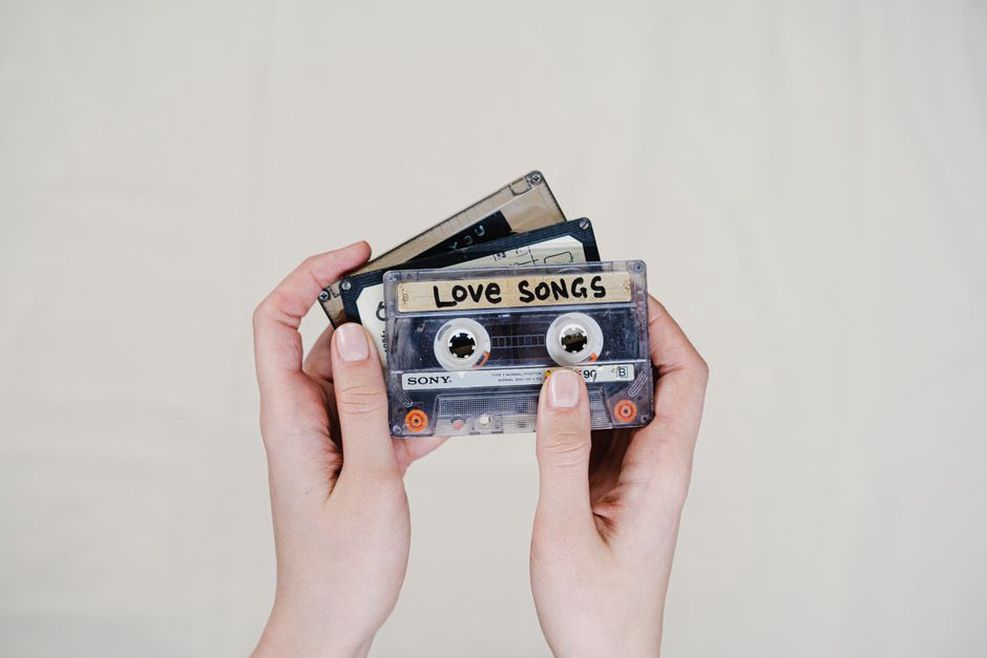
Collectors often encounter experimental Japanese releases through second-hand listings, archive uploads, or partial discographies. Verification is the responsible first step. Compare catalog numbers, sleeve scans, label typography, artist credits, runtime, recording medium, and contemporaneous documentation. A photograph of a cassette does not establish its date, edition status, or authorization. A digital file may preserve the sound while losing sequence, cover information, and material clues needed to identify a version.
- Keep acquisition notes separate from confirmed discographical facts.
- Preserve scans of inserts, labels, and packaging alongside audio files.
- Record transfer details when digitizing tape: deck, speed, noise-reduction settings, date, and audible defects.
- Do not “correct” unknown titles, artists, or dates simply to make a library easier to search.
- Mark bootlegs, unofficial copies, and uncertain objects clearly rather than presenting them as canonical releases.
A modest archive can be more useful than a large but untraceable one. For a tape with no reliable artist credit, assign a stable local identifier, photograph both sides of the shell and insert, transcribe every visible marking exactly, note where it came from, and retain the original transfer before any restoration. Those small acts preserve uncertainty without erasing the object that produced it.