
The last vibration of a cymbal fades, but the piece may not be over. In a quiet improvisation, the next gesture could arrive in two seconds or twenty. While waiting, you hear the ventilation, a chair shifting, perhaps the difference between a sound left to decay and one cut short. The performer has stopped sounding the instrument without necessarily handing the room back to ordinary life.
Calling that interval simply “silence” misses the decision behind it. Japanese experimental musicians have worked with a single sustained electronic tone, sparse instrumental actions, nearly empty recordings, and performances in which no one rushes to fill the available time. These approaches do not add up to a national style. What matters is how a particular work directs attention with fewer events, and what becomes audible when its performers hold back.
Silence is not the same as low volume
A quiet sound can be continuous and dense; a loud piece can have sharp, consequential gaps. Silence is less a volume setting than a relationship between an expected event and what happens instead. Stop playing an instrument in a room, and other sounds come forward. On a recording, an apparently blank passage may hold microphone hiss, electrical noise, distant traffic, or the tail of an earlier note. Absolute silence is rarely the point.
The Japanese term ma is often brought in to explain such intervals. It can refer to spacing or an interval in several arts, but using it as a universal key flattens different musical practices into a cultural cliché. A gap in an improvised set may depend on performers listening to one another in real time. In a tape composition, it may be fixed by a splice, mute, or fader movement. Both can be precise without following the same aesthetic doctrine.
Three ways a sparse piece can change time
Waiting without a predictable pulse
On Improvisation (1981), pianist Sabu Toyozumi and guitarist Taku Sugimoto had not yet arrived at the restrained approach associated with Sugimoto’s later work. The contrast helps show how striking that later sparseness could be: a single guitar tone or small action might stand apart from the next, with no beat to count. In Sugimoto’s sparse improvisations, the interval is more than a rest between phrases. Its length changes how the previous note lingers in memory and how strongly the next one lands.
Even a few regularly spaced events can establish a pulse. Uneven spacing denies the listener that foothold. When another musician could enter but does not, the wait also makes their choice audible.
Sustaining rather than withholding
Minimalism does not require gaps. Ryoji Ikeda’s work often uses precise electronic tones, pulses, and abrupt contrasts to draw attention to frequency and duration. A sustained tone may seem static, then disclose beating, distortion, or a shift in how it is perceived over time. Here, subtraction reduces the number of competing sounds rather than leaving a stretch empty.
That difference gets lost under the loose label “quiet ambient.” A low-volume drone, a nearly motionless sine wave, and an unamplified instrumental pause demand different kinds of attention. Similar sparseness tells us little about how they were made or where they were meant to be heard.
Letting the environment enter
In Akio Suzuki’s work, listening can be the central action. His Otodate project marks places from which to listen to surrounding sounds; no performer needs to supply a continuous soundtrack. Stand still at an otherwise ordinary location, and its audible details come into relation. That does not make every incidental noise secretly composed music. The marked position gives someone a way to hear those noises together.
The recording medium does not disappear
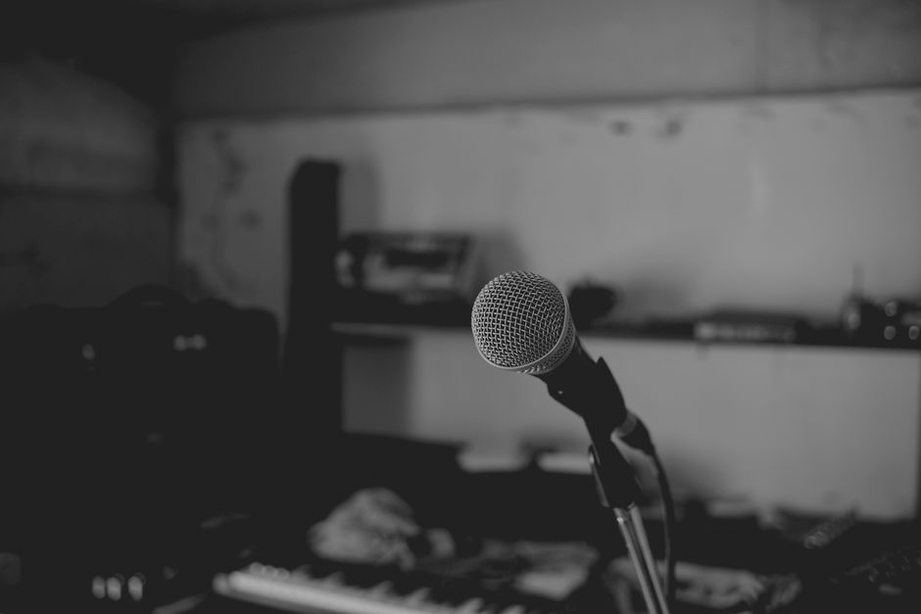
Few events leave production decisions exposed. Room noise, microphone distance, and an edit at the end of a decay have little else to hide behind. Raising the volume may uncover detail, but it can also overstate tape hiss or noise from the playback system. Noise reduction poses the opposite problem: it may erase low-level sound that gives an event its scale.
These questions connect minimal work to broader Japanese electroacoustic music’s studios, independent circuits, and listening practices. A studio composition, a domestic recording, and a document of a live performance allow different degrees of control over what reaches the recording. Their silences need not mean the same thing.
Cassette adds a practical distinction. Its noise floor may remain audible through a deliberately quiet passage, while a digital file can carry a hard mute with no recorded room tone. Neither is automatically more authentic. Collectors need to identify the carrier and edition before treating a hiss, dropout, or sudden blank as the artist’s intention. A damaged copy can make an arresting interruption of its own.
Listening for decisions, not for a mystique
It is more useful to compare individual events than to ask whether a piece “feels Zen.” What changes, and what stays fixed? These checks apply to a performance or a recording:
- Mark the event boundaries. Does a sound fade into the room, end with a physical gesture, or stop as though muted?
- Notice what occupies a gap. Where possible, distinguish room sound, recording noise, audience movement, and an electronically generated low-level tone.
- Compare successive intervals. Similar lengths may suggest a hidden pulse; irregular lengths can make each entry uncertain.
- Check the scale. A tiny click after a long pause can feel forceful without registering as loud on a meter.
Playback level matters, but listening should not become a test of endurance. Keep the principal sounds clear without making sudden entries uncomfortable. Headphones may expose fine details; speakers bring the recorded room into contact with your own. If a passage seems blank, replay it at a moderate level before reaching for the volume control.
Try timing a pause, then go back and listen only to the preceding sound’s decay. What first seemed empty may begin with several seconds of resonance. The silence starts later than the note’s attack might suggest.