
On Taj Mahal Travellers recordings, a sustained tone may hold while its edges shift. Bow pressure changes; electronic processing thickens the sound; another player settles on a nearby pitch. No new section is announced, yet the music has moved. Listen less for notes invented on the spot than for the choices to keep a sound going, alter it or let it disappear.
Improvisation can yield a long drone, a few near-silent gestures or a dense burst of electronics. It does not rule out preparation. Musicians might agree on a duration, an instrument setup or a way of responding to one another, then leave the audible result open. Within those limits, you can often hear them making decisions.
A score can leave room for uncertainty
In Japan, group improvisers have made room for uncertainty in different ways. Taj Mahal Travellers, formed by Takehisa Kosugi in 1969, used acoustic and electronic instruments in extended collective performances. Their recordings are often associated with sustained textures, but the small adjustments between players deserve just as much attention. One musician’s held tone becomes the ground for another’s scrape, pulse or unstable frequency. The length of a performance gives those choices time to register.
Kosugi’s work also makes it hard to define improvisation simply as the absence of a score. His event scores can specify an action or situation without settling its timing or sonic outcome. Rather than supplying a melody to execute, such a score sets conditions under which performers must listen and decide. Fixed instructions need not produce fixed sounds.
A recording complicates the picture. An album preserves one set of decisions, not all the things the players might have done. Editing and physical format also shape what reaches the listener. A recorded passage is evidence of a performance, not a complete map of a musician’s method.
The instrument is part of the decision
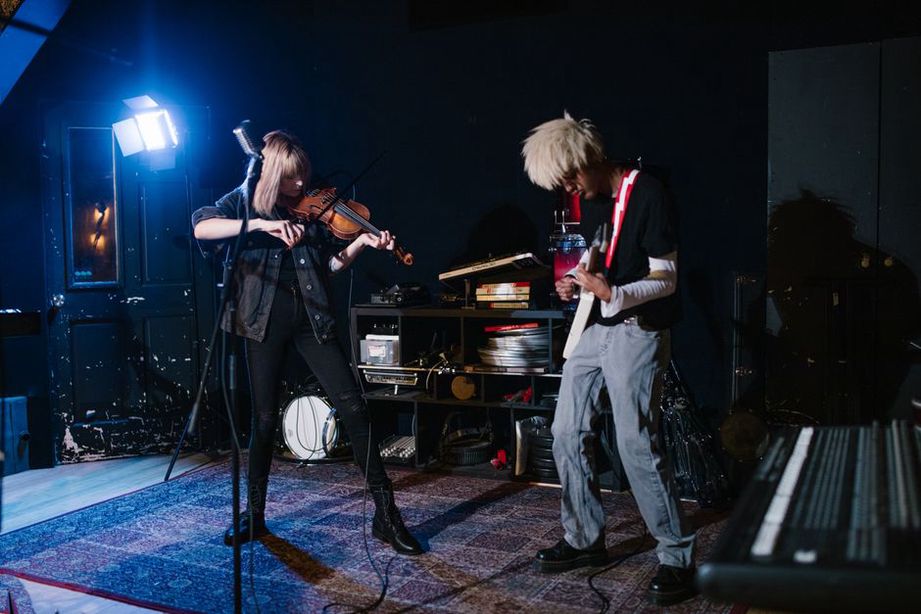
For some improvisers, making a sound means finding out what the equipment will permit. Junichi Masuda’s work as Merzbow is often discussed in terms of sheer intensity, but listen closely and the variations come forward. Distortion can flatten a source, expose a rhythmic fluctuation or change abruptly with an adjustment to a circuit or control. The response is not always as precise as a keyboard note.
That does not make the equipment an independent performer. The musician chooses materials and interventions; feedback, amplification and processing affect what choices are available next. In a loud passage, try following one element—a recurring pulse, a band of hiss, a sudden cut—instead of separating every source at once. An interruption can give the music shape as clearly as a buildup.
Voice makes this exchange with the instrument especially physical. In Hijokaidan, Junko uses extreme vocal sound as part of the ensemble texture. A scream occupies space differently from a synthesizer tone: breath runs out, pitch slips, and the body needs to recover. Those limits shape phrasing. They are also a reason not to reduce a forceful vocal gesture to an emotion a listener assumes is present. Phew offers a different point of comparison. Across her solo work, voice can sit close to electronics, sometimes clear enough to suggest a song, sometimes functioning more as texture. Neither approach assigns it one stable role.
When almost nothing happens
In the late 1990s and early 2000s, musicians associated with Tokyo’s onkyo scene drew attention to low volume, sparse events and room sound. Toshimaru Nakamura’s no-input mixing board is a clear example. With no external sound source plugged into its inputs, the mixer generates sound through internal feedback paths. Nakamura controls levels and routing, but the tones can be delicate or unstable. What matters is how the circuits interact, not what the board plays back.
Guitarist Taku Sugimoto, often discussed alongside this scene, has made music in which isolated notes and long gaps ask for patient listening. Silence is not proof that nobody is deciding anything. Leaving another musician’s gesture unanswered can alter the balance of a room. After a long wait, the attack of a single note may carry more weight than a run of notes would.
None of this amounts to a national aesthetic of quietness. Hijokaidan’s confrontational volume and Merzbow’s crowded frequencies belong in the same broad field of experimental music. Across these very different performances, the practical question is which change matters enough to make now? The answer rests with the players, their tools and the particular encounter—not a rule about how Japanese music ought to sound.
Listening for choices rather than genre signals
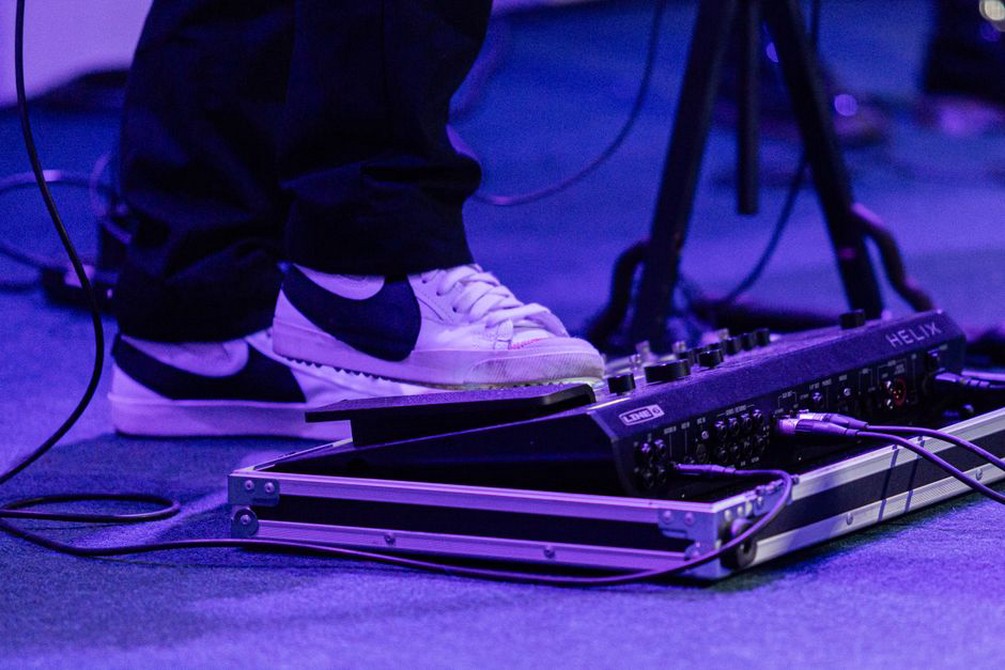
Spend a short stretch of an improvisation tracking decisions before deciding whether it sounds like noise, ambient or drone. This approach works at different volumes:
- Identify a stable element. It might be a held pitch, room hum, repeated attack or continuous hiss. Notice how long it lasts before treating it as background.
- Mark the first meaningful change. Is it a new sound, a shift in level, a withdrawal or a change in how two sounds overlap?
- Listen for a response. Another player may imitate the change, leave space around it or continue unaffected. Nearby events are not necessarily deliberate replies.
- Check what the recording hides. Microphone placement, mastering and the absence of visual information can obscure a gesture or exaggerate its apparent size.
Listening this way also helps distinguish indeterminacy from randomness. A performer may deliberately leave an outcome uncertain, then respond closely to what happens. A feedback tone might arrive unpredictably, but sustaining, reducing or cutting it off is still a choice. Conversely, a volatile-sounding passage may follow a rehearsed procedure. The recording alone cannot always tell you which is which.
What documentation can and cannot show
Improvisation survives through imperfect records: live albums, videos, photographs, sleeve notes and performers’ accounts. Each shows something different. Video may reveal who moved just before a sound changed, though the camera might miss another player’s action. A live recording can preserve the pace of a set while concealing the room’s contribution. Liner notes may clarify a setup; hearing its behavior over time is another matter.
The venue is particularly hard to reconstruct from an album. At low volume, audience movement or ventilation may compete with the musicians. At high volume, bodily vibration matters in ways small speakers cannot reproduce. For more on how location and recording affect what becomes audible, the blog’s piece on Japanese environmental sound art and listening to place offers a related perspective. In an improvisation, room conditions matter when performers adjust to what they hear there.
When comparing two performances by the same artist, note the format before making claims about development: solo or ensemble, studio or live, audible room or close-miked sources. Choose a thirty-second passage in each and write down when a sound stops. Does another enter immediately, continue unchanged or leave a gap? That small moment may tell you more about the musicians’ working relationship than either release’s genre label.