
Run a tape at half speed and the pitch drops an octave; every attack takes twice as long. Reverse it and a piano note swells toward its strike. A tape recorder does not simply preserve sound. Its predictable quirks let early electroacoustic composers work directly with timbre and time. In Japan, those possibilities found a place in radio studios, concert composition, experimental collectives and, later, independent electronic music. The machine matters, but so does the musician’s decision about what to hear in it.
Electroacoustic music is a useful, if imperfect, term for work where electronic processes and acoustic sound interact. It covers recorded sound altered on tape, electronic tones played alongside instruments, and performances in which microphones, circuits and loudspeakers become part of the music. It is narrower than “experimental music” but belongs to no single style. A quiet, carefully spaced tape piece and a volatile feedback performance can both fit the term, though they ask different things of their equipment and listeners.
The studio as an experimental instrument
Japanese composers began working with electronic sound in the 1950s, as interest grew internationally in musique concrète—composition with recorded sounds—and electronically generated tones. The opening of NHK’s electronic music studio in 1955 gave this work an important institutional setting. Access mattered: oscillators, filters, tape machines and mixing equipment were costly, while tape editing demanded time and physical precision. None of that prescribed an aesthetic. Composers could use studio techniques, push against them or combine them with instrumental practices.
Toshiro Mayuzumi’s X, Y, Z for Musique Concrète, composed in 1953, is an early point of reference for recorded-sound composition in Japan. Toru Takemitsu worked across acoustic and electronic forms rather than treating them as separate careers. His tape composition Water Music (1960) uses recordings of water. Isolate a familiar splash, repeat it or place it beside another sound, and attention shifts: its density, attack and decay become as noticeable as the event that produced it.
This is not a single line of descent from a state broadcaster to every Japanese electronic musician who followed. University and broadcast studios offered different resources from small venues, self-built instruments and home recording setups. Yet each setting raised a similar practical question: when sound can be cut, slowed, filtered, amplified or moved through space, which of its properties can carry a piece?
What a tape edit actually changes
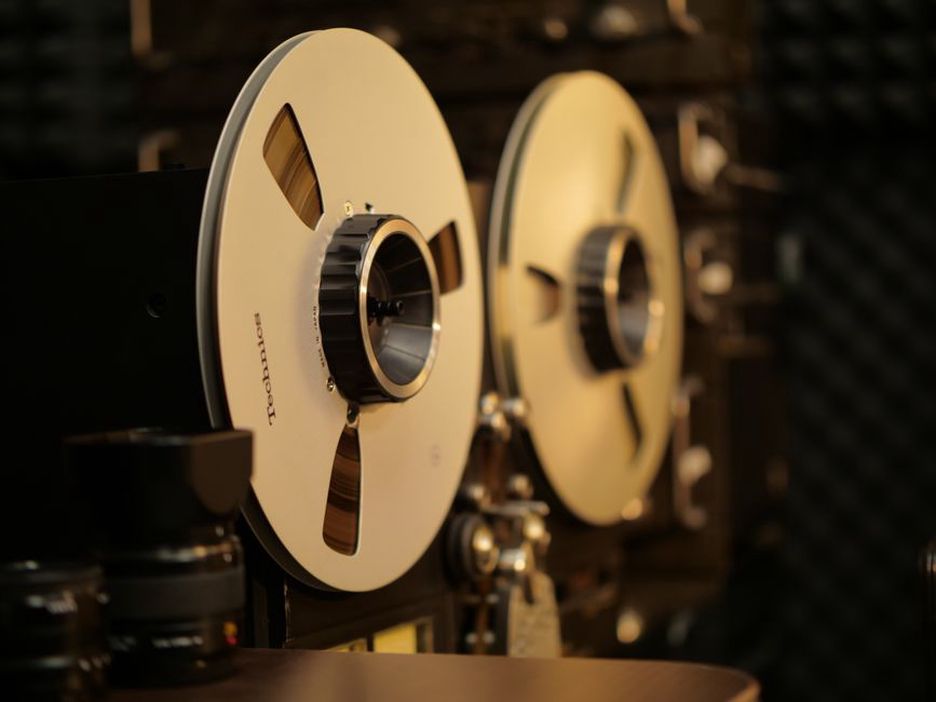
Cutting and joining magnetic tape lets a composer choose exactly where a sound begins and ends. Repeat a short section and an irregular event may become a pulse. Layer two recordings and their attacks can coincide while their decays drift apart. Changing tape speed alters pitch and duration together unless further processing compensates for one of them. Filters remove or emphasize frequency bands, making a sound seem heavy, thin, distant or close. These operations do not make a composition interesting by themselves. What counts is proportion: how long a sound remains, what comes before it, and whether its source needs to stay recognizable.
Where measurement helps—and where it stops
Electroacoustic work lends itself to measurement. A waveform shows an event’s timing and amplitude; a spectrum shows how its energy is spread across frequencies. Those views can distinguish a low sustained tone from a brief broadband click. They cannot tell us whether the click feels abrupt in a passage. That depends on the level, spacing and character of the sounds around it.
Feedback makes the difference between measurement and experience particularly clear. A microphone picking up a loudspeaker can send its sound back through amplification, creating a loop. A stable loop may produce a pitched squeal; changes in gain, microphone position or room acoustics can make it move or break into harsher textures. The process follows physical rules, but small adjustments can have large audible effects. Performers respond to that instability rather than merely demonstrating an acoustic principle.
Playback changes what reaches the listener, too. A sine tone through headphones arrives differently from the same tone played into a resonant room. Low frequencies may be felt through the floor; closely spaced frequencies can produce audible beating, a rise and fall in loudness. Stereo placement affects where two sounds seem to sit. In music built from sustained tones or slight timbral shifts, these may be the main events, not finishing touches.
Experiments beyond the laboratory
Formal studios were not the only places where Japanese musicians put sound technology to work. The postwar experimental collective Group Ongaku, active around the turn of the 1960s, brought instruments, found objects and tape recorders into improvisation. Recording equipment became part of collective action rather than just a means of finishing a fixed score. A recorded fragment could sit among other sounds; choosing when to play it was itself a performance decision.
Later practices took this openness in different directions. Toshimaru Nakamura’s no-input mixing board uses a mixer without an external sound source, routing outputs back into inputs to generate feedback. It may appear to dispense with the traditional instrument, yet it makes the controls, signal path and amplification unusually consequential. Taku Sugimoto’s sparse electric-guitar performances pose another electroacoustic problem: amplification can expose faint contact sounds and long decays, while the intervals between notes leave room for the audience to hear the venue. These are not interchangeable styles. Each lets an electronic process remain audible.
At the abrasive end, noise musicians may use distortion and overload to make circuitry audibly unstable. At the quieter end, a field recording can bring environmental sound into a composition without claiming to reproduce a place neutrally. Microphone placement, gain and editing already determine what survives. The encounter between science and art is less a formula than a set of choices made with processes that can be controlled—up to a point.
Four ways to hear the process
Knowing a little about the techniques can sharpen listening without turning a piece into an equipment test. Even when the recording notes say nothing about the gear, these questions can help locate what is changing:
- Source: Does the sound retain clues to an instrument, voice, location or physical action? If its source becomes uncertain, which features—rhythm, grain or resonance—take over?
- Alteration: Is the sound reversed, repeated, filtered, stretched or driven into distortion? Listen to its attack and decay, not just its pitch.
- Relationship: Do sounds alternate, overlap or interfere with one another? Two steady tones can create rhythmic beating even when neither is pulsed.
- Playback space: Does the music depend on distance, direction or the room’s response? Compare speakers and headphones when spatial detail seems central.
These questions help with long-form pieces that seem static at first. A sustained layer may change gradually in its upper frequencies; a faint second tone may alter the perceived loudness of both. For another approach to slow-moving sound, the discussion of texture in Japanese drone music considers how such details become audible over time. There is a limit to what listening can establish, though: an alteration may be obvious while the original source remains impossible to identify reliably.
Technology does not erase authorship
A novel device does not automatically produce a novel piece. Nor is equipment simply a transparent servant of an idea formed in advance. A circuit has operating limits, a room has resonances, and a recording medium brings noise and constraints. Musicians choose configurations, decide which results to keep and place sounds in time.
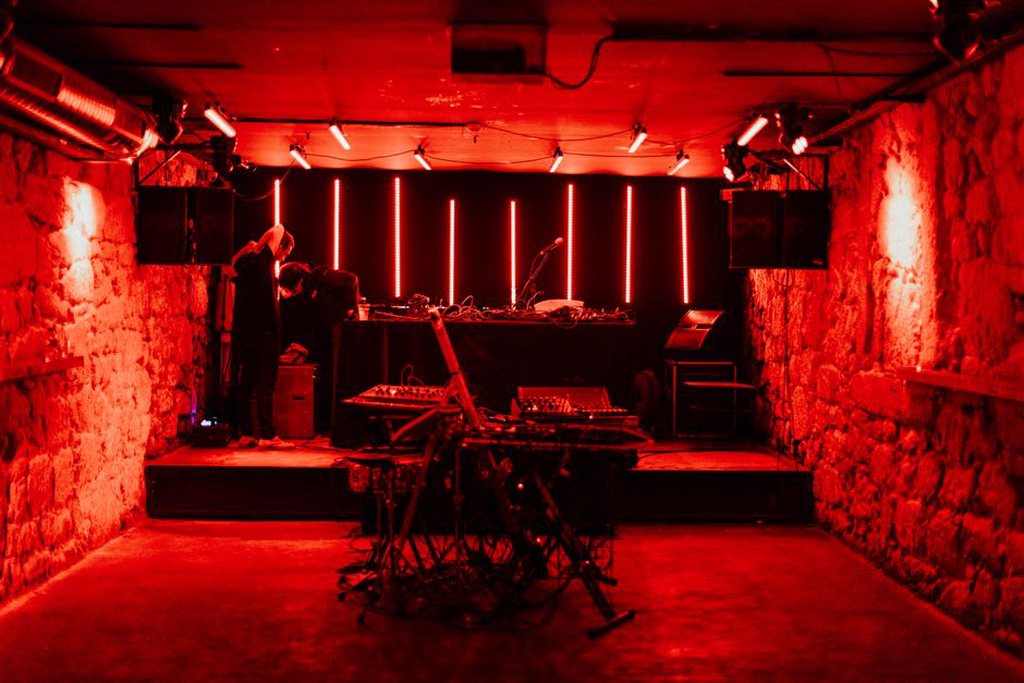
That distinction matters when comparing an institutional studio with DIY practice. A composer editing tape at a broadcaster and a performer using a compact feedback setup may both investigate repetition, threshold and timbre. Their access to equipment and their ways of revising the work differ. In a studio, a passage can often be assembled through repeated edits. In a live feedback performance, the musician may set conditions and respond as the sound develops. Neither method is inherently more rigorous; each exposes different decisions.
Format can expose them as well. Tape hiss may sit alongside a quiet passage; cassette duplication can soften detail; a digital reissue may preserve the material while changing the listener’s encounter with its original noise floor. Better to describe what a particular edition sounds like than assume an older format is more authentic. Playback limits any judgment, too: a layer barely audible on laptop speakers may separate clearly through suitable headphones, while bass that fills a venue may disappear at home.
A practical listening comparison
Choose a passage with one recognizable event—water, a struck object or a plucked string—and replay about thirty seconds. First, identify the event. On the second pass, set its name aside and listen to the shape of its attack, the length of its decay and any recurring frequency band. On the third, notice what the next sound does to your memory of the first. A filtered splash might stop suggesting water when a similar hiss appears beside it; a faint click might become a beat once it repeats regularly.
Keep the playback level consistent between passes, especially if the passage contains feedback or sharp transients. If you compare headphones with speakers, record one difference rather than declaring either version definitive. Perhaps a quiet layer separates more clearly in headphones, or a low tone gathers force in the room. Note what changed, and under which listening conditions you heard it.