
A cassette passed between musicians carried more than a recording. A handwritten title, a duplicated cover, a return address: any of these could point its recipient toward a contact, a performance venue or a label willing to hear another tape. In Japan’s experimental underground, the cassette was more than an inexpensive container for noise. It was a practical unit of exchange—small enough to mail, easy to copy in modest numbers, and able to circulate beyond record stores.
“Tape culture” can sound like a genre, but it describes a set of overlapping practices: recording at home, duplicating tapes, exchanging them by mail, running small labels and collecting. Noise was prominent, though a cassette might just as readily contain improvisation, electronic experiments, ambient music or a live set. These recordings did not share a single sound. What connected them was how they reached listeners—and how, at times, they changed along the way.
Why the cassette suited an underground network
Before inexpensive digital publishing, circulating a recording meant working within material limits. Pressing vinyl took more money and advance planning; cassettes could be recorded and copied on equipment that fit in a room at home. Blank tapes, decks and packaging still cost money, and real-time copying took hours. But an edition could be small and still reach interested listeners: collaborators, independent shops, mail-order distributors or people met at performances.
The format left room for changes of plan. A label could print covers separately, add information by hand or assemble copies as orders came in. An artist could mail a demo, a finished release or a live recording without waiting for a conventional production cycle. That flexibility suited music with little reason to follow a commercial schedule. It did not make the work effortless. A worn deck might change the sound of a copy; postage shaped what could be exchanged; keeping up with letters took time. The network ran on that labor.
Japanese tape activity belonged to a wider international exchange of recordings, zines and letters; it was not an isolated national invention. Artists, labels, venues and listeners gave those channels their local shape. An overseas trade could bring a Japanese noise recording to someone who had never seen its maker perform. Another tape might circulate only among friends or participants in a local scene. Both could be called “underground,” but a public release and a privately shared document leave different kinds of evidence.
The label was a correspondence point
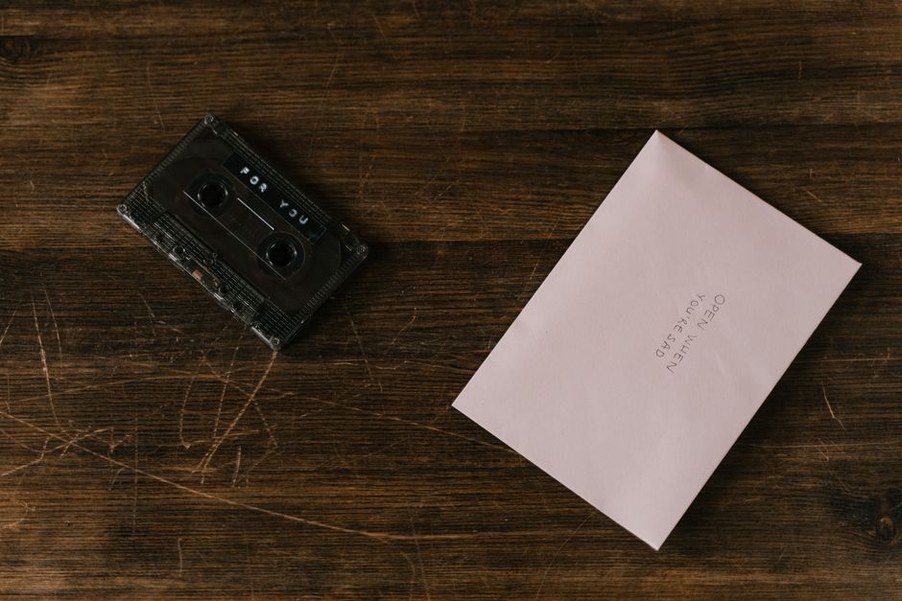
A small cassette label did more than select music. Someone had to find blank tapes, duplicate a usable master, check the copies, prepare sleeves, answer inquiries, pack parcels and keep track of trades. In a one-person operation, those chores could determine what appeared next as much as artistic taste did. Missing materials or unanswered mail could hold up a release in a system built around spare time and personal resources.
Trades helped labels build catalogs without relying entirely on sales. Two labels could exchange copies for distribution, each opening a route into another circle of listeners. A compilation might introduce several artists at once, though sharing a tape does not prove they belonged to a cohesive scene. Addresses printed on inserts invited further contact; on a surviving copy, they show an intended route for correspondence, not proof that every recipient wrote back.
That makes the packaging worth examining. Track lists, recording notes, edition numbers and inserts show how a tape was presented when it left its maker. A revised sleeve may point to another assembly run, but not necessarily a new recording. Identical-looking covers, meanwhile, do not guarantee identical contents. Covers and recordings could be prepared at different times, and undocumented substitutions are possible. The tape and its paper belong together, though neither can settle every question.
What a surviving copy can tell you
- Written credits identify who was named on that copy; spelling and roles may differ elsewhere.
- Contact information shows where correspondence was directed when the sleeve was prepared, not necessarily where the music was recorded.
- Tape and shell details can help compare copies, but replacement cases and reused stock complicate dating.
- Side lengths and track order help distinguish versions when a release lacks a reliable catalog entry.
- Marks of ownership document a copy’s later travels, not the artist’s original intentions.
What the medium changed—and what it did not
Cassettes made certain editing decisions easy. A musician could record successive passes, splice or pause a recording, then sequence material across two sides of a fixed length. A side break might divide contrasting sets or simply reflect the blank tape at hand. Duplication at home could add hiss, shift levels or soften high frequencies. Those traces may be audible, but they were not necessarily chosen by the artist.
Cassette saturation is often romanticized. Sometimes distortion was part of the music; sometimes it came from copying or a poorly aligned playback deck. Comparing copies, when possible, can help distinguish something present on the master from a later transfer problem. Even the earliest surviving copy may not be the version its maker preferred.
Artists in Japan’s experimental tape networks also worked on vinyl and CD, performed live, or saw their recordings issued digitally later. Merzbow’s extensive cassette-era output matters, but it cannot represent the whole practice. For one artist, tape might have been a regular release format; for another, a way to send one performance to a potential collaborator. There was no simple march from cassette to supposedly better media. Formats coexisted, and a change in distribution changed who might hear the work.
Listening to a tape as an edition
For a collector or researcher, “Which object am I hearing?” may be more useful than “What is the definitive recording?” A digital transfer could come from a master, a distributed cassette or a later copy. Each path can affect speed, channel balance and noise. A clean-sounding rip might be a careful restoration, or it might erase clues about the tape that circulated. Roughness, by itself, is no certificate of authenticity either.
Begin with the edition in front of you. Record the title as printed, the named artist or artists, the label and catalog number if present, and the order of both sides. If the cassette is unmarked, describe what is physically there rather than assigning it a plausible identity. Listen for a clean ending or an abrupt cutoff at the side break. A cutoff could be deliberate, but it could also mean the chosen tape was too short for the recording.
Playback calls for care: a cassette is a mechanical object. Check the shell and tape path before putting an unfamiliar copy in a deck; damaged or sticky tape can deteriorate further. Use a maintained machine if possible, and do not replay a fragile original repeatedly just to settle a track time. For preservation, one careful transfer with notes on the equipment and settings is more useful than an unexplained audio file. Avoid permanently modifying the cassette to make it play unless its condition and conservation expertise justify that step.
The archive has gaps built into it
Underground cassettes were not always numbered, dated or deposited in institutions. Small runs could vanish through wear, moves or the routine clearing of personal collections. A tape known from a catalog listing may differ from the copy that later turns up. If the sleeve gives no year, its design or shell model can be a poor basis for assigning one: materials were reused, and old stock could sit unused for years.
Online discographies and scans make these recordings easier to find, but they can lend uncertain details an air of certainty. A date repeated across listings may come from a single unverified entry. Missing credits may reflect an incomplete scan rather than an anonymous release. When accounts conflict, keep separate what the object says, what a participant later recalled and what a cataloger inferred. All three can be useful; they answer different questions.
Digitization raises another question. A transfer can make obscure music audible beyond the owners of surviving copies, but owning a cassette does not grant permission to distribute its contents. Artist and label wishes, copyright, and the privacy of addresses or personal notes on inserts all matter. An object can be documented without publishing every piece of correspondence kept with it.
Where the network becomes visible
An address on a cover, a distributor’s sticker, a letter tucked into the case or another artist’s name in the credits may help reconstruct a tape’s route. Such details show music moving through relationships, not arriving fully formed in a database. They also expose an imbalance in the record. Releases that traveled internationally, drew collectors’ attention or had memorable covers are easier to document than copies that stayed within a small local circle.
That imbalance matters when telling the history. Famous noise releases are useful entry points, but the most widely traded titles are not necessarily representative. Nor was every cassette a statement against the music industry. Some makers needed an affordable format; others valued the visual object or the direct exchange it allowed. Those motives have to be established case by case.
With an unfamiliar Japanese underground tape, start with a plain record of the object: photograph both sides of the cassette, the full sleeve and any loose insert; transcribe the wording exactly; mark what remains uncertain. Keep a distributor’s price mark separate from the original credits. Otherwise, a later listener might mistake a stop along the tape’s route for its point of origin.