
Japanoise is a convenient label, but it arrived long after Japanese artists began making work that resisted a single genre name. It helps identify one intense strain of noise music while blurring the differences between tape collage, free improvisation, feedback performance and electronic sound art. To trace the history, it helps to follow those practices separately, then look at how performers, small labels and listeners brought them into contact.
1960s: Experimental music before the genre name
One starting point is Group Ongaku, an improvising collective active around the turn of the 1960s. Its members included Takehisa Kosugi and Yasunao Tone. They used instruments, voices, tape and unconventional sound sources when electronic composition, performance art and free improvisation had yet to settle into separate scenes. There is no straight sonic line from Group Ongaku’s open-ended performances to the dense distortion associated with 1980s Japanese noise. The connection lies in treating interruption, chance and sounds without conventional pitch as musical material.
Similar possibilities appeared in broader Japanese avant-garde activity, including intermedia performance and experimental tape work. That does not make any one movement the birthplace of noise. These were related experiments, not a unified style.
1970s: Amplification, improvisation and rock’s edges
The 1970s offered other routes into abrasive sound. Guitarist Keiji Haino emerged from Japan’s underground rock and improvising circles, and his group Fushitsusha took shape toward the end of the decade. Duration, volume and physical intensity matter in his performances, but so do fragile voices and long stretches of near-stillness. Calling all of it noise misses that range.
Masayuki Takayanagi, meanwhile, pushed amplified guitar improvisation toward overwhelming density. His work makes a useful counterpoint to later pedal-driven noise: the guitar can remain identifiable as the source even when the mass of sound makes individual gestures hard to pick out. Neither player belongs to a tidy prehistory of a single 1980s scene. Their work shows how distortion and sustained volume entered experimental music through live performance as well as through tape and electronics.
1980s: Noise acquires multiple centers
By the 1980s, a more recognizable noise underground had developed, though its artists did not share a method. Merzbow, Masami Akita’s project, began releasing recordings in the late 1970s and became central to how international listeners understood Japanese noise during the following decade. Early work used tape manipulation, loops and recorded material; later releases often put electronics and distortion in the foreground. Hearing those periods separately matters: the name does not denote one unchanging wall of sound.
Incapacitants, formed by Toshiji Mikawa, took a fiercely physical approach to electronic feedback. Hijokaidan joined extreme sound to unruly live performance, making the event itself part of the work audiences encountered. In Osaka, Hanatarash, led by Yamantaka Eye, became associated with confrontational performances, though accounts of their most notorious actions can draw attention away from the music. None of these groups can stand in for every Japanese noise set.
Women were part of these overlapping undergrounds, not a footnote to them. Junko became a defining voice in Hijokaidan; her sustained, piercing vocals unsettle the idea that noise is principally made with machines. Phew, whose work spans punk, electronics and experimental song, points beyond the narrower genre label. For a closer account of their distinct paths, the history of Phew, Junko and the cassette underground keeps the artists’ roles in view.
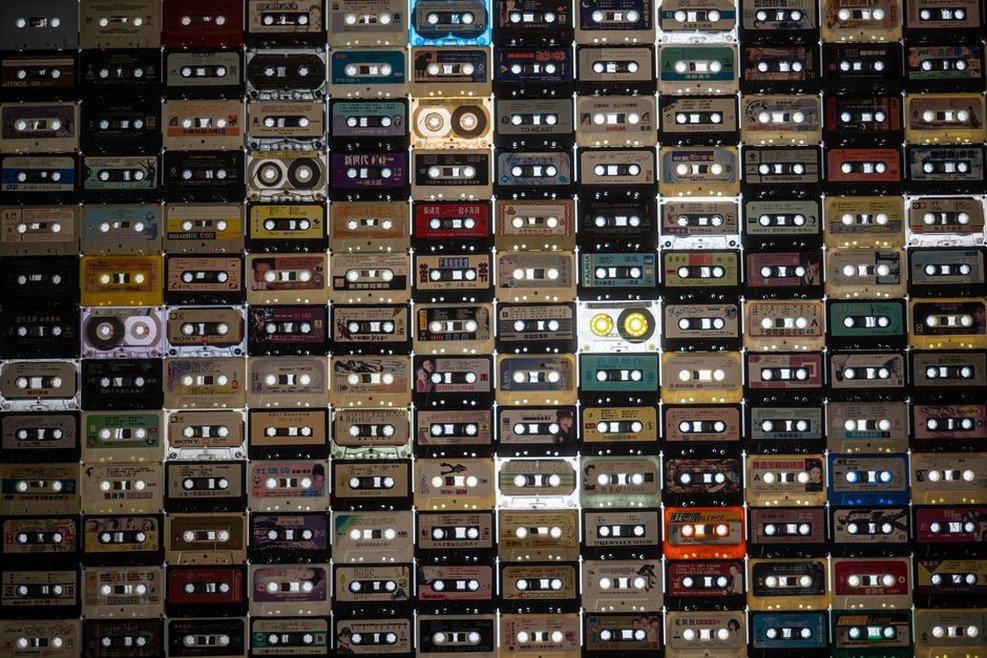
The tape as a distribution tool
Cassettes and small-run releases carried the music across scenes and borders without mainstream distribution. Artists could duplicate recordings, exchange them by mail and collaborate at a distance. Tape was more than a cheap container: saturation, edits and generation loss could become audible parts of a recording. But the original format tells us little about how every surviving copy sounds. Reissues, transfers and undocumented variants make it risky to treat a single upload as definitive.
1990s: Overseas circulation and internal contrasts
In the 1990s, imports, touring, collaborations and independent-label networks brought Japanese noise to a larger international audience. The term japanoise gained traction outside Japan. It helped listeners find recordings, but also encouraged them to hear varied work as one national sound. Boredoms, for instance, moved between noise-rock, percussion-heavy ensemble music and other forms; their trajectory resists the label. The decade opened up more connections rather than simply turning up the volume.
Contrasts within Japan mattered just as much. The spare, unstable textures associated with Onkyo in Tokyo around the end of the decade challenged the assumption that experimental sound had to fill every frequency. Musicians including Toshimaru Nakamura and Sachiko M worked with restrained electronics and focused listening. Onkyo was not another name for noise music, but it shared improvising networks with the wider experimental scene. In those settings, feedback might be a sustained eruption or a faint event at the edge of audibility.
2000s onward: Changing tools, changing archives
Digital recording, software and online circulation made production and listening more accessible in the 2000s without displacing analog practice. Artists kept working with pedals, homemade circuits, contact microphones and tape alongside computers. An old-versus-new division says little about the sound of a performance: a laptop can be brutally loud, while an overloaded circuit can produce a delicately shifting drone.
Online archives brought another issue into focus: some work is far easier to find and identify than others. A widely circulated Merzbow release may have clear documentation, while a privately duplicated tape or one-off live collaboration may survive with incomplete credits. What is available digitally is not a complete record of a scene. Current experimental performances, meanwhile, may draw on noise, electroacoustics, field recordings or installation practice without taking on an inherited genre name. Noise art installations in Japan offer one account of how sound, space and listening systems interact outside the concert format.
How to read a noise chronology
- Separate first activity from wider recognition. A project may predate the decade in which overseas listeners encountered it.
- Distinguish a recording from a live practice. Tape collage, a staged performance and an improvised set preserve different kinds of evidence.
- Check what a genre label leaves out. Rock, improvisation, electronic composition and sound art have all intersected with noise without becoming interchangeable.
Try placing an early Merzbow tape-based recording beside a later electronic work, then listen to Junko’s voice in Hijokaidan and a sparse Sachiko M performance. Pay attention to the sound source and the space between events. Ask whether each recording presents an assembled piece or captures an interaction unfolding in time. Those details tell you more about the music’s history than its volume does.