
Push a finger into the potting mix before reaching for the watering can. The surface can look dry while the soil below is still damp, and a pot near a warm window may dry faster than the one beside it. That quick check helps you water when a plant needs it, rather than when the calendar says it should.
Most houseplants do not need daily attention. They do benefit from regular, brief checks: notice changes in light, learn how quickly each pot dries, and catch problems before they spread. The goal is not a flawless set of leaves. Older leaves die, growth slows in low light, and even indoor plants respond to the seasons. A few useful habits make those changes easier to read.
Check the soil, not the date
Use watering reminders as prompts to inspect a plant, not instructions to water it. For many common foliage plants, the upper layer of mix should dry before the next watering. How much drying is appropriate depends on the species, pot size, and conditions. Succulents generally need to dry out more than plants adapted to consistently moist soil. If a plant is unfamiliar, check its needs rather than applying one rule to the whole shelf.
Push a finger a few centimetres into the mix for a quick reading. In a deeper pot, insert a wooden skewer toward the bottom, then see whether damp mix clings to it. Pot weight helps too, once you know how it feels just after watering and when nearly dry. Use these clues together; none is a perfect moisture meter.
When the plant needs water, pour slowly over the mix until excess starts to run through the drainage holes. This moistens more of the root zone than repeated splashes on the surface. Let the pot drain, then empty the saucer or decorative outer pot. Roots need oxygen as well as water, and a pot left standing in water can stay saturated too long.
With very dry mix, water may run down the sides and out the bottom while the centre remains dry. Pause, then water a second time. You can also stand the nursery pot briefly in shallow water to let the mix absorb moisture from below; remove it afterward and let it drain. If the soil stays wet for days and the plant is declining, do not add more water. Check the pot, drainage, light, and roots first.
Give each plant a place it can use
“Bright indirect light” is not a fixed feature of a room. Window direction, distance from the glass, curtains, nearby buildings, and season all affect it. A plant a few steps back from a window may get far less light than one on the sill. Notice where direct sun falls during the day, and how long each spot stays bright without it.
Choose a spot the plant can use. Many tropical foliage plants do well with light filtered through a curtain or with some distance from strong afternoon sun. Cacti and many succulents usually need a brighter position. A plant sold as low-light tolerant may survive in a dimmer spot, but it is unlikely to grow vigorously in a dark corner. Small, widely spaced new leaves or a sharp lean toward the window can point to too little light. Pale, scorched patches after a move into direct sun can mean the change was too abrupt.
Change light levels gradually when you can. Even a sun-loving species may be damaged if moved straight from a shaded shelf into strong sun. Glass can create hot spots, while leaves pressed against a cold window may suffer in winter. If growth becomes lopsided, try turning the pot a quarter turn every week or two. Leave it alone if frequent turning seems to interrupt flowering or its stems are too fragile to move safely.
Use seasonal changes as a cue
Shorter days often mean slower growth and less water use. A pot that dried in four days in summer may stay moist much longer in winter, so check it instead of keeping the summer schedule. Heating can dry the air even while the soil remains wet. Dry leaf edges, then, do not automatically mean the roots need water; temperature, humidity, fertilizer, and water quality can affect leaf tips too.
Make a quick leaf inspection routine
When you check the soil, look at both sides of a few leaves. New growth, leaf undersides, and the places where leaves meet stems are good places to spot pests. Look for fine webbing, cottony clusters, raised bumps, sticky residue, or unusual speckling. One damaged leaf tells you little on its own. A pattern spreading across several leaves deserves a closer look.
Keep a new plant apart from the rest of your collection for a while, inspecting it periodically before it joins the other pots. If you find pests, move the affected plant away from its neighbours and identify the likely pest before treating it. Washing leaves or removing insects by hand can help with a small infestation. Test any treatment on a limited area first and follow its label, since some foliage is sensitive to sprays. Check again over the following weeks; eggs or hidden pests may remain.
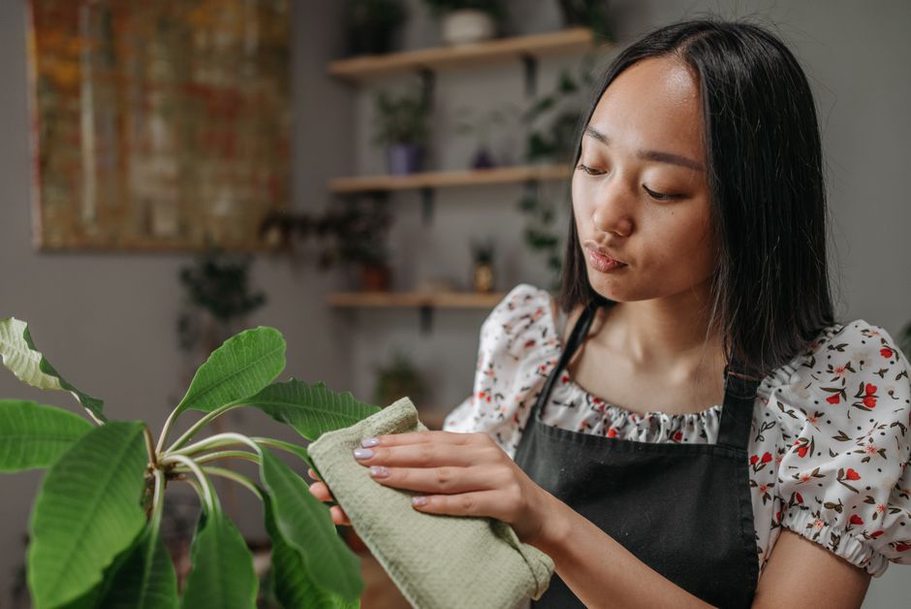
These inspections also reveal everyday maintenance needs. Dust cuts down the light reaching a leaf and makes early pest signs harder to see. Support broad leaves from underneath as you wipe them gently with a damp cloth. Some sturdy plants can take a gentle rinse, provided the pot drains afterward. Do not scrub fuzzy or delicate leaves. Remove fully yellow or dead leaves with clean scissors, but do not cut healthy foliage just to make the plant look symmetrical.
Keep the pot and roots in the picture
A container without a drainage hole works best as an outer pot around a smaller nursery pot. After watering, let the inner pot drain and check whether water has collected inside the outer one. Planting directly into a container without drainage makes it much harder to tell how wet the bottom remains. A layer of stones is no substitute for a drainage hole.
Size matters too. A pot much larger than the root system holds mix the roots may not use quickly, increasing the chance that it stays wet. When a healthy plant is crowded, go up modestly in size rather than choosing the largest pot available. Roots poking through drainage holes can suggest crowding, but they are not proof by themselves. Water running quickly through a dense mass of roots, tightly circling roots inside the pot, or stalled growth despite suitable light and care offer stronger clues.
Repotting is usually easier on a plant while it is actively growing, though urgent root problems should not wait for the right season. Choose a mix suited to the plant: airy for many tropical foliage plants, faster-draining for species that need to dry more thoroughly. Loosen tightly circling roots gently where practical. Set the plant at about its previous depth without burying the stem, and leave room below the rim for water to soak in rather than spill over as the fresh mix settles.
Feed for growth, not for every symptom
Fertilizer supplies nutrients; it cannot fix inadequate light, persistently soggy roots, or pests. Feed mainly during active growth, following the product’s directions for dilution and frequency. If the mix already contains fertilizer, you may not need to add more at first. Extra fertilizer in the hope of faster growth can leave salts in the mix and damage roots.
White crust on the soil surface or pot rim may come from fertilizer or minerals in the water. Remove crusted surface mix if appropriate. For a pot with drainage, you can occasionally water thoroughly enough for some excess to run through. But do not flush a plant whose soil already stays wet without addressing that problem first. Yellow leaves may point to a nutrient issue—or to aging, low light, watering problems, or pests. Look at the wider pattern before feeding.
Adjust the room without chasing a perfect number
Where possible, keep plants clear of strong drafts, heating vents, and air-conditioning streams. Rapid temperature changes can stress foliage, while hot moving air can dry leaves unevenly. Grouping plants may raise humidity slightly right around them, but it will not meet the needs of a species that requires a more humid room. If dry air is a persistent problem, a room humidifier may help; clean it according to its instructions.
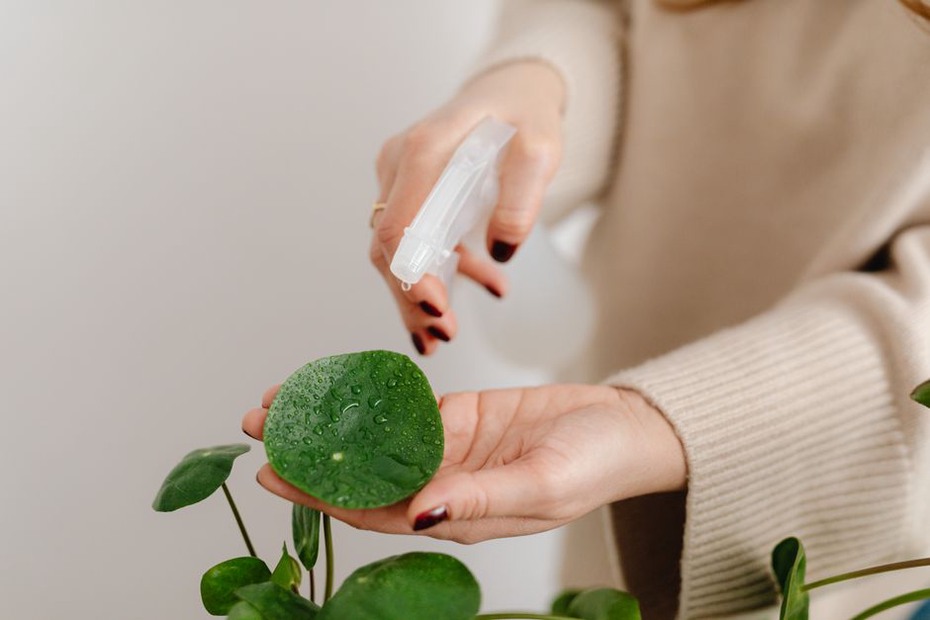
Misting has only a brief effect on humidity, and leaves that stay damp can be more prone to problems where ventilation is poor. Airflow does not require a fan pointed at every plant. Give crowded pots some space, particularly if their leaves are often wet, and clear fallen leaves from the soil before they decay.
Keep a small record when something changes
You do not need a spreadsheet for every plant. For one that is struggling, a note of when you watered, moved, repotted, or fed it can save guesswork. If a change is hard to judge day to day, take a photo from the same angle every week or two. New healthy growth often tells you more than an old damaged leaf, which may never look as it once did.
When a plant is stable enough to wait, change one major condition at a time. Move it, repot it, fertilize it, and revise its watering schedule all in one week, and you will not know what helped. A sour-smelling pot, softening stems, or rotten-looking roots call for quicker action: remove the plant from its pot, inspect the roots, trim clearly dead material with clean tools, and repot in suitable fresh mix if healthy roots remain.
A routine check takes less than a minute per pot. Feel the mix, look under a leaf, lift the pot if its weight tells you something, and check the saucer. If the soil is still damp and the leaves look sound, leave the watering can where it is. Note the date and check again in a few days.