
A sustained note is rarely still. Give a Japanese drone recording thirty seconds of close attention and its apparent center may shift: a faint upper tone comes forward, close pitches begin to pulse against each other, or a rough edge appears as the volume falls. Treat the recording as background and those changes can slip past. Listen instead for what happens within a long sound, before waiting for the next one.
“Drone” covers a great deal: a held pitch, a low-frequency bed, feedback that slowly gathers weight, or an acoustic instrument whose decay becomes part of the piece. Japanese artists have worked with duration through rock amplification, minimalist composition, electronics and improvisation. There is no single national sound to identify. The more useful questions concern how this recording handles time, pitch, volume and the space around it.
What makes a drone eventful?
In a song, a new chord or verse tends to announce change. In a drone, the change may be harder to place. Two close pitches can produce beating, a regular rise and fall in loudness as they interact. Added harmonics can change the color of a note while its fundamental pitch holds steady. Distortion can spread a clean tone into a dense band of sound; a drop in volume can uncover details louder frequencies had masked.
It helps to separate three kinds of movement. Source movement is what a musician or device does: changing bow pressure, moving a guitar near an amplifier, adjusting an oscillator. Acoustic movement arises when sounds interact with one another and with the room; beating and reverberation are examples. Perceptual movement happens in your attention. A high whine might seem to arrive late even though it was there all along. A finished recording may not tell you which is responsible, but the distinction keeps every newly noticed detail from becoming an assumed musical gesture.
Try following the lowest audible layer for the first minute of a piece. For the next minute, attend to the highest sustained tone; then listen between them. Is the middle range a steady hum, an irregular crackle, or a set of wavering pitches? Asking what changes within that range is often more revealing than asking whether the track is “going somewhere.”
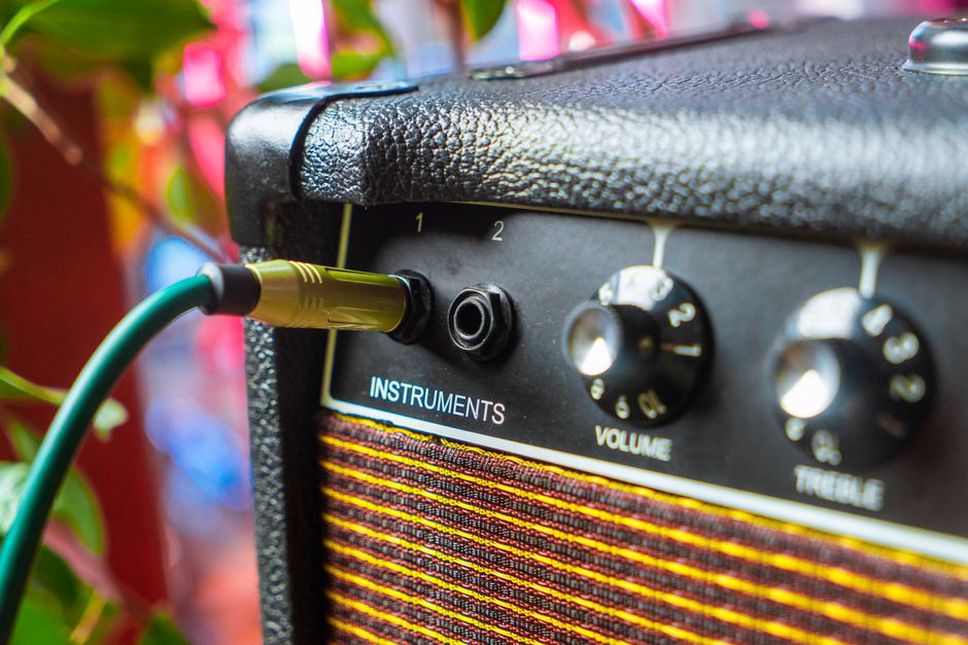
Several routes into Japanese drone
The label can hide real differences in method. Tony Conrad’s collaborations with Japanese musicians belong to a different history from an amplified solo guitar performance, however much long tones might connect them. Organ-based minimalism, amplified guitar and electronics offer three ways into this music. Each gives the ear something different to follow.
Organ tones and deliberate accumulation
Yoshi Wada’s work offers a way into sustained sound through long tones and tuning relationships. His performances and recordings may involve organ, bagpipes or other sound sources. Much of their force lies in tones sharing a space over time. Rather than searching for a melody, listen to the intervals: adding a pitch above an existing tone can make the lower one seem altered, even when it has not moved.
With an organ’s steady sound, tiny pitch differences become easier to hear. Close notes can produce beats slow enough to count. Follow those pulses for a few seconds, then notice whether they speed up, slow down or vanish when another tone enters. You need no exact frequency measurements; the audible relationship matters more than naming every interval.
Amplified guitar as a changing surface
Japanese experimental guitar offers a direct lesson in how unstable amplification can be. In a quieter sustained passage by Keiji Haino, for instance, a guitar note may start with a pick attack, settle into feedback and end in amplifier noise. It remains recognizably a guitar, though the activity has moved beyond playing notes in the usual sense. That possibility does not make Haino’s approach interchangeable with anyone else’s.
Fushitsusha, the group associated with Haino, also shows why a drone need not be ambient. Repetition and sustained sound can carry strain or interruption. A held tone might make the next drum hit feel like a rupture; silence might expose an amplifier still running. The shifts in a performance matter as much as its average volume.
Electronics and the edges of a signal
Electronic drones draw attention to a sound’s envelope: how it begins, holds and ends. An oscillator tone can seem steady while filtering, interference, modulation or gain changes reshape it. In work by Japanese artists such as Ryoji Ikeda, sustained frequencies may sit beside abrupt cuts and sharply defined pulses. Ikeda’s precise, often high-frequency work is no template for the whole field. It does, however, show how differently a constant pitch can register depending on its level, duration and neighbors.
Rougher feedback-based music can place a narrow whine inside a broad band of noise. Louder playback will not necessarily reveal more. Turning it down may make the contours easier to follow, with less listening fatigue.
A workable deep-listening session
Deep listening does not require sitting motionless through an entire long-form release. Ten or fifteen focused minutes can reveal more than a distracted hour. Choose a recording long enough to let tones develop, and keep playback comfortable. Do not use maximum volume to chase faint details: headphones can deliver sustained high- or low-frequency energy more intensely than you expect.
- Listen once without taking notes. Notice where your attention drifts and where it returns. Either the sound or your concentration may have changed.
- Replay a short passage and follow one register. Track the bass, middle or treble instead of trying to describe the whole mix at once.
- Mark events with approximate times. “Upper tone becomes prominent around 4:30” records what you heard without guessing how it was produced.
- Test another explanation. If a pulse appears, could two pitches be beating? Could an effect be cycling, or an instrument being struck repeatedly? Leave the question open if the recording does.
- Play the passage again at a modestly different level. Some layers disappear when it is quieter; others become clearer when distortion or room sound is less overwhelming. Keep both passes comfortable.
Keep observations separate from proposed causes. “The low tone feels wider near the end” might reflect a change in the mix, a shift in harmonics or your growing awareness of the sound. You can leave that unresolved in your notes and listen again.

How the playback space changes the piece
Drone can put important information at frequency extremes, or in quiet differences between loud sounds. Laptop speakers may leave out much of a low drone. Headphones can reveal fine interference, but they cannot reproduce the physical feel of bass in a room; they may also exaggerate left-right separation compared with speakers. Neither setup has a monopoly on the piece. Comparing them shows which details depend on playback.
Bass changes with your position in a room. Reflected waves can reinforce a low note in one spot and weaken it a few steps away. If a fundamental pitch seems to disappear, move before concluding that the artist removed it. At a live performance, this effect may shape your experience without reflecting a deliberate change by the musician. Stay a respectful distance from speakers when levels are high, and use hearing protection if needed. Sustained sound can tire the ears even without sharp peaks.
Format matters too, though it is no test of authenticity. Cassette hiss may share a register with a quiet tone, while softened frequency extremes change its edges; a digital file may make subtle edits easier to hear. Attend to the version in front of you. Hiss is part of that listening experience whether it came from the performance, the recording chain or the copy you own.
Attention, expectation and duration
Waiting for a payoff can make a drone frustrating. A held pitch may stay within a narrow band of intensity and then stop, with no climb toward a climax. Its sudden absence can reveal how fully it occupied your attention. That does not give every extended tone a hidden narrative. Some recordings invite close tracking of small events; others hold a condition in place.
Your ears change over the course of a piece as well. After several minutes, a steady texture may recede through adaptation, making a tiny crackle seem unusually vivid. If listening becomes difficult, pause. Endurance is no measure of attention, and a rest may change what you hear on returning, especially in dense or high-frequency work.
Genre labels can obscure these differences. “Ambient” may suggest calm, “noise” constant assault, and “minimalism” a strict compositional system. None predicts the feel of a particular Japanese drone recording. An extended electric guitar tone can be fragile; a quiet electronic signal can pierce. Start with what happens—an uneven pulse, an abrupt cutoff, a band slowly thickening—before choosing a shelf.
Listening without turning place into an explanation
Long tones in Japanese experimental music are sometimes attributed to supposedly timeless qualities of Japanese culture. That shortcut tells us little about a musician’s instruments, collaborators, choices or recording conditions. With amplifiers, gain, feedback paths and the room shape a drone. An organ raises different questions about tuning and breath or motor-driven continuity. Begin with those particulars rather than broad cultural symbolism.
Context still matters. In a live drone, players may respond to one another and to the room; a studio work may use layers and edits that no single performance could reproduce. Sleeve notes, instrument credits and documented collaborations can help you tell those situations apart, but they cannot dictate what you hear. If the credits say “guitar” and the sound resembles a wavering electronic tone, keep both facts in view rather than filling the gap with a guess.
For one last close pass, pick ninety seconds you have already heard. Write down the lowest continuous sound, one event that changes it, and what remains afterward. If the event is an abrupt cut, replay the two seconds on either side. Sometimes the duration of a drone becomes clearest just as it ends.