
A sustained tone is never just one sound. Its apparent stillness contains beating partials, room reflections, amplifier hiss, unstable tuning, and the physical limits of a speaker cone. Japanese drone music often brings this internal activity forward by withholding familiar signs of progression: no firm pulse, no obvious refrain, sometimes no clear point where one event ends and another begins. What remains is not a frozen object, but a shifting field of attention.
Drone is better understood as a method than as a fixed genre. In Japan it appears in electroacoustic composition, improvised music, psychedelic guitar, organ and harmonium works, tape manipulation, field-recording pieces, and harsh electronic performance. Calling all of this “ambient” obscures important differences in volume, density, material, and listening intent. A quiet, nearly static recording and a saturated wall of sustained amplification may both depend on duration, yet they ask very different things of the ear.
What makes a drone landscape?
A drone usually centres on prolonged pitch, timbre, or texture. It does not have to be a single note. A piece may hold several close tones, return to a narrow band of frequencies, or sustain a feedback circuit whose pitch keeps shifting. The essential point is that change occurs slowly enough for small details to become structural.
Rather than asking whether a piece “goes anywhere,” listen for what is moving:
- Pitch: Is the sound fixed, drifting, detuning, or pulling against another sustained frequency?
- Timbre: Does a smooth tone pick up grit, metallic overtones, distortion, breath, or tape wear?
- Density: Are layers building, thinning, or briefly exposing silence?
- Space: Does the recording suggest a small room, a resonant hall, a close microphone, or an artificial digital field?
- Dynamics: Is the volume actually stable, or does it slowly breathe and edge toward overload?
This is one way to distinguish drone from background music. It may be sparse, but it often rewards close attention to minute variation. Its scale is temporal: after ten minutes of sustained listening, an almost imperceptible shift can become decisive.
Material matters more than labels
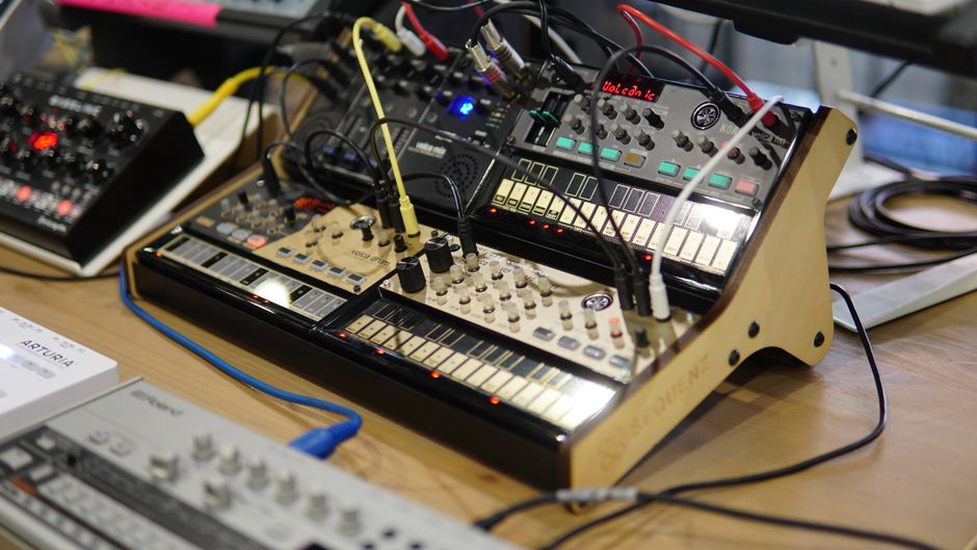
The character of a drone often begins with its source. A bowed cymbal, feedbacking guitar, modular synthesizer, pipe organ, processed voice, and cassette loop can all produce extended sound, yet each brings a different grain and instability. Japanese experimental musicians have often moved among these sources rather than treating drone as a closed style.
Acoustic resonance and sustained instruments
Works built with organ, harmonium, strings, metal, or amplified objects put physical resonance at the centre. Tone can fluctuate with bow pressure, air supply, sympathetic vibration, or small adjustments by the performer. Such pieces may seem stable at first while remaining full of friction: nearby pitches beat against each other, low frequencies activate the room, and sustained highs reveal the listener’s own auditory fatigue.
Takeo Yamashita’s work as Tetuzi Akiyama, for example, has included radically reduced guitar and acoustic approaches in which duration and instrumental noise carry as much weight as conventional melodic material. It is a useful reminder that drone can be a practice of concentration rather than a smooth electronic atmosphere.
Electricity, feedback, and saturation
Electric drone can emerge from effects chains, oscillators, mixing-board feedback, contact microphones, or amplifiers held in a narrow yet unstable operating range. Keiji Haino’s long-form guitar and vocal performances are an important reference point, though they cannot be reduced to drone alone. Sustained amplification here is often volatile: a tone may bloom into distortion, break into noise, or be cut off by a forceful gesture.
This is where drone meets noise without becoming the same thing. Noise-oriented drone may rely on mass, harshness, and volume, but duration changes how those elements register. Once the initial shock recedes, a dense block of sound can reveal internal pulses and swells. A low-volume feedback piece, by contrast, may remain physically tense despite its restraint.
Tape, loops, and imperfect repetition
Magnetic tape produces its own sense of time. Repeated material can degrade through hiss, slight speed fluctuation, print-through, dropouts, or accumulating layers. A loop is never neutral: its length determines when recurrence becomes noticeable, while the condition of the tape gives repetition a body. In cassette-based settings, these qualities were often practical conditions as much as aesthetic choices, shaped by available equipment and copying methods.
Yasunao Tone’s broader work with sound, text, damaged media, and electronic alteration is a useful warning against treating technical irregularity as decorative “lo-fi.” Playback and transmission errors can become compositional events, raising questions about information, control, and audibility. The same applies to drone recordings that leave flutter, clipping, and signal leakage intact.
Listening to frequency as architecture
Drone music is often described in spatial terms because frequency shapes a listening environment. Low tones may seem to occupy the chest and floor; high partials can feel suspended above the speakers; midrange saturation can make sound seem close and enclosing. These impressions depend on the playback system, room size, volume, and individual hearing, so they are not fixed properties of a recording.
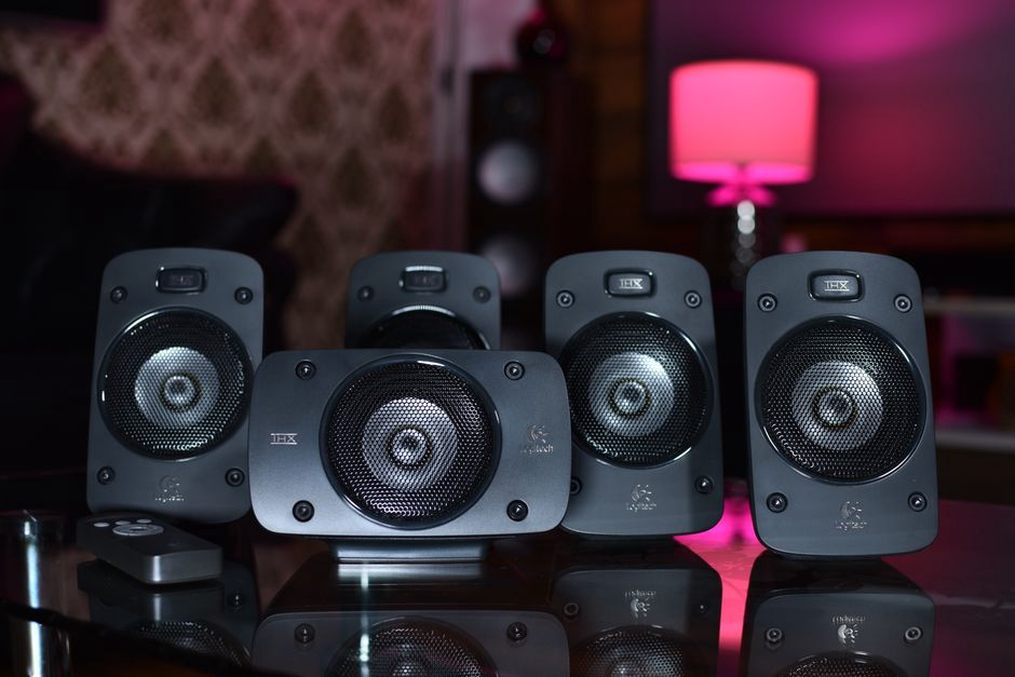
For a first listen, set the volume at a moderate level and identify the most persistent frequency range. Then raise or lower it slightly. A recording that seems uneventful at one level may reveal beating patterns at another, while excessive loudness can turn a delicate piece into strain. Headphones expose fine detail, but speakers reveal interactions with physical space, especially in low-frequency material.
| Listening feature | What it can reveal |
|---|---|
| Slow pulsing between close tones | Beating, detuning, or independently sustained layers |
| Sudden roughness in a stable tone | Overdrive, speaker movement, feedback, or added harmonics |
| A sound that seems to move without panning | Shifting spectral emphasis or changing room resonance |
| Repeated return of a texture | A loop, a recurring process, or a performance constraint |
| Silence that feels charged | Residual room tone, anticipation, or contrast with prior density |
These details also show why a waveform is an incomplete guide. A visually uniform track may contain substantial spectral movement, while a dramatic waveform may be built from repeated gestures. Listening through time tells more than visual shorthand.
Japanese drone in relation to adjacent practices
Japanese drone has no single origin or unified school. It developed through overlapping scenes and individual practices: postwar experimental composition, free improvisation, underground rock, industrial and noise performance, sound art, and home-recorded electronic music. That plurality is more useful than any national myth about a uniquely “Japanese” sound.
Eliane Radigue’s work, though not Japanese, is often cited internationally as a model of patient electronic listening. In Japan, artists such as Sachiko M and Otomo Yoshihide showed other paths toward minimal material through sine waves, feedback, turntables, sampling, and deliberate reduction. Their work can intersect with drone, but it also belongs to improvisation and experimental sound practices with distinct histories.
Masami Akita’s Merzbow is another boundary case. Much of his extensive output is associated with harsh noise rather than drone, yet sustained spectral mass and long-duration pressure can produce overlapping listening strategies. The key distinction is not a rigid genre line, but the role of change: whether the listener is following assault, accumulation, erosion, repetition, or an extended condition of sound.
Field recordings complicate the picture further. Ventilation, insects, electrical infrastructure, rain on a roof, or distant traffic may take on drone-like qualities when their cyclical and continuous elements are foregrounded. The source remains meaningful, even as the listener begins to hear texture and frequency. Environmental sound does not automatically become music; framing, editing, duration, and context still matter.
A practical method for close listening
Long-form recordings can be hard to enter if approached as songs. Instead of demanding immediate development, give the piece a defined listening condition. Twenty uninterrupted minutes often reveal more than repeatedly sampling the opening minute.
- Start without multitasking. Set aside conversation, scrolling, and tasks that compete for attention. Drone can accompany activity, but analytical listening needs fewer distractions.
- Locate the anchor. Identify the tone, noise band, loop, or resonant object that persists longest.
- Track one change at a time. Follow pitch drift for several minutes, then move to texture or dynamics instead of trying to hear everything at once.
- Notice the room. Move slightly, or switch from headphones to speakers on another listen. A change of position can reveal standing waves and masked frequencies.
- Write observations, not verdicts. Notes such as “high whine emerges after low swell” are more useful than “nothing happens.” They create a record of actual sonic events.
Repeated listening matters most with recordings built on very slow change. The first encounter may establish physical impact; later sessions expose construction. This is true of spare electroacoustic work as much as dense amplifier drone.
Formats, documentation, and the problem of context
For collectors, drone releases can be difficult to document because titles, track divisions, and editions do not always tell the whole story. A cassette may contain one unbroken side-long piece; a CD may split a continuous work into tracks for navigation; a digital file may omit details about source materials or recording conditions. Credits, sleeve notes, catalogue numbers, and contemporaneous flyers can help, but gaps in documentation should not be filled with assumptions.
This restraint matters in underground archives, where ambiguous filenames and detached files often circulate without reliable provenance. The blog’s examination of the cryptic filename “wasted 4 520” from Japan’s noise underground shows why a suggestive name alone cannot establish an artist, release, or date. The same discipline is necessary when identifying drone recordings transferred from tapes or shared as isolated audio files.
Playback format changes perception as well. Cassette compression and hiss can bind layers together; vinyl surface noise may become part of quiet passages; digital playback can make transients cleaner while concealing the physical constraints of the original object. No format is inherently more authentic. What matters is which version is being heard, what information accompanies it, and whether the medium changes the balance of the work.
For a focused session, choose one sustained passage, note the starting volume, and leave the settings unchanged for its first ten minutes. At the ten-minute mark, write down only three things: the dominant frequency area, the clearest change, and whether the sound now feels nearer or farther away than it did at the start.