
A Japanese noise recording can hold more than its audible events. A clipped radio broadcast, the drag of a cassette mechanism, a room microphone picking up traffic beyond a window, or a handwritten catalog number can place a work within a chain of people, rooms, equipment, and circulation. These traces do not make every release documentary evidence. They do make recordings imperfect carriers of cultural memory, preserving something of a scene’s methods, affiliations, and listening conditions.
In noise, memory rarely survives in one stable, authoritative version of a piece. A performance might remain as a privately dubbed tape, a small-run CDr, a photograph of a sleeve, a partial digital rip, or somebody’s recollection of the night. Each version may differ in duration, sound quality, sequencing, and context. To treat one surviving file as the complete work is to risk losing the social history carried by its format and circulation.
Memory held in material form
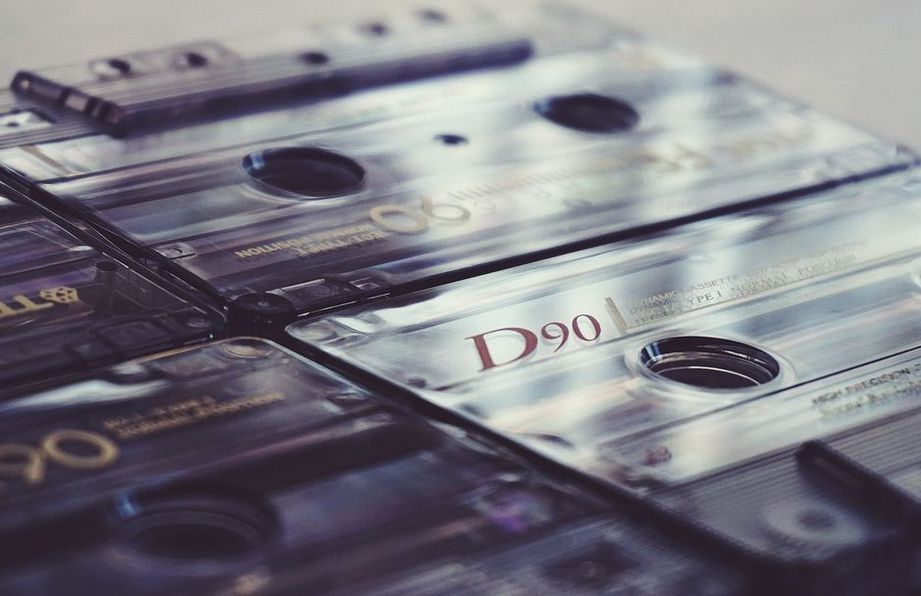
Physical media affect what a recording retains. Cassette hiss is not inherently meaningful, and vinyl surface noise is no proof of authenticity. Still, a format can preserve practical facts about production. A cassette may show evidence of home duplication, a particular tape length, level changes between sides, or the limitations and decisions of a specific deck. A photocopied insert can retain an address, date, collaborator’s name, or visual language shared across a local network.
These details matter because Japanese experimental music has often circulated beyond major institutional archives. Small labels, self-released tapes, mail exchanges, temporary event groups, and artist-to-artist distribution have all produced records whose context can disappear once audio is separated from the object. In that sense, the recording is often less a finished commodity than the residue of an exchange.
The object is not neutral
A reissue, upload, or remaster can make inaccessible music audible again, but each involves editorial choices. Which source tape was used? Was hum removed? Were side breaks kept? Does the cover scan include the reverse side and insert? Are uncertain names presented as fact? Such decisions shape how later listeners picture an earlier moment.
For collectors and archivists, it helps to separate what an object states from what is inferred. If a sleeve gives only a project name and cryptic code, that is evidence of limited documentation, not permission to fill the gaps with a tidy story. The ambiguity may itself matter historically. It can point to informal distribution, deliberate obscurity, lost metadata, or simply a production process that did not prioritize conventional cataloging.
Recordings as social evidence
Cultural memory is not limited to preserving familiar names. It also concerns the relationships that made a recording possible: who organized the concert, supplied equipment, duplicated tapes, designed the sleeve, or passed a copy across a city or through the mail. Noise scenes have often depended on this work, even when a release foregrounds one performer.
Live documents can be especially revealing. Applause, venue announcements, PA distortion, abrupt tape changes, audience conversation, and uneven microphone placement all place a performance in a shared setting. Removing every incidental sound in pursuit of sonic cleanliness may make for a smoother listen, but it can also flatten an event into an abstract studio artifact.
That does not mean every flaw deserves fetishization. Some artifacts genuinely obscure the music, and artists may prefer a carefully reconstructed version. The important distinction is between restoration and replacement. A restored transfer should be identified as a transfer; a reconstructed edition should not quietly replace the only historical form of the work.
Names, aliases, and incomplete credits
Japanese underground recordings often pose identification problems. Artists may use aliases, shifting project names, collective identities, or partial credits. Romanization varies, while later discographies can repeat errors introduced by an early listing. A Japanese title, its translation, and a filename may circulate as though they are interchangeable even when they refer to different editions or sources.
Good documentation keeps uncertainty visible. Useful notes distinguish between:
- Printed information: text physically present on a sleeve, insert, label, or master.
- First-hand testimony: statements by artists, label operators, engineers, or organizers, ideally with a clear source and date.
- Secondary cataloging: discographies, collector databases, sale listings, and reviews, which can be useful but need checking.
- Inference: plausible conclusions drawn from sound, design, chronology, or association, which should remain marked as interpretation.
This distinction is especially useful with orphaned digital material. A filename can be a clue, but it is not a provenance record. Our examination of the forensic life of the cryptic noise file “wasted 10” considers how a sparse filename can gather competing meanings after its original context disappears.
What sound itself can remember
Noise is sometimes discussed as though it rejects reference altogether. In practice, recordings often retain references through their construction. Shortwave radio can preserve fragments of a broadcast environment. Contact microphones can bring out the material behavior of metal, glass, wood, or household mechanisms. Feedback records a relationship among amplifier, speaker, room, body, and volume setting rather than an isolated electronic signal.
Field recordings and found sound complicate the question further. A station announcement, television fragment, street sound, or domestic recording may carry social and temporal associations. Recognition, however, is not the same as transparent access to a place or community. A field recording is shaped by where the recorder stood, what was excluded, how the source was edited, and whether the original context can safely be disclosed. Precise location data can expose private homes, fragile sites, or people who did not consent to appearing on a release.
| Audible feature | Possible historical value | Documentation caution |
|---|---|---|
| Tape hiss, dropouts, speed drift | May indicate copying history or aging media | Do not assume every flaw belonged to the original performance |
| Room ambience and audience sound | Can identify a live, social setting | Venue and date still need independent confirmation |
| Radio or television fragments | May suggest media context and listening practices | Fragments can be edited, re-recorded, or hard to date |
| Repeated equipment noise | May reveal a method or instrument setup | Similar sounds can come from different devices |
| Speech and announcements | Can preserve names, languages, and event logistics | Transcriptions should mark unclear passages |
Memory after digitization
Digitization broadens access, but it creates losses of its own. A compressed file may circulate without side labels, artwork, running order, recording date, or any indication of who made the transfer. Folder names often change as files move between hard drives, blogs, cloud storage, and private messages. The music remains available while its relation to an edition, event, or maker becomes uncertain.
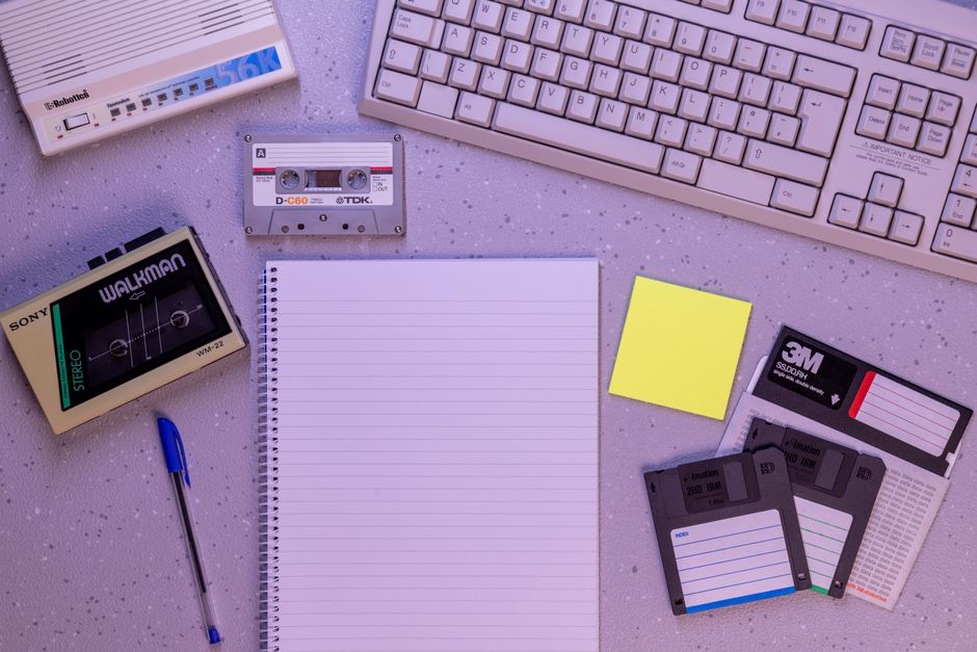
Digital preservation is strongest when the audio travels with a modest, durable record. At minimum, retain the original filename, transfer date, physical source description, known provenance, duration, and inscriptions exactly as they appear. Scan both sides of a cassette shell, every J-card panel, inserts, and labels, rather than only the most visually striking surface. If a file is renamed for convenience, keep the earlier name in metadata or a text file.
A practical cataloging method
A collector does not need museum infrastructure to retain useful context. A simple entry can be built in verifiable layers:
- Assign a local identifier without overwriting the item’s original title or code.
- Transcribe printed text faithfully, marking uncertain characters with brackets or a note.
- Photograph or scan all packaging before repair, cleaning, or rehousing.
- Describe the source: original cassette, duplicate, CDr, download, radio capture, or unknown-generation copy.
- Record transfer equipment and settings when making a digitization.
- Separate confirmed dates from estimated ones, and explain the basis for an estimate.
- Attribute recollections to their source instead of turning them into anonymous fact.
This care matters particularly with noise recordings, whose sonic extremity can encourage listeners to treat context as secondary. Yet a damaged label or nonstandard tape sequence may be historically more useful than a speculative genre tag. The aim is not to force every item into conventional discographic norms. It is to avoid silence around the conditions under which it survived.
Reissues, ethics, and contested ownership
Memory work has ethical limits. A recording may be culturally important while still requiring permission for public circulation. Artists retain rights and interests in their work; labels, estates, collaborators, photographers, and people whose speech was incidentally recorded may have them as well. The assumption that an obscure tape is ownerless because its makers are difficult to locate has caused real harm in underground music cultures.
Responsible reissue work involves more than finding a clean copy. It means attempting contact, crediting all known contributors, distinguishing authorized editions from unofficial ones, and making uncertainty visible. When contact cannot be established, documentation should not imply authorization. A researcher can describe an item’s existence without distributing its audio or reproducing all of its visual material.
There is also a difference between preserving a scene and fixing it into mythology. Japanese noise includes incompatible aesthetics, local histories, generations, and ways of working. Cultural memory becomes reductive when a small group of internationally familiar figures is made to represent every practice, or when underground circulation is described as mystique rather than ordinary labor, friendship, conflict, and resourcefulness.
Listening as an archival practice
Attentive listening can support documentation if it remains modest about what it can prove. Compare multiple copies before declaring a speed error. Check whether an apparent track boundary matches a cassette side change. Listen for edits, repeated passages, ambient shifts, or spoken material that may distinguish a live recording from a studio construction. Keep time-stamped notes, but do not turn sonic impressions into biographical claims.
When a file arrives with little context, start with a small provenance sheet: retain the received filename, note its duration, file format, and embedded metadata, transcribe audible speech without guessing at unclear words, and record where the copy came from. Put any later identification in a separate field marked “unverified.” That simple separation preserves what is known while leaving room for evidence that may emerge later.