
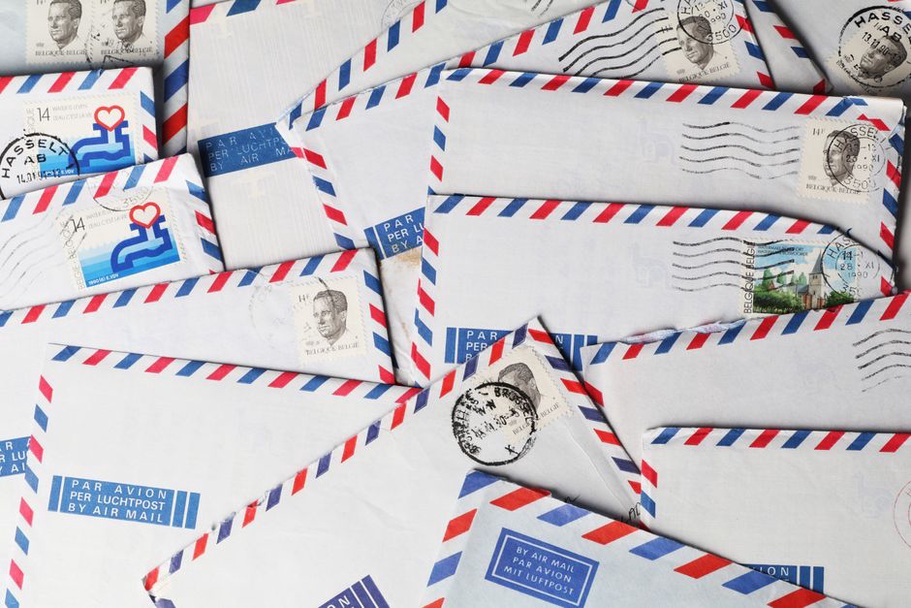
The solitary Japanese noise artist, hunched over a table of scavenged electronics in a soundproofed Tokyo apartment, is a persistent and partially accurate image. But to frame the history of Japanese noise as purely insular development misses a fundamental current that shaped its sound: a continuous, often chaotic process of cultural exchange. This exchange was not a polite, institutionalized dialogue but a tangled web of postal networks, shared DIY ethics, and the unpredictable alchemy that occurs when distinct traditions of sonic extremism collide. The cassette and the mailer became the primary vessels for a global conversation, one that predated the internet and operated on its own hermetic logic.
Long before digital file-sharing, the international underground relied on the physical movement of magnetic tape. A musician in Osaka could read about a project in a fanzine from Sheffield, send a letter with a few crumpled bills as international reply coupons, and weeks later receive a C-60 filled with unidentifiable clatter. This was not a simple process of influence, where one sound directly imitates another. The materiality of the medium itself—tape hiss, generation loss from repeated dubbing, the warble of a cheap deck—became a collaborator. A pristine recording of a European power electronics act would arrive in Japan already degraded, its high frequencies softened, its silences filled with the ghostly imprint of a distant machine. This degraded artifact was the raw material from which new work was built, a process that inherently blurred the line between listening and transformation.
The resulting collaborations were often asymmetrical, built on a shared commitment to extremity rather than a perfect understanding of each other's cultural context. A Japanese project rooted in the visceral, bodily performance style of the early 1980s might send source material to a European artist working within a more conceptually rigid, academic framework of electroacoustic composition. The return tape would not be a fusion, but a confrontation. The Japanese artist might bury the received sounds under a landslide of ferric oxide distortion, actively destroying the original structure to reclaim it as raw texture. This was not a failure of communication; it was the precise mode of communication the medium demanded. The exchange was about the productive friction between a philosophy of pure sonic materiality and one of cathartic, physical release.
This network was sustained by a constellation of micro-labels, each a node in a decentralized system. A label in the American Midwest, operating out of a basement, might specialize in releasing lathe-cut records by forgotten Japanese free-noise units alongside local Midwestern drone artists. The catalog numbers were small, the artwork often xeroxed and hand-assembled. These objects were not commodities in a traditional sense but artifacts of connection, proof that a signal had traveled across an ocean and been decoded. The aesthetic was one of deliberate obscurity, where the cryptic nature of a release—a mysterious filename like 'tumblr_mnru4nmhii1qdhp0uo1_500' echoing the logic of an orphaned digital file—mirrored the physical rarity of the tape it accompanied. The value lay in the trace of the exchange, the evidence of a hidden dialogue.
Another critical vector for exchange was the live setting, though not in the form of conventional touring. The logistics and cost of moving a full Japanese noise unit through Europe or North America were often prohibitive, making each performance a singular, high-stakes event. These were not polished showcases but volatile encounters. An artist known for a meticulous, low-volume tabletop setup of contact microphones and custom oscillators might find themselves on a bill with a local act whose performance involved broken glass and a cement mixer. The resulting set could be a quiet act of resistance against the context, or it could absorb the ambient violence of the room, transforming into something entirely unplanned. The audience, a mix of the curious, the committed, and the confrontational, became an active part of the circuit, their presence and reaction feeding directly into the unstable signal path.
The role of the curator or intermediary in these exchanges is often overlooked. These were individuals who ran distros, organized sporadic shows in art spaces or squats, and translated not just language but intent. They provided the crucial contextual bridge that a jiffy bag alone could not. They could explain that a seemingly formless piece of feedback was, in its original context, a direct response to a specific architectural space or a political situation, or conversely, that a blast of pure white noise was intended as a rigorous phenomenological experiment. This human layer of translation was essential in preventing the exchange from becoming purely aesthetic tourism, ensuring that the conceptual weight of the work was at least partially transmitted alongside its sonic force. The enigmatic filename 'wasted001_520' stands as a digital monument to this era of careful, coded transmission, a fragment of a larger, now-invisible archive of intent.
Field recordings became a particularly potent currency in these international trades. A cassette of environmental sound captured in the Kansai region—not the stereotypical tranquility of a Zen garden, but the clatter of a pachinko parlor, the industrial hum of a port, the specific frequency of a pedestrian crossing signal—would be sent abroad. For a European artist, this was not a postcard but a raw, untranslated document. Stripped of its visual and cultural signifiers, the sound became purely a set of acoustic properties: a dense broadband noise, a rhythmic metallic pulse. This raw data could then be processed, looped, and layered without sentimentality, becoming the foundation for a new work of dark ambient or rhythmic industrial. The source was often uncredited, the transformation so complete that the original location was dissolved into pure texture, a ghost in the machine.
The relationship between Japanese noise artists and the American underground followed a different but parallel track. While the European connection often gravitated toward a shared intellectual framework with industrial and post-academic electroacoustic music, the American exchange was frequently mediated by the DIY hardcore and experimental rock infrastructure. A Japanese harsh noise artist might find their records distributed by a label primarily known for powerviolence or sludge, their cassettes played between sets at basement shows. This context re-contextualized the noise, framing it not as gallery-bound art but as a direct, physical extension of punk's most confrontational impulses. The sound was absorbed into a culture that valued intensity as a primary virtue, creating a feedback loop where Japanese maximalism and American extreme music continually recalibrated each other's thresholds.
This process was never a one-way street. The concept of "Japanese noise" itself, as a distinct genre marker, was partly a construction of this international reception. Western labels and audiences, in their enthusiasm, often grouped wildly disparate Japanese artists under a single exoticizing banner, eliding the fierce aesthetic and personal divisions within the scene. A meticulous drone artist from Sapporo might find themselves inexplicably lumped with a visceral noisecore act from Tokyo, their work judged against a monolithic and largely external definition. This created a complex dynamic where artists had to navigate an identity that was both a source of opportunity and a reductive label, a tension that in turn fed back into the work, generating its own forms of resistance and self-definition.
The physical traces of these collaborations are now dispersed and decaying. Master tapes are lost in flooded basements. Cassettes shed oxide with each play. The specific social and material context that gave a collaboration its meaning—the letter, the fanzine review, the technical limitations of the gear—is the first thing to vanish, leaving only the disembodied digital file. An isolated sound file, divorced from this network of intent and accident, becomes an enigma, a puzzle for future archivists. It exists in a state of pure potential, its history a set of conjectures, much like the ghost file 'tesuco520_bl', whose meaning is locked in a code of forgotten abbreviations and personal shorthand.
Ultimately, the history of collaboration in Japanese noise is a history of infrastructure. It is the story of the International Reply Coupon, the Nakamichi tape deck, the photocopied catalog, the tolerant postal worker. These material conditions enabled a specific kind of creative dialogue—one defined by distance, delay, distortion, and a profound commitment to the act of transmission itself. The resulting music is a document not of a placeless globalism, but of the intense, localized effort required to bridge physical space with pure sound. It is a monument to the fact that noise, for all its abstraction, is always a carrier of the specific, messy, and deeply human circumstances of its own making.
The legacy of these methods persists even in an age of instantaneous, lossless file transfer. The deliberate obscurity of the tape-trading era has morphed into a digital aesthetic of cryptic filenames and limited-access archives. The act of seeking out a rare collaboration, of decoding a mysterious file like 'sludge man3', replicates the archaeology of the physical mail trade. The friction has shifted from the postal system to the labyrinthine structure of the web itself, where dead links, unsearchable characters, and invite-only repositories create a new kind of distance. The core impulse—the desire to connect through a shared language of extreme sound, and to embed that connection in a material form that resists easy consumption—remains intact, a continuous, hidden signal beneath the surface of the global underground.