
The piezo disc is a ceramic wafer bonded to a brass plate. When bent or vibrated, it generates a voltage. That is the entire physics of the contact microphone, and in the Japanese underground, that simple principle has become a foundation for entire approaches to sound. Unlike air-microphones that capture pressure waves, contact mics transduce vibrations directly from solid surfaces. The result is a sound that is dry, abrasive, and intimately tied to the physical object it touches.
In the late 1970s and early 1980s, as Japanese noise began to coalesce, the contact microphone was not a boutique item. It was a salvaged component from toys, buzzers, or electronic organs. Artists and builders would pry open a piezo disc, solder a 2-conductor cable to the two faces, and terminate it with a 3.5mm or RCA plug. The signal was weak, so a preamp was necessary. Many early designs relied on a 9-volt battery to power a simple transistor circuit. The instability of that power source—the voltage drop as the battery drains—became part of the instrument's character. The relationship between the contact mic and the battery is a thread worth following: the 9V battery in Japanese noise is not just a power supply but a parameter that shapes the sound.
Materials and Construction
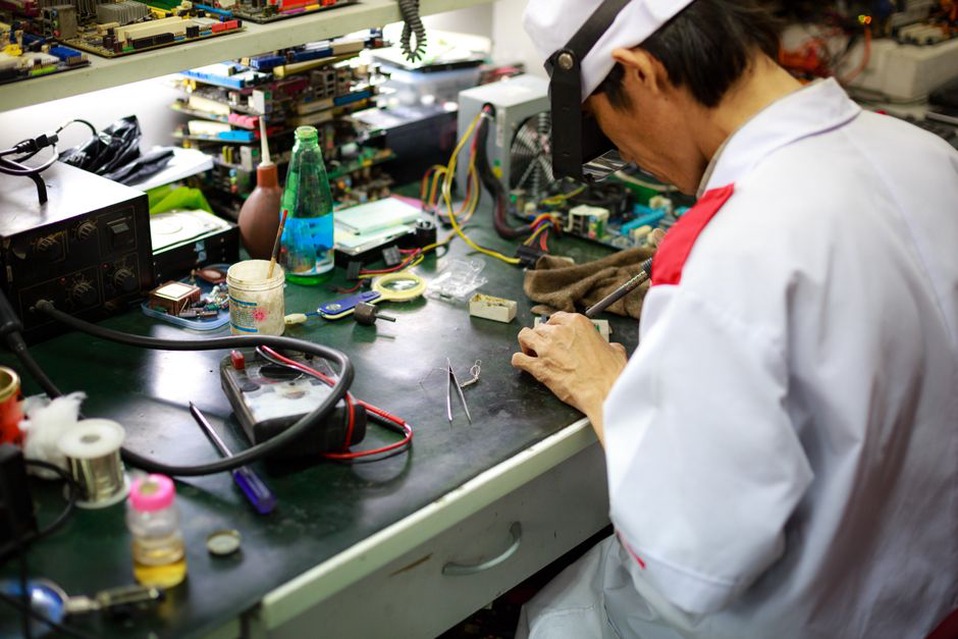
Building a contact microphone for Japanese underground use is a ritual of its own. The choice of piezo disc matters: 20mm diameter discs are common, but smaller ones from greeting cards or larger ones from musical greeting cards are also used. The housing—if any—is often a metal washer, a wooden coin, or simply heat-shrink tubing. The goal is not fidelity but a specific sonic signature: a sharp attack, a limited low-frequency response, and a susceptibility to handling noise.
Common components list:
- Piezo disc (20–35mm, 2–10 kHz resonant frequency)
- Two-conductor shielded cable (thin, flexible)
- 3.5mm stereo or mono jack (or RCA)
- Soldering iron, rosin-core solder
- Heat-shrink tubing or electrical tape
- Optional: enclosure (metal pill box, aluminium tube)
The soldering technique is critical. The piezo ceramic is fragile; excessive heat cracks it. Builders often use a low-wattage iron and a quick touch. The disc is polarized: the ceramic side is negative, the brass plate positive. Wiring it correctly means the diaphragm pushes outward for positive pressure. Many artists reverse the polarity deliberately to get a phase-inverted signal, which can be used in stereo pairs.
Performance and Field Recording
In a live noise setting, the contact mic is taped to metal surfaces, glass, plastic pipes, or the artist's own body. The body contact mic is a distinct subgenre: a piezo taped to the throat or chest captures internal sounds—breath, heartbeat, bone conduction. The Japanese underground has a history of using the body as a resonant surface, linking the internal to the external. The microphone becomes a stethoscope for the material world.
In field recording, the contact mic is pressed against railway tracks, street lamps, building foundations, or the ground itself. The sound is not the ambient air but the vibration of the structure. A recording of a subway tunnel made with a contact mic yields a continuous low rumble and metallic clatter, completely different from an air-mic recording of the same space. The choice of contact mic over a conventional microphone is a deliberate rejection of the documentary ideal—it is a compositional tool that selects a specific physical layer of the environment.

The Aesthetic of Contact
The word "contact" carries a double meaning. First, the physical touch between the microphone and the object. Second, the human contact between performer and instrument, or between builder and the materials. In the DIY culture of Japanese underground labels and cassettes, the contact mic is often the first piece of equipment a musician builds. It is a gateway into electronics. The cart in Japanese underground music is another example of how everyday objects are repurposed for sound production; the contact mic shares that ethos of transformation.
There is no commercial standardization. Each contact mic is unique, and the subtle differences in cable length, solder joint, and disc type become part of the musician's voice. The same piezo disc may sound radically different when mounted on wood versus metal. The musician learns to control the pressure and position of the mic to create dynamic changes. This is not a precision instrument; it is a rough, unpredictable tool that rewards experimentation.
The Japanese underground has never embraced the clean, flat response of studio microphones. The contact mic's limited bandwidth—often rolling off below 100 Hz and peaking at a few kHz—is seen as a feature, not a flaw. It isolates the midrange texture of the source, making it cut through a dense mix of feedback and distortion. In many noise sets, the contact mic is the only microphone, feeding directly into a chain of effects and amplifiers.
Collecting and Preservation
For collectors of Japanese underground cassettes and ephemera, the contact mic occasionally appears as a bonus item: a handmade mic sealed in a plastic bag with a label, or embedded in a cassette case. These are artifacts of the DIY economy. They are rarely documented, and their provenance is often lost. If you acquire one, the first step is to test it with a known preamp or audio interface. Many of these mics are built for high-impedance inputs—they need a preamp with at least 1 MΩ input impedance to avoid loading down the signal. A simple test: touch the disc with a fingernail—you should hear a sharp click. If not, the solder joint may have failed, or the piezo ceramic is cracked.
Repairing a vintage contact mic from an obscure Japanese label is a skill in itself. Open the housing carefully, inspect the solder joints, and if the disc is intact, resolder with fresh tin. The original cable may be stiff and brittle; replace it with a modern shielded cable. The result is a direct link to the sound of the past—a tool that once vibrated under the hands of a musician in a small Osaka live house, now vibrating again under your fingers.