
A cassette sleeve may carry a history the recording cannot: a handwritten address, a corrected name, a note inviting the next exchange. In Japan’s experimental underground, those details mattered alongside the sounds on the tape. A musician could duplicate a small batch at home, mail out copies, and use the case to credit collaborators or keep a conversation going. The cassette was more than a cheaper substitute for a record; it allowed music to move at a different pace.
What the cassette made possible
Recording and playback equipment was widely available, copies did not require a pressing plant, and a finished tape could go in a padded envelope. Home duplication still took time and money, and the results could vary. But musicians could circulate a new work without waiting for a conventional release schedule, assembling an edition as the recordings, artwork, and addresses came together.
That flexibility suited noise, extended improvisation, drone, electroacoustic experiments, and recordings of everyday sound—work that did not always fit a record-shop category. It also made room for unfinished ideas. A tape sent to a collaborator might invite another layer rather than present a definitive album. When a surviving cassette sounds rough, remember that it may have been made for exchange, not preservation.
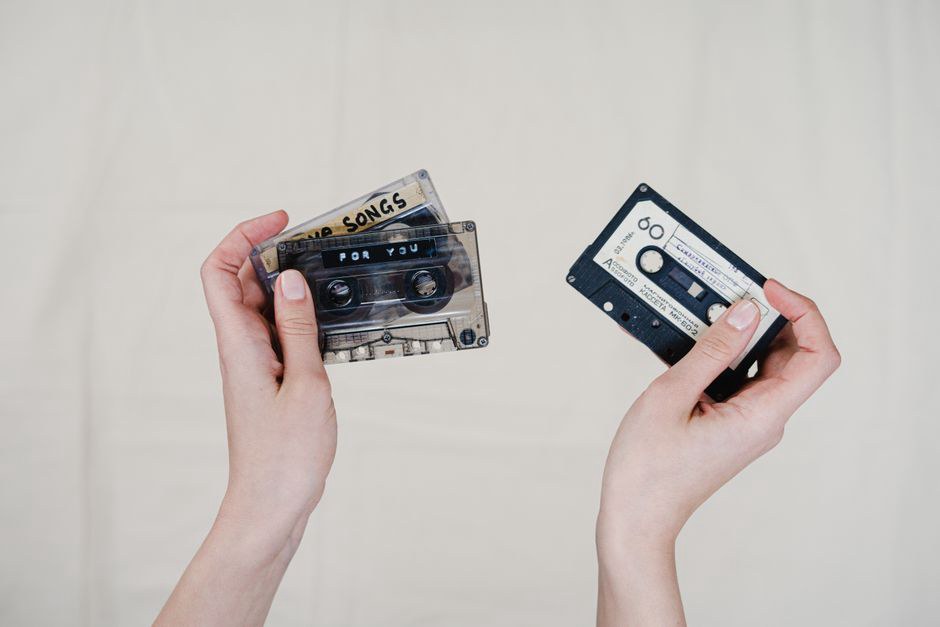
Release, letter, or working copy?
Not every circulating cassette had the same status. Some were packaged and sold as releases; others were demos for venues, gifts between musicians, mail-art exchanges, or private recordings that later reached collectors. A typed insert and catalog number suggest one kind of circulation, while a name and address written on the shell may suggest another. Neither tells us how many copies existed or whether the recipient was meant to pass one along.
The same flexibility that helped build networks makes their histories hard to reconstruct. A title might turn up with different sleeves or track divisions. A home-recorded copy might date from the time the music was made—or have been dubbed years later. Treat every surviving tape as a formal release, and an untidy practice becomes a misleadingly tidy discography.
A network, not a single sound
Japan’s cassette culture grew through overlapping local scenes and international correspondence, not one unified movement. Independent shops, small venues, zines, personal addresses, and mail-order lists helped recordings travel beyond a musician’s city without the distribution systems available to established labels. Exchanges also let artists hear work that local shops might never stock.
Those routes did not produce a uniform aesthetic. A dense noise recording and a quiet piece built from room sound could pass through the same network while demanding very different kinds of attention. Cassette culture describes a way of making and distributing music, not a genre. For a closer look at one strand, the blog’s piece on Japanese noise music and sonic rebellion addresses the noise context specifically.
Calling this a “revolution” makes sense only at the scale of access. Cassettes did not erase social barriers or guarantee listeners. Personal networks could be selective, and individuals still had to dub, write, pack, and post each copy. What changed was who could start circulating work, how quickly a reply could become a recording, and how little infrastructure a release needed.
Lo-fi is a condition, not a verdict
“Lo-fi” can describe hiss, reduced high-frequency detail, uneven levels, saturation, or the softened transients of a copy made from another copy. None of these is exclusive to cassette, and none proves intent. A noise musician might deliberately drive a recorder hard; a field recordist might have wanted a cleaner machine but used what was available. A poorly aligned playback deck can add a layer that belongs to the listener’s equipment rather than the recorded work.
The format could shape decisions before sound reached the tape. Two sides offered natural boundaries. Recording over used stock could leave traces of earlier material. A portable recorder made working outside a studio easier, while a multitrack cassette machine allowed overdubbing at home. These were options, not rules: a cassette could hold a carefully mastered studio recording or a single rough take.
When listening, it helps to keep three kinds of roughness in mind:
- Compositional texture: distortion, feedback, or unstable electronics that are part of the performance.
- Recording texture: microphone placement, room sound, tape hiss, or level changes captured in the original recording.
- Copy and playback artifacts: dropouts, speed variation, dullness, or channel imbalance introduced later.
You may not be able to separate these layers by ear. Rather than treating every flaw as an artistic choice, note where it occurs. A brief dropout heard at the same point on multiple transfers may come from a shared source; one heard only on a particular copy tells a different story.
The sleeve as part of the exchange
Photocopiers, stamps, collage, typewriters, and handwritten notes all found their way onto cassette packaging. The small surface forced choices: which names to include, whether to list tracks, how to mark each side, where to put an address. An insert could serve as artwork, documentation, and a way to contact the person behind the tape. A corrected title or pasted-over address shows that the object itself may have changed as it circulated.
Artwork is evidence, but it is not a transparent account of provenance. An address on a sleeve could belong to a distributor rather than the artist. An undated insert cannot establish the recording year, and a striking cover says nothing certain about the sound. Read the object alongside the audio, without asking either to prove more than it can.
Reading an unfamiliar tape
Begin with what you can observe. Note the wording on the shell and insert separately, including spelling differences. Record whether the case holds a folded J-card, a loose sheet, or no paper. Check whether both sides are labeled and whether the audio matches those labels. Then listen without assuming the side break marks an intended pause; the tape may simply have run out.
If release information is unclear, a cautious description does more good than a confident guess. “Undated cassette with handwritten insert” records what is there. Assigning a scene, year, or label because the artwork resembles another release can send an error into later listings. Online audio needs the same care: a transfer lets you hear the recording but may leave out the packaging, copy history, and playback conditions that explain it.
What survives when a tape moves online
Digitization can spare fragile or scarce tapes repeated playback and make recordings easier to hear. It also changes what a listener encounters. A file has no automatic side change, no visible correction on a sleeve, and no record of how a particular copy reached its owner. Online descriptions may compress the recording date, duplication date, and upload date into one convenient year. If those dates are unknown, leave them unknown.
Physical copies have their own limits. Poor storage, mechanical damage, or a misaligned playback machine can affect the sound. A clean transfer need not represent every copy that circulated; damage on one old tape should not be mistaken for an artistic decision. When documenting a tape, note which copy you played, any audible problems, and whether you adjusted the audio during transfer.
For a useful comparison, play the beginning and end of each side at the same volume. Note any changes in level, background hiss, or pitch stability. Keep those observations beside your sleeve transcription rather than adding them to it: the sleeve records what the object claims, while your notes describe what this particular copy allowed you to hear.