
Ambient noise. The term sits awkwardly in the mouth, a quiet provocation. In the logic of record store bins and streaming platform algorithms, these two words are supposed to repel each other. One suggests drift, stasis, benign sonic wallpaper. The other promises confrontation, texture as assault, the deliberate weaponization of signal. But in the Japanese underground, this contradiction has become something else entirely: a precise cartographic tool for mapping territory that's existed, largely undocumented, since the late 1980s.
Lowering the volume on a harsh noise wall isn't the point. That's a technical adjustment, not an aesthetic position. The Japanese ambient noise axis grew out of a specific historical exhaustion—fatigue with the rigid orthodoxies of early digital synthesis on one side, and the performative extremity of the Tokyo noise scene on the other. By the mid-1990s, a loose constellation of artists had started treating the pedal chain differently. Not as a machine for generating peak amplitude, but as a microscope. A dying battery in a distortion unit. The electromagnetic whine of a malfunctioning power supply. A contact microphone dragged across a resonant surface at near-inaudible pressure. These weren't failures anymore. They became the primary sound sources.
The foundational gesture was reductive. Take the signal path of a classic Japanoise setup—oscillators, ring modulators, overdriven mixers—and starve it. Cut the voltage. Use cables with broken shielding. Record the resulting whisper of crackle and hum, then amplify it not through a PA system but through the act of focused listening. What emerged was a music of extreme proximity. The listener's own auditory system became a collaborator, filling in phantom frequencies and patterns that may or may not exist on the tape.
Cassette as Acoustic Lens
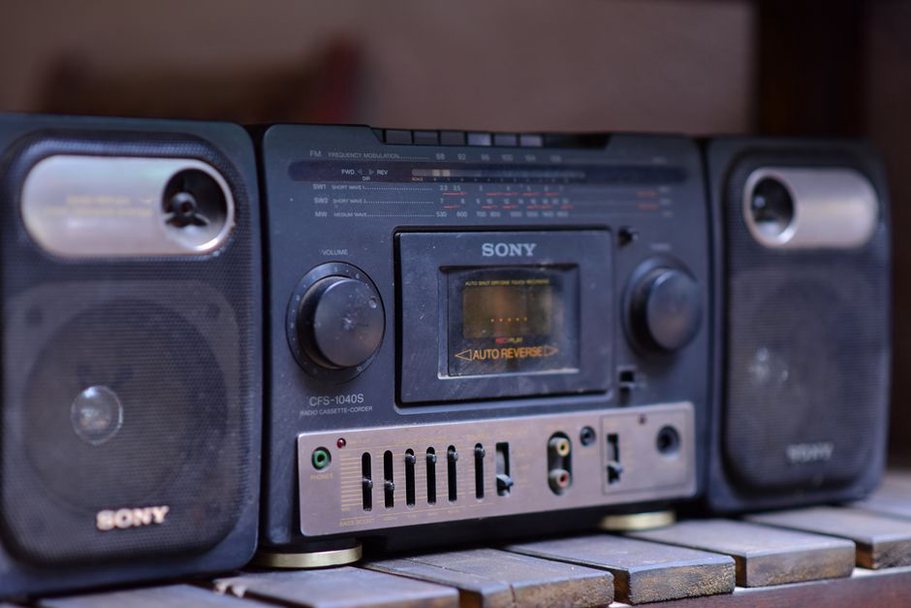
The format question is inescapable here. Ambient noise in Japan is inextricably bound to the economics and materiality of the cassette. Labels like G.R.O.S.S., P.S.F., and a constellation of micro-imprints that operated through postal mail order in the 1990s treated the cassette not as a demo medium or a stepping stone to vinyl, but as the definitive artifact. The built-in limitations—tape hiss, azimuth drift, the subtle wow and flutter of cheap transport mechanisms—were compositional elements. A C30 looped tape played on a Walkman with failing batteries became an instrument in its own right, its unstable playback speed introducing aleatoric pitch shifts that no digital plugin could convincingly replicate.
This was not a nostalgic project. The cassette's sonic signature—a particular compression curve, a specific roll-off in the high frequencies, the way saturation colors transient material—created a unified textural field that pulled disparate source material into coherence. Field recordings of rain on a corrugated roof, processed through three generations of tape bounce, could sit alongside a filtered oscillator drone without any sense of aesthetic collision. The medium itself performed the mixing.
A forensic approach to archiving this era has become its own sub-field. Cryptic filenames and orphaned digital transfers circulate among collectors, each one a potential key to undocumented sessions. The process of tracing a single distorted file back through corrupted metadata often reveals more about the conditions of production than any liner notes ever could. As discussed in a previous examination of archival fragments, the mystery of a folder name like 't2' can unfold into a complex narrative about how these recordings were stored, lost, and partially recovered.
Field Recording and the Collapse of Figure-Ground
Conventional field recording practice, rooted in the traditions of bioacoustics and ethnographic documentation, maintains a clear distinction between subject and environment. The recordist captures a specific sonic event—a bird call, a street musician, a thunderclap—against a background that is ideally minimized. Japanese ambient noise systematically dismantles this hierarchy.
The approach, refined through decades of practice by artists who rarely appeared on Western festival bills, treats the recording apparatus as an invasive presence. Microphones are placed not to isolate a sound source but to capture the entire acoustic field as a continuous, undifferentiated mass. A recording made inside a ventilation shaft does not document the fan motor as a discrete object. It captures the standing waves, the phase cancellations, the way the metal ductwork resonates sympathetically at specific frequencies. The result is not a document of a place but a new sonic object that never existed in the original space—a product of the interaction between the environment and the recording chain.
This methodology connects directly to the electroacoustic tradition but diverges on a crucial point. Where European electroacoustic composers historically subjected field recordings to studio-based transformation—tape splicing, spectral processing, granular resynthesis—the Japanese ambient noise approach often favors minimal intervention after the moment of capture. The compositional act lies in the choice of location, the placement of transducers, and the duration of the take. A sixty-minute recording of rain hitting different surfaces—glass, plastic sheeting, exposed metal—requires no further processing to function as a complete work. The listener's attention, shifting between the distinct attack characteristics of each surface, provides the structural dynamism.
The Influence of Architecture
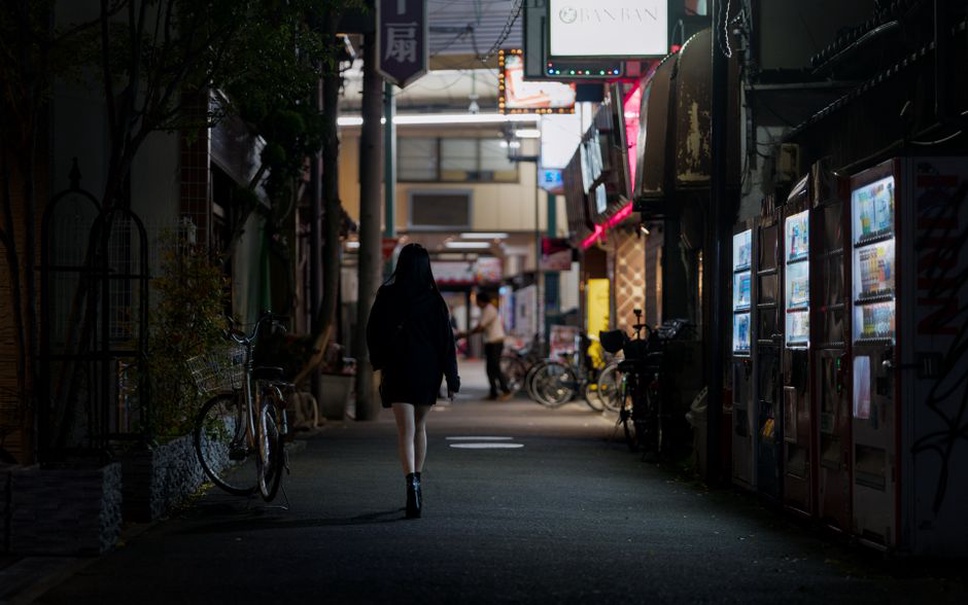
A frequently overlooked factor is the acoustic signature of Japanese domestic and urban spaces. Lightweight construction materials, sliding partitions, and the proximity of neighboring structures create a specific kind of ambient bleed that differs markedly from the stone and concrete reflections common in European recording environments. A quiet recording made in a Tokyo apartment inevitably captures the muffled transit of the building itself—elevators, plumbing, the distant thud of a door closing three floors away. Rather than treating these intrusions as flaws to be edited out, ambient noise practitioners incorporated them as a kind of found percussion, a rhythmic undercurrent that anchors the more abstract electronic elements to a specific, lived-in temporality.
Digital Decay and the New Archival Objects
The migration of this music to digital formats has created an unexpected second life for many recordings. Files circulate in lossy formats, subjected to data corruption, incomplete downloads, and the general entropy of peer-to-peer sharing networks. A recording that began as a pristine 24-bit transfer of a DAT master can, after a decade of circulation, exist primarily as a 128kbps MP3 with audible encoding artifacts. The glitches become part of the work.
This phenomenon has generated its own archival discourse. Collectors and researchers now study the compression fingerprints of specific encoders, attempting to trace a file's lineage through the networks that distributed it. The orphaned digital fragments that surface on abandoned servers and forgotten hard drives often carry more mystery than the original releases. A single corrupted file, stripped of its metadata and identifiable only by a cryptic designation, can represent the sole surviving trace of an edition that no longer exists in any physical form. The forensic reconstruction of these artifacts, as explored in the examination of a ghost in Japanese noise archives, has become a necessary method for preserving work that was always too marginal for institutional memory.
DIY Electronics and the One-Off Instrument
The economic constraints of the Japanese underground—high urban rents, limited access to imported equipment, the collapse of the domestic instrument manufacturing sector—paradoxically fueled innovation. Artists built their own devices not from ideology but from necessity. A contact microphone can be assembled for a few hundred yen. An oscillator circuit requires a handful of components available at any electronics district. The resulting instruments were often unstable, prone to drift with temperature changes, and capable of producing sounds that no commercial synthesizer could replicate.
These devices were rarely documented. An artist might build a single unit, use it for one recording session or a handful of live performances, and then cannibalize it for parts. The sounds captured on tape represent the only evidence that a particular circuit configuration ever existed. This ephemerality is not a romantic affectation—it is a direct consequence of a scene that operated with virtually no financial infrastructure, where the documentation of process was a luxury that few could afford.
The listening posture that ambient noise demands is not passive. It requires a recalibration of attention, a willingness to treat barely audible fluctuations as dramatic events. A three-decibel change in the level of a tape hiss bed, sustained over twelve minutes, becomes a structural pivot. The sudden appearance of a radio frequency interference pattern, bleeding into a recording from a nearby cell tower, reads as a melodic intervention. This is music that rewards the kind of sustained engagement that the dominant streaming economy actively discourages. It exists, stubbornly, as a practice of resistance to the algorithmic smoothing of all sonic experience.