
A soft hiss beneath a sustained tone is not necessarily damage. On a cassette, it may be the noise floor of the tape, the recorder’s electronics, or the gain chosen during recording. A quiet tone exposes it; a dense passage may bury it. Much of the interest in lo-fi Japanese tape music lies in that changing relationship, rather than in the presence of hiss alone.
“Lo-fi” is a loose term. It might describe limited bandwidth, distortion, wavering pitch, room sound, rough edits, or an unpolished mix. None belongs exclusively to cassette, and a cassette need not exhibit any of them prominently. Japanese experimental musicians have used tape alongside other formats, sometimes drawing attention to its limits and sometimes using it simply to circulate music. Instead of asking whether a recording sounds worn enough, ask which parts of its texture came from composition, recording conditions, copying, or your playback deck.
What the cassette actually changes
A cassette records sound on magnetic tape moving past a head. Compared with a well-maintained professional reel-to-reel setup, its narrow tape and relatively slow speed make noise, wavering pitch, and high-frequency loss more likely to be audible. But the machine, tape formulation, recording level, noise reduction, duplication method, and condition of the cassette all affect the result. One recording may sound clear; a poorly aligned or deteriorating copy may sound dull or uneven.
Those differences become conspicuous in music built from drones, small electronic sounds, or field recordings. When little else fills the spectrum, a faint mechanical or electrical layer has room to be heard. Sustained notes expose speed fluctuations as wow and flutter. Recording at a high level may thicken or distort transients rather than reproduce them cleanly. Copying through several generations can raise noise and lose detail, though a murky release has not necessarily been copied that way.
Tape does not have exclusive rights to grain. Distortion could have begun in a contact microphone, small mixer, damaged cable, saturated preamp, or overloaded digital file. Hiss on playback might come from the deck rather than the master. If you can, play the same passage on another machine to see which features persist.
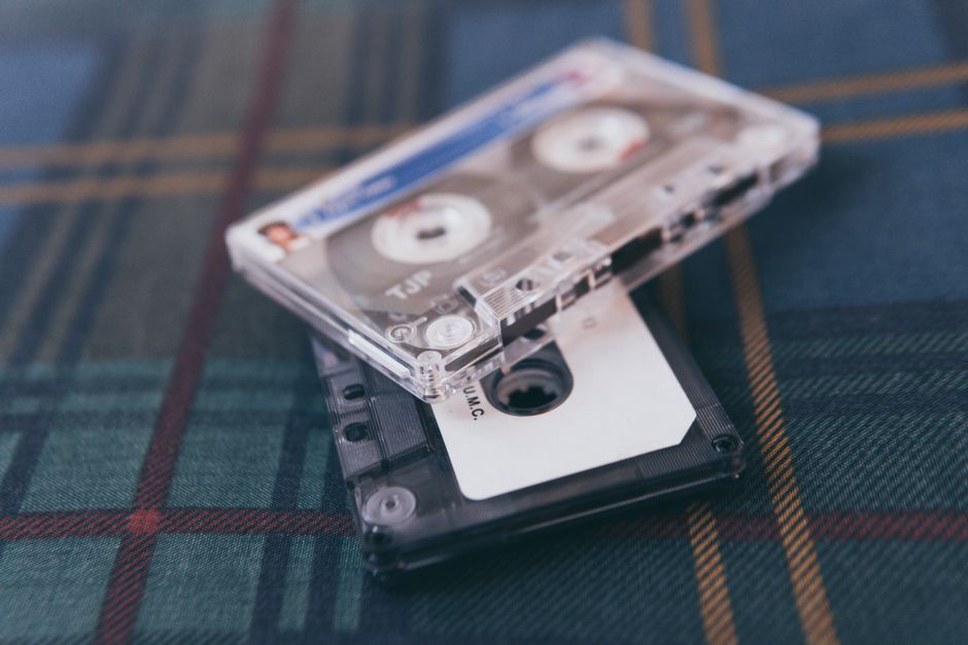
Hiss, saturation, and unstable pitch
These effects do different work. Hiss occupies the background, even in the apparent pauses of a sparse piece. Saturation changes the density and shape of loud sounds; in a rough noise passage, it can bind separate sources into one abrasive mass. Pitch drift changes the movement of a sound over time. A nearly fixed drone may seem to bend as tape speed varies, although an oscillator or instrument could produce the same bend deliberately.
None of this is automatically warm or intimate. Hiss can mask quiet detail, saturation can flatten dynamics, and flutter can interfere with carefully tuned intervals. The limitation becomes more interesting when its role is audible: a field recording receding behind its own noise floor, say, or a sustained tone whose decay reveals the medium after the source stops.
Lo-fi as a relationship between source and medium
Japanese tape music is not a single style. In experimental, ambient, noise, and electroacoustic work, a cassette might carry a finished performance, supply sounds for another one, or serve as an intermediate recording stage. A clean digital master copied to cassette need not sound like a piece assembled through repeated recording and playback. An artist can also incorporate cassette recordings into a digital release: the medium remains audible even when the final copy is a file.
In a drone that changes little for minutes, a brief dip in level or shift in background noise may feel like a major event. In harsh noise, the same fluctuation may be harder to pick out; saturation and restricted frequency response may instead shape the sound’s overall pressure. Neither result follows inevitably from the genre on the sleeve.
Field recordings complicate the picture further. Wind hitting a microphone, distant traffic, and recorder noise may occupy similar parts of a quiet recording. Calling all of them “tape hiss” erases the setting and the microphone technique. Does the noise change with the surroundings, stay steady between locations, or rise when the recording level goes up? Those clues matter particularly when a work moves between recognizable places and nearly abstract passages.
For more on changing recording tools, The Evolution of Japanese Noise Music: From Analog to Digital offers a related perspective. Tape and digital recording often coexist in the same working process.
Why rough edges can be deliberate
A hard splice, abrupt start, or uneven level can preserve a trace of how a piece was made. An edit may leave in the faint knock of equipment being moved; stopping a recorder between takes may leave no graceful fade. Such marks can set the pace of a sequence without amounting to a declaration about imperfection. An abrupt cut can also be planned precisely. Roughness tells us what we hear, not how casually it was made.
A small recording setup lets a musician test an arrangement without waiting for studio access. They can record a pass, play it through speakers, and capture that playback with a new layer of sound. Now the room and speakers are part of the recording too. Repeating the process can make the source less recognizable while bringing out rhythm, resonance, or noise. The technique is not exclusive to Japan, nor does it signal a national aesthetic; what matters is how an artist uses it.
Lo-fi can convey distance as well. A sound recorded across a room differs from a close-miked sound made dull in post-production, even if both lack treble. The distant recording carries reflections, background activity, and clues to where the microphone stood. On tape, those spatial details may compete with noise and reduced clarity. The result can register less as a transparent record of an event than as an object with several audible layers between event and listener.
The visual promise of a cassette
The object shapes expectations before it plays. A handwritten label, photocopied insert, or reused shell may suggest a modest setup, but it says little about how the audio was recorded. A professionally mastered digital file can be duplicated onto a hand-assembled cassette; a carefully designed package can hold a raw rehearsal. Packaging is presentation, not proof of sonic authenticity.
Physical details still frame the listening. An insert may give only a name and track titles, or it may identify equipment, locations, collaborators, and whether the sides contain separate works. Turning the tape over creates a pause that a continuous digital file does not. A piece ending early leaves unused tape; one that runs to the end may stop with the mechanism. These effects may be planned, accidental, or peculiar to one copy.

It is easy to romanticize the look of an underground release. Photocopy grain and handwritten type reveal little about the labor or cost behind it; practical decisions can produce those details too. For more on imagery in noise contexts, see The Interplay of Visual Art and Noise Music. The sleeve and recording are related materials, not interchangeable evidence.
Distribution without the myth of isolation
Cassettes can support small-scale circulation: they can be duplicated in modest batches, mailed, or exchanged without the manufacturing arrangements some other physical formats require. That has mattered to independent experimental music in Japan and elsewhere. But DIY is rarely solitary. Organizers, designers, duplicators, shops, performers, and listeners who pass information along may all help a release circulate, even when no archive records their involvement.
Nor is there a pure cassette underground cut off from digital life. An artist may record on a computer, send a master as a file, announce the release online, and sell the tape with a download. They might choose cassette for its physical form, for its sound under particular conditions, or because it suits the project’s scale. None of those reasons implies a rejection of high-fidelity audio.
Small releases can be difficult to research. A seller may describe a recording as “tape-worn” without any account from the artist of how it was made. An uncredited upload may not say which side is playing or whether the source was an original cassette. When the history is uncertain, stick to what can be heard. “The right channel drops briefly” describes an event; blaming a broken duplication deck requires evidence.
How to listen without confusing texture and condition
On a first listen, every stray noise can seem part of the composition. A few checks help, especially with second-hand tapes and digitized copies:
- Note when the noise appears. Hiss that continues between tracks may belong to the cassette or transfer. Noise heard only with one source may have entered earlier in the recording chain.
- Listen for repeated events. A click at exactly the same musical point on separate plays is likely fixed in the recording. One that moves may be a playback or handling problem.
- Compare channels cautiously. An imbalance may be intentional, but dirty heads or alignment problems can weaken one channel. Check the equipment before trying to “repair” the audio.
- Keep the transfer history in mind. A stream made from a cassette reflects the tape and its digitization. Compression, level changes, or automatic cleanup may alter what you take for the original texture.
Care is not the opposite of lo-fi
Collectors sometimes avoid maintenance for fear of removing a tape’s character. Cleaning playback heads according to the manufacturer’s guidance does not erase the artist’s recording choices; it reduces noise and faults introduced by the deck. Store cassettes in their cases, away from heat and strong magnetic fields. If a tape squeals, sheds material, or struggles to move, stop rather than replaying it to check the sound.
A preservation transfer should generally capture what is on the tape before noise reduction or equalization. Processing may help a listening copy, but an unprocessed transfer leaves room for later judgment, especially when noise, level shifts, or abrupt transitions may matter musically. Differences between editions can also reflect mastering or duplication, not just deterioration.
Where the attraction has limits
Lo-fi language can turn restricted access into an artistic virtue. A scarce cassette is not inherently better than an available digital edition, and hard-to-read credits do not deepen the music. Romanticizing obscurity can blur the separate questions of musicianship, distribution, and preservation. It may also hide other people’s contributions: collaborators, recording engineers, or those sharing the space where a recognizable artist worked.
Tape noise should not be made to stand for Japan itself. Cassette technology is international, and musicians in Japan have used it for different ends. Dense noise, a nearly silent electroacoustic study, and ambient music built from room sound may share a carrier without sharing an approach. Start with the decisions and sounds of each work, then consider what the cassette adds.
Try playing a quiet passage from a cassette and an available digital edition at roughly matched volume. Make three notes: what the sound source does, what remains during its pauses, and what changes only on one playback. Keep any differences between editions in your notes rather than attributing them all to tape.