
A venue name on a Tokyo flyer rarely tells you how a night will sound. A basement club might host abrasive electronics at 19:00, then improvised acoustic music later that week. A gallery can become a listening room for one evening; an independent bar might move between drone, tape manipulation, performance and free improvisation on the same bill. Kyoto’s circuit is smaller and often built on closer relationships, but the same uncertainty applies. The point is not to find one permanent “noise venue,” but to understand how organisers, rooms and audiences create an experimental-music situation for a few hours.
Tokyo and Kyoto have different, connected infrastructures. Tokyo offers density, overlapping scenes and a long list of rooms with constantly changing programmes. Kyoto has fewer regular options, though its compact geography and artist-run networks can make links between performances, labels, workshops and exhibitions easier to follow. Neither city is a fixed map. Closures, relocations, changes in programming and one-off events are ordinary parts of underground music.
Read the venue as part of the performance
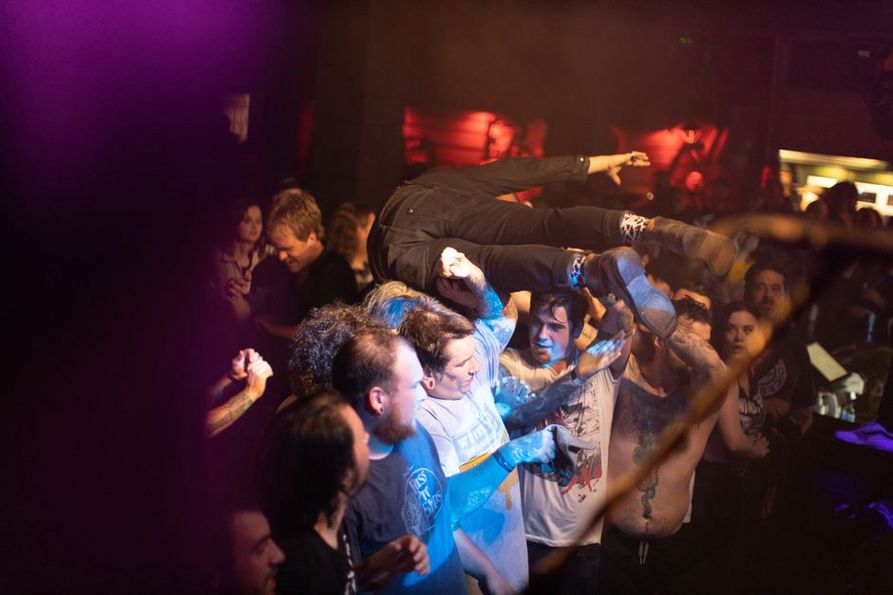
For experimental music, the room is never neutral. A PA-heavy live house responds to pressure, amplification and physical volume differently from a low-ceilinged bar. A gallery may make quiet sound easier to hear, while imposing a strict finish time. A seated hall changes the way people receive a long electroacoustic work; a standing room may allow movement, conversation and a looser boundary between performance and social gathering.
Before crossing the city, look beyond genre labels. Promoters often give better clues through practical details: seating, whether the programme is a solo set or a multi-artist bill, the presence of visual work, an early door time, or an intermission. The name of an organiser or recurring series can tell you more than a broad tag such as “experimental.”
Three venue types to distinguish
- Live houses and clubs: These are often the most visible entry points for amplified noise, electronics, hybrid rock bills and improvisation. Sound systems vary sharply. Ear protection is sensible, though not every event in this kind of room will be loud.
- Bars, cafés and micro-spaces: Small capacities can produce either focused listening or a more social atmosphere, depending on the promoter. Lower production costs often let these spaces take chances on unusual bills.
- Galleries, studios and cultural spaces: Sound art, electroacoustic work, field recording and audiovisual performance often appear here. Entry procedures, ticketing and rules on late arrival may differ from club norms.
Tokyo: density, turnover and parallel circuits
Tokyo’s experimental activity cannot be reduced to one district. Shibuya, Shinjuku, Koenji, Nakano, Asagaya and other areas have supported different combinations of independent music, art spaces and nightlife at different times. The advantage is choice: several relevant events may be within train distance on the same night. The problem is fragmented information and competing schedules.
Koenji has long mattered to underground music because of its concentration of small venues, rehearsal rooms, bars and record culture. It is best approached by following local bills rather than arriving with a narrow expectation. A night advertised around punk, free improvisation or experimental rock may include electronics or noise, and the reverse is equally possible. The social makeup of a bill often matters more than an exact genre label.
Shinjuku remains important for its ties to live music, record shops and long-running independent activity. Its scale can be disorienting, but it is a practical transit point for rooms scattered across western Tokyo. Shibuya and nearby areas offer another pattern: more established clubs and performance rooms alongside spaces with adventurous programming, reached through a mix of formal ticketing and smaller promoter networks.
The city’s geography shapes the night. Check the last train before buying a ticket, especially if the venue is outside a central interchange. Taxi fares can turn a modest cover charge into an expensive evening, while an early programme may make it possible to catch sets in two different neighbourhoods. Treat travel time as part of the decision, not as an abstract distance on a map.
For historical context on how the city’s built environment has influenced sound practices, The City as Instrument: Tokyo’s Urban Soundscape and the Roots of Japanese Noise examines the relationship between urban listening and Japanese noise without treating the city as a simple backdrop.
How to find a credible Tokyo event
- Start with venue calendars and promoter announcements. Event pages are usually more current than third-party listings, particularly when lineups or door times change.
- Check the performers individually. Their recent bills can show whether an event belongs to an improvisation, harsh-noise, sound-art, ambient or cross-disciplinary network.
- Look at billing order and duration. A five-act weekday bill may run far later than the advertised opening time suggests.
- Confirm entry terms. Some Japanese venues charge at the door and require a drink purchase. Bring cash unless the venue explicitly lists other payment options.
- Save the address in Japanese as well as Roman letters. Basement entrances and upper-floor rooms are easy to miss on dense commercial streets.
The drink-ticket system is not an obscure ritual. It is part of how many live venues cover their costs. If the process is unclear, ask staff directly. At smaller events, the person at the door may also be the organiser, performer or sound engineer, so brief and patient communication works better than expecting a dedicated box office.
Kyoto: smaller scale, deeper local continuity
Kyoto’s experimental music activity is spread across venues, galleries, university-adjacent projects, artist studios and temporary spaces. The smaller scale can make travel between neighbourhoods easier, but information does not automatically gather in one place. Important events may circulate through flyers, mailing lists, social-media accounts and the personal networks around an organiser rather than a central calendar.
Urban Guild is one of Kyoto’s recognisable independent spaces, with programming that has included music, performance and other cross-disciplinary work. Its importance lies less in a fixed genre identity than in its role as a room where different practices meet. Check each event closely: a concert in a multipurpose space may be intimate and quiet, intense and amplified, or built around visual performance.
Socrates is another long-running Kyoto venue associated with independent and underground music, including experimental work among broader programming. As with any active room, the useful question is not whether it carries a permanent stylistic badge, but who is presenting that night and how the space is being used.
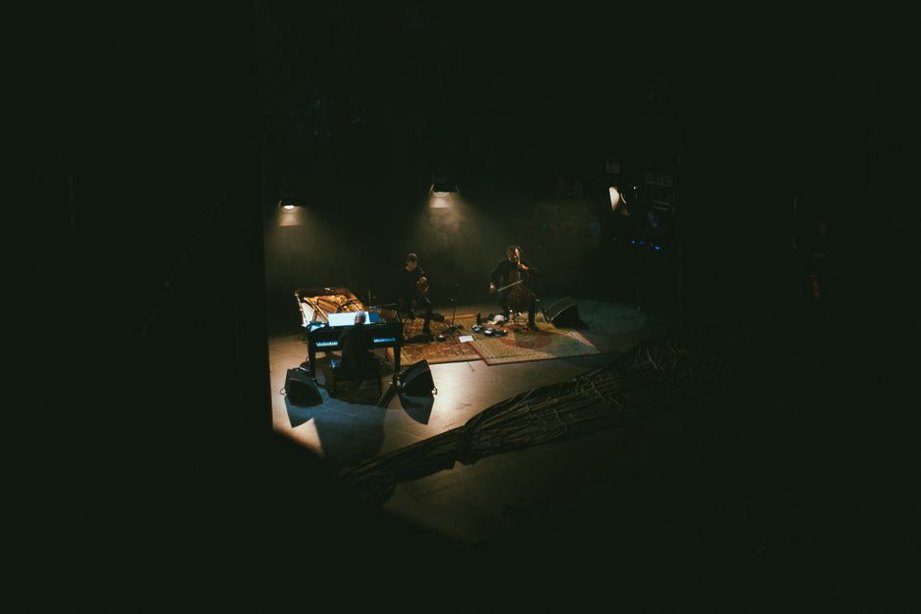
Kyoto also rewards attention to temporary settings. An exhibition opening, bookshop event, university-related presentation or studio concert may present work that does not fit club schedules. Such events can be especially suitable for electroacoustic and field-recording-based practices, where a room’s acoustics and the availability of quiet matter as much as amplification.
What changes between Tokyo and Kyoto
| Practical factor | Tokyo | Kyoto |
|---|---|---|
| Event density | Several overlapping options can occur on the same night | Fewer simultaneous events, often easier to follow once a local thread appears |
| Travel | Longer cross-city journeys and last-train planning are common | Shorter urban distances, though buses and evening schedules still need checking |
| Discovery | Venue calendars, artist networks and neighbourhood browsing all matter | Recurring organisers, cultural spaces and personal recommendations can be especially useful |
| Programming | High turnover and many overlapping micro-scenes | Smaller bills and cross-disciplinary contexts often carry more weight |
Etiquette without folklore
Experimental events do not follow one universal code of conduct. Take cues from the room. If the audience is silent during a quiet performance, save conversation for the break. If a set is physically loud, protect your hearing and avoid blocking exits. In a very small space, keep bags and outerwear out of the route between the door, bar and stage.
Photography is a common source of uncertainty. Some artists welcome documentation; others do not want bright screens, cameras near performers or recordings of unreleased work. A venue rule, sign or announcement takes priority. If none is given, ask before recording and do not assume that a ticket grants permission to publish footage. This is especially important for improvised and site-specific work, where a performance may be deliberately unrepeatable.
Buying physical media can support artists and small labels, but it is not a required gesture. Ask about price and format, handle cassettes and records carefully, and remember that a performer may have brought only a small amount of merchandise with no promise of future availability. Exchanges are often brief because artists are setting up, packing down or speaking with other attendees.
Follow organisers, not only famous names
A reliable way to understand a scene is to follow the people who assemble it repeatedly. Promoters, label operators, sound engineers, visual artists and venue staff create continuities that artist discographies can obscure. A recurring series may shift genres from month to month while retaining a commitment to unusual formats, new work or attentive listening. Looking through earlier bills can offer a practical route into a local network.
This is particularly useful if you only have a few days in either city. Rather than searching for a definitive genre destination, choose one event whose organiser and setting match your interests. Arrive early enough to get a sense of the room, notice flyers without treating them as guarantees of future activity, and note the names of people and projects that recur. A printed flyer or venue noticeboard may be more current than an old travel guide.
A compact preparation checklist
- Verify the date, door time, venue floor and payment method on the day of the event.
- Carry earplugs. They matter at noise events, but are also useful when a mixed bill becomes louder than expected.
- Keep enough cash for entry, a drink charge and local transport.
- Check the final train or arrange accommodation within realistic reach.
- Use translation tools for logistics, but keep artist and venue names exactly as written when searching.
- Do not take a venue’s past reputation as proof of its current programme.
After the performance, record the venue address, promoter’s name and date. Small rooms change names, move floors or stop programming; social accounts disappear and posters come down. Those three details turn a passing night into a traceable entry in a personal archive and give you a concrete starting point for finding the next event through the people who made the one you attended possible.