
Japanese electroacoustic music has never been a single school with a settled sound or one institutional home. Its history runs through broadcast studios, university research, independent concert spaces, artists’ workshops, record labels, and improvised performance. The term may refer to tape composition, live processing of acoustic instruments, feedback systems, synthesized sound, or works in which environmental recordings are reshaped structurally rather than presented as documentation.
That breadth matters. Japanese experimental music is often reduced to a handful of export-friendly images: severe noise, immaculate ambient, or technological futurism. Electroacoustic practice has been less tidy and more contingent. It has depended on access to equipment, the availability of rooms and presenters, the formats that could circulate, and the ways artists treated recorded sound as material with grain, weight, and history.
Studio origins: tape, broadcast, and institutional access
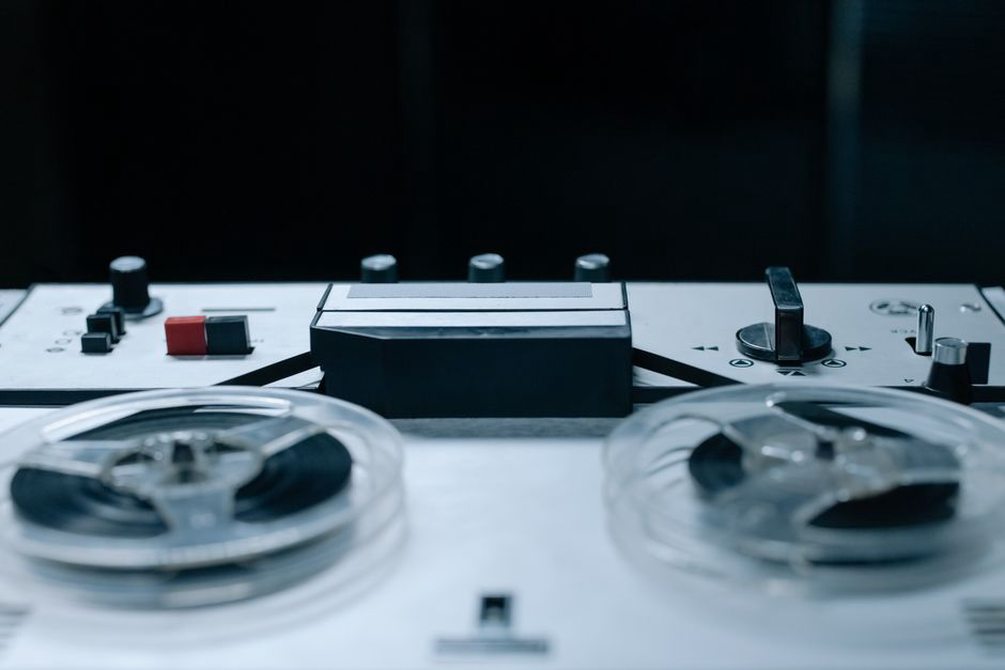
The first sustained opportunities for electronic and musique concrète-oriented work in Japan emerged through institutions that had recording technology. In the 1950s, NHK’s electronic music studio became a significant site for composition with oscillators, tape manipulation, filters, and recorded sources. Founded in 1955, it placed Japan among the countries where public broadcasting supported serious electronic-music production.
NHK was more than a room full of equipment. It provided engineers, editing facilities, archives, broadcast expertise, and a setting where composers could test methods that were difficult to attempt privately. Composers associated with the studio included Toshiro Mayuzumi, Minao Shibata, Joji Yuasa, and Toru Takemitsu. Their work did not share a single aesthetic: some pieces foregrounded synthetic timbre, while others brought instrumental thinking, theatre, or concrete sound into studio composition.
In this period, the central question was often how a sound might be altered. It could be cut into fragments, reversed, sped up, slowed down, layered, filtered, or placed within an invented acoustic perspective. Tape served as both recording medium and compositional surface. A railway brake, struck object, voice, or instrumental attack might become difficult to identify while retaining enough of its original character to create tension between recognition and abstraction.
Access shaped aesthetics as well. Large studios encouraged careful editing and fixed works intended for playback. A finished tape composition could be assembled with precision, yet remain difficult to reproduce outside specialized settings. This distinction still matters: electroacoustic music is not defined simply by electronic instruments. It concerns the organization of recorded, synthesized, or electronically altered sound, and the conditions under which that organization is heard.
Postwar avant-garde and the widening of sound material
Across the postwar decades, electronic composition developed alongside avant-garde work in music, visual art, dance, and theatre. The boundaries between composition, action, installation, and performance were often porous. That did not make every experimental work electroacoustic, but it broadened the sense of sound as an event, physical force, or spatial element rather than merely a vehicle for melody.
Groups and artists working across disciplines helped make this wider field audible. Group Ongaku, active around 1960, remains especially important for its exploratory work with sound, objects, improvisation, and listening. Takehisa Kosugi and Mieko Shiomi later became key reference points for practices that crossed conventional disciplinary lines. Their work should not be treated as a simple origin story for later electronic music, yet it established a durable willingness to let method follow sound rather than inherited musical form.
Japanese composers engaged with international currents without simply reproducing them. Techniques associated with European musique concrète, elektronische Musik, indeterminacy, and postwar modernism entered local networks through recordings, visiting artists, publications, broadcasts, and personal exchange. The result was not a national style of electroacoustics, but overlapping approaches: composed tape works, multimedia pieces, live electronic setups, and hybrid scores for performers and machines.
Listening beyond the source
One useful way to hear this repertoire is to separate source from function. A recorded bell can act as rhythm; a breath can become a sustained noisy texture; a filtered piano attack can serve as a spatial marker rather than an instrumental gesture. The source remains relevant, but its identity is only one parameter alongside duration, density, spectral range, dynamics, and placement in time.
- Fixed-media composition presents a finished work through loudspeakers, often built through detailed editing and layering.
- Live electronics processes or generates sound during performance, making timing and acoustic conditions part of the work.
- Mixed music combines performers with tape, synthesis, sensors, or computer-based processing.
- Sound installation places electroacoustic material in a site where movement, architecture, and duration affect listening.
From the studio to the circuit: live electronics and independent spaces
As equipment became smaller and easier to obtain, electroacoustic work moved beyond formal studios. Tape recorders, contact microphones, effects pedals, inexpensive mixers, home-built circuits, and later computers allowed artists to develop practices around direct performance. The shift was not only technical. It affected who could make work, how quickly ideas could be tested, and how much contingency could remain inside a piece.
From the 1970s onward, experimental musicians in Japan developed different relationships to electronic sound. Free improvisers used amplification and devices to extend instrumental language; composers worked with synthesized timbres and spatial projection; artists in underground scenes embraced distortion, cassette manipulation, radio interference, and feedback. These lines often met, but they should not be folded into a single genealogy.
Noise became a conspicuous branch of this wider history, particularly through artists who treated overload, feedback, and damaged signal as compositional material. Yet electroacoustic music is neither a polite precursor to noise nor a route that inevitably leads there. A low-volume tape piece, a feedback performance, and a multichannel composition may share tools while placing very different demands on the listener. For context on performance-based extremes, the exploration of improvisation in Japanese noise performance traces a neighboring but distinct practice.
The independent circuit also changed the social scale of presentation. A work could appear in a small gallery, live house, art space, or privately circulated cassette rather than requiring a broadcast studio or concert hall. Roughness could then register as more than a technical limitation. Hum, clipping, room resonance, imperfect edits, and unstable amplification might function as active elements instead of flaws awaiting correction.
Technology did not replace materiality
Digital audio introduced new options for editing, synthesis, sampling, and multichannel distribution, but it did not displace older media. Tape, vinyl, compact discs, MiniDisc, and cassettes continued to shape workflow and sound. Each format demands different decisions. Tape involves irreversible cuts, physical splices, saturation, and looping; a computer permits non-destructive editing and dense layering; live digital processing can respond quickly while concealing its operations behind presets and interfaces.
Artists working across ambient, drone, sound art, and experimental electronics have often treated media as audible conditions rather than neutral containers. Long decays, tape hiss, unstable loops, compressed digital artifacts, and a room’s contour can all carry compositional force. The important distinction is not analog against digital, but whether the chosen process has a perceptible role in the work’s structure.
| Working method | What it foregrounds | Common listening cue |
|---|---|---|
| Tape editing | Duration, repetition, physical joins | Notice cuts, loops, speed changes, and accumulated wear |
| Live feedback | System behavior and instability | Follow small shifts in pitch, resonance, and gain |
| Digital processing | Layering, alteration, spectral control | Listen for what remains of the original source |
| Multichannel diffusion | Spatial movement and projection | Track where sound appears to gather or recede |
Sound art, environment, and compositional responsibility
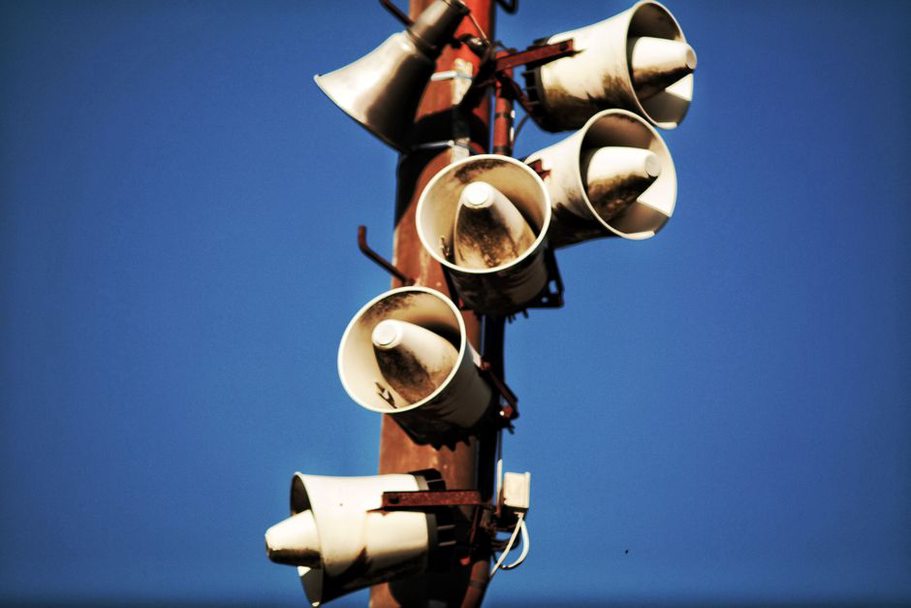
Electroacoustic practice in Japan often meets sound art when recorded material enters a site. In installation and gallery work, the loudspeaker is not merely a delivery device. Its position, volume, enclosure, distance from walls, and relation to ambient sound can determine the piece. A quiet recording played too loudly can become an assertion over the room; a loud work played through inadequate speakers may lose the detail that gives it shape.
Environmental recordings raise another set of questions. A field recording may be treated as evidence, atmosphere, documentary material, raw input for alteration, or a sonic presence with its own duration. These uses carry different ethical implications, especially when recordings include identifiable voices, domestic activity, religious observance, or sounds made within vulnerable communities. Editing does not remove responsibility simply because it makes a source unfamiliar.
For the same reason, “Japan” should not be treated as an acoustic resource or a bundle of recognizable signs. Train announcements, temple bells, cicadas, arcade machines, and street crossings are not inherently meaningful because listeners can identify them. Their use gains meaning through framing, context, consent where relevant, and attention to sonic detail. A recording that relies only on recognizability can become decorative; one attentive to rhythm, distance, interruption, and social context can support more rigorous listening.
Why archives are incomplete
Much of this history resists a clean timeline. Institutional works may be documented through programmes, score collections, recordings, or broadcast archives, while independent releases can disappear after a small cassette run, a short-lived venue, or an obsolete file host. Credits are sometimes partial. Dates may refer to composition, premiere, recording, or reissue rather than the same event. Those distinctions should be retained rather than smoothing uncertain material into a neat chronology.
Useful documentation for a release or performance includes participants’ names, recording location and date where known, equipment or process if disclosed, original format, label or presenter, and the source of any later reissue. Descriptions such as “rare,” “lost,” or “seminal” require caution unless traceable evidence supports them. An archive is not simply a collection of objects; it also records what can and cannot still be verified.
How to approach the history without reducing it to a genre
Instead of listening in a straight line from early electronic music toward present-day laptop performance, follow particular problems across decades. How is a sound separated from its source? When does a recording function as memory rather than documentation? What changes when processing is hidden, and what changes when the audience can see cables, microphones, or an operator at work? Such questions reveal links between works that otherwise belong to different scenes.
- Begin with a fixed tape work and identify its palette: synthesized tones, recorded objects, voices, instruments, or noise.
- Listen once for form only: entrances, absences, density shifts, repetition, and endings.
- Listen again for treatment: cuts, filtering, reverberation, pitch changes, distortion, and stereo or spatial movement.
- Compare it with a live-electronic or improvised performance, noting which decisions are fixed and which emerge from the situation.
- Check release notes, concert documentation, and credits before repeating biographical claims or assigning a work to a simplified movement.
This method is especially useful for recordings that first appear uneventful. A sparse passage may contain minute changes in phase, decay, microphone distance, or room tone. A dense one may be organized less by dramatic gesture than by the slow redistribution of frequency bands. Electroacoustic listening often rewards attention to transitions that song-based listening habits treat as background.
For collectors, format is evidence, not proof of aesthetic intent. An original cassette may preserve a particular transfer, sequence, or artifact of circulation, while a reissue may reveal details buried in an earlier edition. Keep notes that separate what is printed on the object from what has been inferred through memory or secondary descriptions. When comparing versions, begin with a short passage and log differences in level, channel balance, noise floor, edits, and running time before making broader claims about fidelity or authorial preference.