
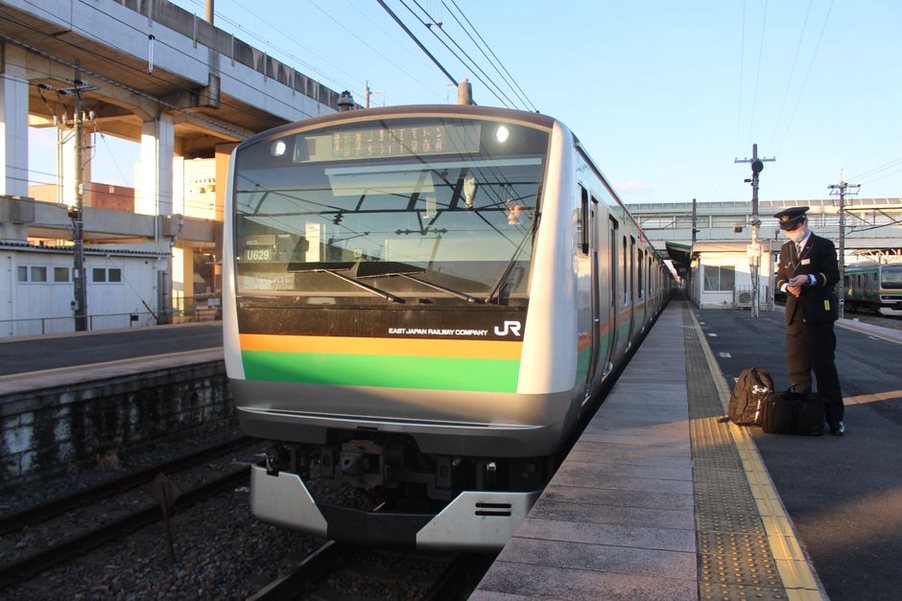
A railway platform is rarely one sound. A public-address chime is filtered by roof panels; suitcase wheels cut across an announcement; brakes rise in pitch, then disappear as the doors close. A worthwhile urban recording does more than collect this density. It leaves enough time, perspective, and context for the listener to hear separate events sharing the same space.
Japanese field recording in cities sits between documentation, composition, and situated listening. It touches sound art, experimental music, radio practice, and private note-taking without belonging wholly to any one of them. A recording made beside an elevated road, in a covered shopping street, or at a harbor’s edge may remain nearly untouched, become part of an electroacoustic piece, or feed tape loops and noise processing. What matters is not whether the city sounds “beautiful” or “harsh,” but what the recording lets its sounds disclose.
Cityscape as acoustic structure
Urban sound is often called a wall of noise. Up close, it is more divided than that: ventilation motors, pedestrian signals, delivery carts, crossing gates, construction impacts, bicycle freewheels, and scraps of conversation. Architecture, schedules, weather, and traffic determine how these sounds recur and interrupt one another. Field recording can make those conditions audible without reducing them to background atmosphere.
Japan’s cities offer markedly different acoustic settings. Dense central districts can produce tight layers of reflection from glass, tile, arcades, and narrow streets. Residential lanes may be quieter without being inactive: air conditioners, household sounds, birds, mopeds, drainage channels, and occasional trains all have their place. Coastal industrial zones, suburban interchanges, temple precincts, and underground passages bring different distances, reverberation times, and degrees of access.
That difference matters. “Urban Japan” is not a fixed sonic object. A recording from Tokyo does not represent a nation, nor do recordings from Osaka, Kyoto, Sapporo, Fukuoka, or smaller cities. Identify a place as precisely as privacy and safety allow, and avoid broad cultural claims. The most convincing recordings stay with one location over a particular stretch of time rather than using the city as an exotic backdrop.
What makes a city recording musically useful?
For listeners drawn to experimental music, a field recording can have form without conventional melody or rhythm. Repeated signals may establish a pulse. A door opening and closing can divide a piece into sections. The approach of a train can gather into a slow low-frequency mass. A long take also catches instability: a seemingly constant hum shifts when the wind turns, a bus changes route, or an automatic door alters the sound field.
That does not mean every recording must become “music.” Raw location audio can matter because it retains awkward duration, distant speech, uneven levels, and waiting. Editing is useful when it clarifies an idea rather than simply erasing evidence of the site. Cutting a forty-minute underpass recording to six minutes changes its scale and rhythm; looping one resonant impact turns an event into an instrument; heavy filtering may leave little indication that the source was urban at all. None of these methods is inherently wrong, but each should be identified plainly.
Three useful modes of working
- Documentary capture: retain a continuous take with minimal intervention, keeping the location, date, time, and basic technical details available.
- Compositional editing: select, layer, or sequence recordings while maintaining a traceable distinction between source material and later arrangement.
- Material transformation: use recordings as input for feedback, granular processing, tape manipulation, or other methods where recognizability may no longer be the aim.
The boundaries overlap. A continuous recording still reflects choices about microphone placement and levels, while a heavily altered piece may depend on the particular resonance of a real stairwell or tunnel. What matters is not presenting an edited construction as neutral documentation.
Microphone placement changes the city
A recorder at chest height beside a crossing hears a different city than one placed near the ground by a drain cover. Stereo microphones can bring out movement and reflections, while a mono microphone may isolate a narrow source or reduce unwanted width. Contact microphones reveal vibration in railings, shutters, bridges, and pipes, though they do not capture the surrounding air. Binaural setups can give headphone listeners a persuasive sense of position, but may pick up body movement and clothing noise.
There is no universally correct setup. The subject should determine the choice:
| Situation | Useful approach | Common problem |
|---|---|---|
| Narrow alley or arcade | Stationary stereo recording to preserve reflections and passing movement | Handling noise from frequent repositioning |
| Railway boundary or bridge | Wind protection and conservative levels for sudden high-volume events | Clipping during arrivals, horns, or metal impacts |
| Quiet residential lane | Long take with low self-noise equipment and patient monitoring | Discarding subtle material too quickly as “nothing happening” |
| Vibrating surface | Contact microphone plus a separate air microphone when possible | Assuming structural vibration represents the whole site |
Wind protection matters especially near elevated roads, waterfronts, broad intersections, and station exits. Wind can overload a microphone before it seems especially loud in headphones. Leave headroom rather than pushing levels: digital clipping is difficult to repair, while a quiet file can usually be amplified later. Closed headphones help reveal cable faults, handling noise, and interference, though they can make you less aware of your surroundings. Never let monitoring compromise safe movement near traffic or rail infrastructure.
Duration, repetition, and the overlooked middle
Short recordings tend to privilege obvious events: the train, the crossing signal, the crowd surge. Longer takes expose the city’s maintenance layer—the sounds that continue before and after anything apparently happens. Here, urban recording can approach drone practice. A ventilation system, distant road wash, or power transformer may seem static at first, then reveal slow fluctuations, beating frequencies, or shifts in reflected tone.
Record beyond the event. Start several minutes before a scheduled arrival, street-cleaning pass, market opening, or school dismissal, then remain in place after it ends. The transitions may say more than the peak. A station platform after departure has a different acoustic identity from the same platform before arrival: the crowd thins, the PA system becomes exposed, doors stop masking ceiling reflections, and the track bed comes forward.
This attention to residue separates field recording from a catalogue of recognizable sounds. It also makes city recording relevant to noise and ambient work without forcing the material into either category. The city is not offering ready-made effects; it offers changing relations among signal, resonance, distance, and attention.
Ethics: public sound is not automatically free material
Recording in public involves more than deciding whether a place is physically accessible. Speech may be intelligible, vulnerable, or personally identifying. Employees, children, unhoused people, people in distress, and people holding private conversations near public spaces require particular care. Legal rules vary by place and intended use, but ethical practice should exceed the bare minimum.
If voices are central to a recording, seek consent where practical. Where that is not possible, ask whether the voices need to remain intelligible. Moving the microphone, choosing another take, reducing vocal presence in the mix, or leaving out the material may protect people without erasing the character of the site. Avoid places with explicit recording restrictions, do not obstruct pedestrian flow, and never position equipment where it creates a hazard. Transport facilities, commercial interiors, and event venues may have their own policies; follow staff instructions without argument.
Field notes are part of this ethical work. Record the general location, date, time, weather, microphone configuration, and conditions such as rain or nearby construction. Note omissions as well: if an exact location is withheld for privacy, say so. Metadata is not bureaucratic residue. It allows a future listener to distinguish an anonymous urban texture from a recording made in particular conditions.
Editing without flattening the evidence
Editing city recordings calls for restraint as much as technique. Keep an untouched master file first, then make working copies for noise reduction, equalization, segmentation, or montage. If you remove low-frequency rumble, listen closely to what disappears with it: distant train movement, building resonance, or the pressure that gave the recording its scale. Excessive denoising can produce watery artifacts and remove the grain that made a location distinct.
Simple edits are often sufficient. A fade can stop a cut from feeling arbitrary; a modest high-pass filter can reduce handling rumble; level automation can bring out a quiet passage without crushing sudden peaks. When combining sites, label them in session notes. In cassette-oriented work, track generation loss, tape speed, and whether the finished piece contains environmental audio, electronic additions, or both. Documentation does not diminish mystery; it gives listeners grounds for hearing the alteration.
Material tools and improvised techniques have long mattered to Japanese noise practices, a subject explored in The Origins and Evolution of DIY Instrumentation in Japanese Noise Music. Urban recordings can enter that continuum as unstable source material: never a neutral sample library, but sound shaped by microphone limits, weather, access, and the recorder’s choices.
A practical city-recording session
- Choose one modestly defined site: an underpass entrance, a pedestrian bridge, a back street, or a station-adjacent public area.
- Visit without recording first. Identify safe places to stand, recurring sound events, wind exposure, and areas where people may expect privacy.
- Record one uninterrupted take of at least ten minutes. Keep the recorder still unless movement is central to the idea.
- Make brief notes immediately afterward, including details that will not be audible later: weather, nearby works, microphone angle, or unusual crowd conditions.
- At home, listen once without editing. Mark points where the sonic balance shifts, then decide whether the material calls for a complete take, a short excerpt, or further processing.
For an archive-minded workflow, give the master file an unambiguous date and location code, such as 2025-03-08_underpass-west_stereo_01.wav, and store notes alongside it. If exact coordinates could expose a sensitive site or identifiable people, retain a full private note and use a broader public description. Often, the most useful result is not a dramatic landmark recording, but a carefully documented ten-minute take whose beginning, middle, and final minute remain intact.